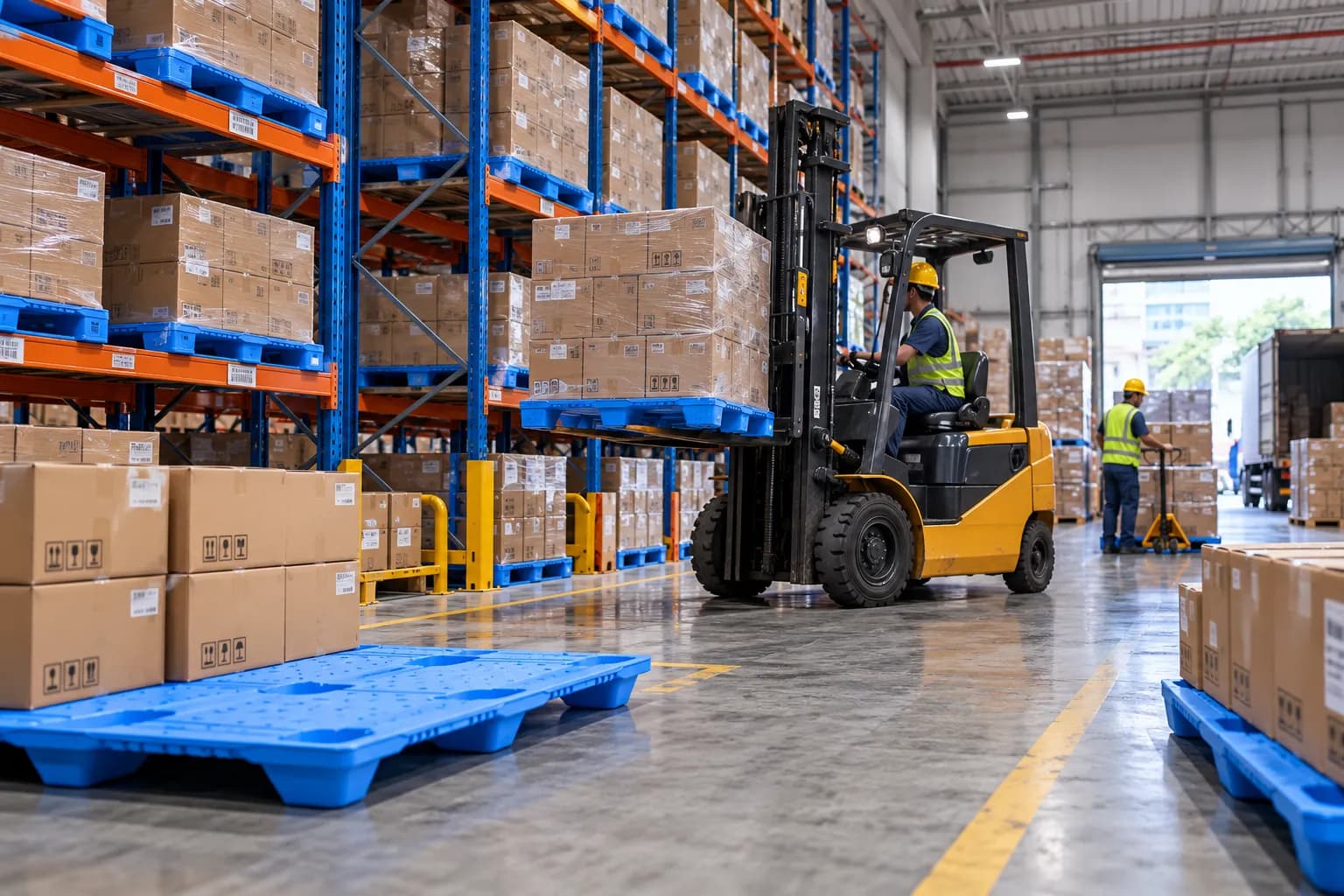
For companies that carry out storage and shipping activities every day, pallets have become an essential part of warehouse operations. Goods arriving from production need to be arranged, moved, stored, and then shipped to customers. Throughout this process, pallets help keep operations more organized.
When a company needs new pallets, the purchasing department usually starts looking for a plastic pallet supplier that can provide the required sizes and quantities. Some offer low prices, others provide a wide selection of models, and some manufacture pallets directly at their own factories.
Having many options certainly benefits buyers. However, before placing an order, there are several things that should be checked. After all, pallets that look similar do not necessarily have the same load-bearing capacity.
So, how do you choose the right supplier for warehouse, factory, or corporate procurement needs?
Why Should You Be Careful When Choosing a Plastic Pallet Supplier?
Plastic pallets are often purchased in relatively large quantities, especially by manufacturing, warehousing, and logistics companies. The pallets purchased are not used just once or twice but can remain part of a company's operational equipment as long as they are still in suitable condition.
Therefore, choosing a pallet supplier requires careful consideration.
For example, one company may need pallets to store goods on the warehouse floor. Meanwhile, another company uses pallets to transport goods with forklifts and place them on storage racks.
Although both companies need plastic pallets, their required specifications may differ.
Choosing the wrong pallet can potentially cause problems once the products are put into use. These problems may include dimensions that are incompatible with warehouse equipment, construction that is unsuitable for the load, or supply delays when the available quantity of pallets is insufficient.
This is why it is important to choose a supplier that understands the buyer's needs rather than simply offering products at the lowest price.
A good supplier should be able to provide clear product information, help buyers determine suitable options, and explain ordering conditions before a transaction takes place.
Supplier, Distributor, and Plastic Pallet Manufacturer: What Is the Difference?
When searching for plastic pallets online, buyers usually come across several terms, such as plastic pallet supplier, pallet distributor, and plastic pallet manufacturer.
All three are related to product sales, but they do not always have the same roles.
A plastic pallet supplier is a party that provides and supplies pallets to buyers. Suppliers may obtain their products from factories, distributors, or manufacture them themselves.
Meanwhile, distributors generally distribute products from manufacturers to customers or sales networks. Distributors with sufficient stock can be an option for companies that need certain products within a relatively short period.
Unlike the other two, a plastic pallet factory is a facility where the manufacturing process takes place. A company that manages this manufacturing process is called a manufacturer.
Purchasing directly from a manufacturer can offer certain advantages, especially when a company needs large quantities or wants to discuss product specifications in greater detail.
However, buying directly from a factory does not always mean lower prices or faster delivery. Pricing and delivery times still depend on order quantities, production capacity, stock availability, and destination locations.
For purchasing departments, the most important thing is knowing where the products come from and who is responsible for their quality and delivery.
Understand Your Warehouse Needs Before Requesting a Quotation
Before contacting several suppliers, a company should already have a general idea of the pallets it intends to use.
This step is quite simple, but it can make the quotation request and product selection process easier.
Pay attention to the required pallet dimensions
Plastic pallets are available in various sizes. Some are used to organize smaller goods, while others have larger surfaces for industrial applications.
Pallet dimensions need to be adjusted to the dimensions of the goods, warehouse aisle widths, storage space, and transport vehicles.
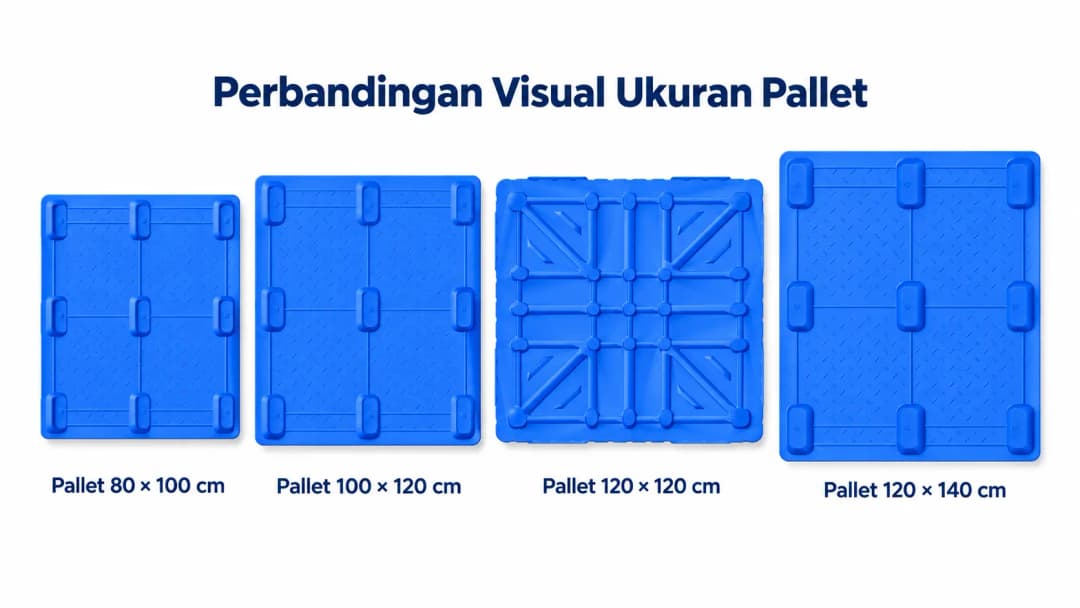
For example, pallets measuring 100 × 80 cm and 120 × 100 cm require different amounts of space. This difference can affect the number of pallets that can be arranged in storage areas or distribution vehicles.
If the company already uses a particular pallet size, it is best to inform the supplier from the beginning.
Determine the weight of the goods to be supported
In addition to dimensions, load-bearing capacity must also be considered.
Pallets used to store lightweight cartons do not always require the same construction as pallets used to store large quantities of production materials.
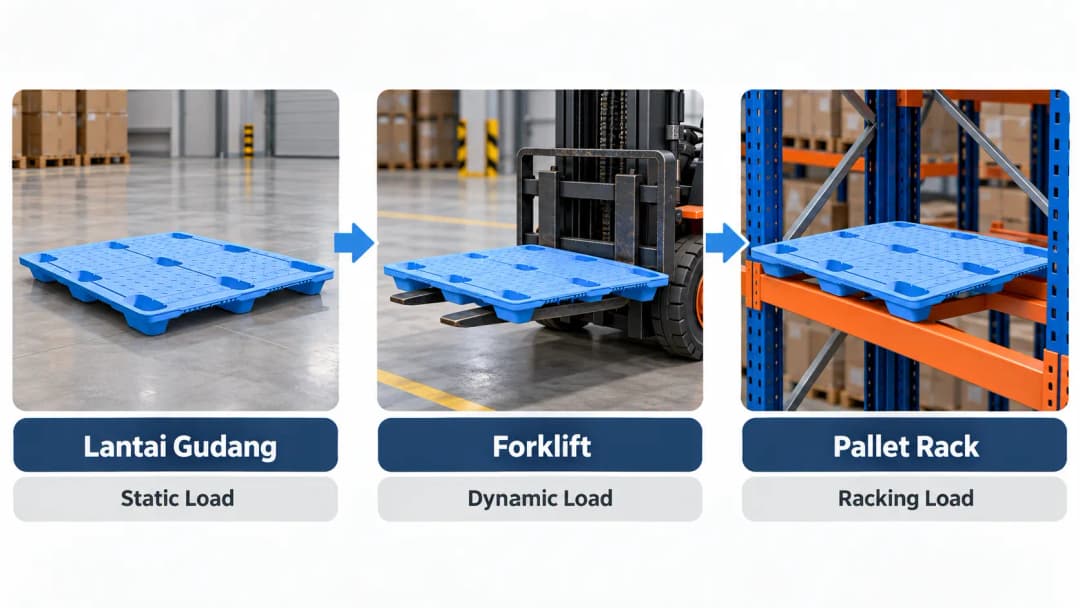
The purchasing department should request information about static and dynamic load capacities.
Static load capacity indicates the pallet's ability to support a load while stationary on a flat surface. Meanwhile, dynamic load capacity refers to the pallet's ability to carry goods while being moved using equipment such as a forklift.
For example, a pallet with a static capacity of 2 tons may not necessarily be able to carry a 2-ton load when lifted by a forklift. Its dynamic capacity may be lower.
If the pallet will be used on warehouse racks, its capacity for racking systems must be checked separately.
Check the equipment being used
Not all pallets have the same bottom structure.
Some pallets have a single-side construction, while others have a double-side design. Differences in leg shapes, runners, and fork entry directions can affect compatibility with forklifts, hand pallet trucks, or other warehouse equipment.
Therefore, buyers should explain how the pallets will be used to the supplier.
Do not let a large quantity of pallets arrive only to discover that they are not fully compatible with the available material-handling equipment.
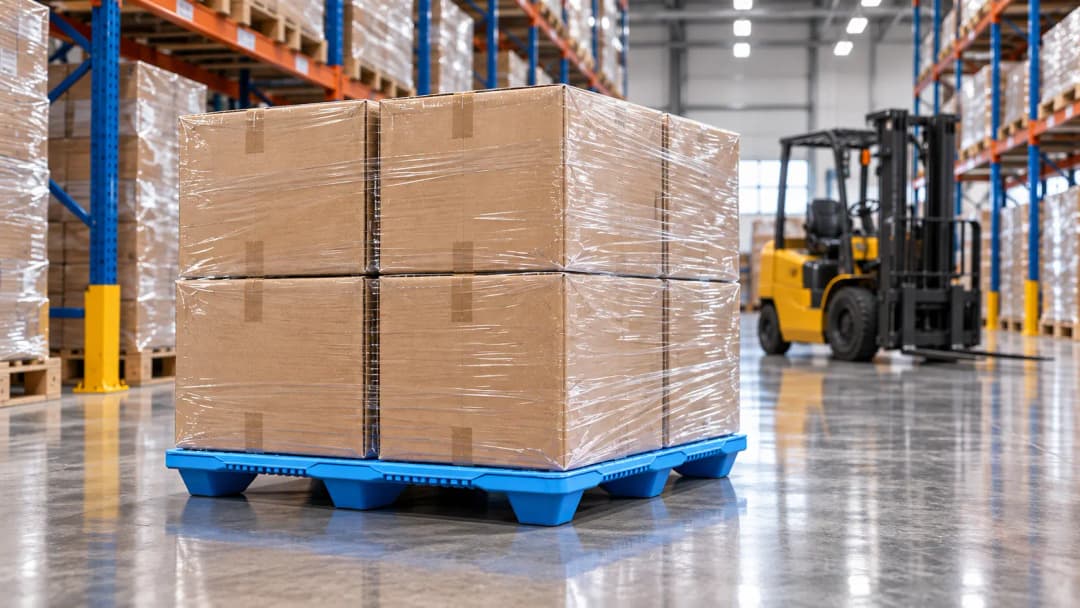
How to Evaluate a Plastic Pallet Supplier Worth Choosing
Once the company's requirements are identified, the next step is to compare several plastic pallet suppliers.
At this stage, price is certainly a consideration. However, there are other factors that are equally important.
Make sure the company and product information is clear
Suppliers operating legitimate businesses should be able to provide company identification and information about the products they sell.
For corporate purchases, documents such as business licenses, tax information, catalogs, and quotation letters may be requested according to administrative requirements.
This information helps purchasing departments ensure that transactions are conducted with clearly identifiable parties.
Also, check whether the supplier provides new pallets, used pallets, or both. This is important because product condition can affect pricing and service life.
Request specifications, not just product photos
Catalog photos certainly help buyers recognize pallet designs. However, photos alone are not enough to determine whether a pallet is suitable.
Request information about dimensions, pallet weight, materials, construction design, and load capacity.
For large-scale procurement, this information should be included in a written quotation.
Suppliers who can explain the differences between product variants make it easier for buyers to compare products.
Ask about stock availability and delivery capabilities
Product availability needs to be considered, especially when pallets are used for production activities with fixed schedules.
For example, a company may need 500 pallets to expand its warehouse capacity. Before issuing a Purchase Order (PO), the purchasing department must confirm whether the goods are available or need to be manufactured first.
If the products must be manufactured, ask how much time is required and how the delivery will be arranged.
Clear information from the beginning can help companies organize their goods-receiving schedules.
Consider after-sales services
Cooperation with a supplier does not always end when the goods have been received.
Under certain circumstances, buyers may need additional quantities, replacements for nonconforming products, or explanations about pallet usage.
Therefore, ask about warranty terms, complaint procedures, and services provided after the transaction.
It is also advisable to request that all these terms be included in the quotation document.
Checking Pallet Specifications and Load Capacity
One mistake that should be avoided is choosing a pallet based solely on its weight.
A heavier pallet is not necessarily the most suitable option for every application. Conversely, a lightweight pallet does not always mean poor quality.
Load-bearing capacity is influenced by the material, construction, support structure, and how the goods are positioned on the pallet.
For example, a warehouse may need pallets to move goods weighing approximately 1 ton using a forklift.
In this situation, the purchasing department must check the dynamic load capacity, not just the static capacity. The selected pallet must also have suitable capabilities for the actual load distribution and handling conditions.
For floor storage, static load capacity is one of the main references. Meanwhile, for multi-level warehouse racks, it is necessary to ensure that the pallet has specifications and structural support suitable for the racking system.
If the supplier does not provide racking capacity information, do not assume that the pallet is safe for rack storage simply because it has a high static load capacity.
Technical information like this is important to check before purchasing, especially for procurement involving heavy loads.
HDPE Pallet Options for Warehouses and Industry
Plastic pallets made from High Density Polyethylene (HDPE) are widely used in warehousing and industrial activities. This material does not absorb water like wood, does not corrode like metal, and can be cleaned according to usage requirements.
Nevertheless, pallet quality is still influenced by product design, manufacturing processes, and how the pallet is used.
One manufacturer that provides HDPE plastic pallets is PT Karya Pilar Nusantara, offering several size and construction options for warehouses, factories, and goods distribution.
The following pallet options are based on product specification data.
Pallet Light KPN 1080
The KPN 1080 is a pallet measuring 100 × 80 × 15 cm, available in weight options of 5 kg, 7 kg, and 8 kg.
Each variant has a static load capacity of 2 tons, 2.5 tons, and 3 tons, respectively. Meanwhile, their dynamic load capacities are 1.5 tons, 2 tons, and 2.5 tons, respectively.
With its relatively compact dimensions, this model can be considered for warehouse applications requiring 100 × 80 cm pallets.
Pallet Standard KPN 1210
For pallet requirements measuring 120 × 100 × 15 cm, the KPN 1210 Standard series is available.
This model offers weight options of 8 kg, 8.5 kg, 9 kg, 10 kg, 11 kg, and 12 kg. Its static load capacity ranges from 1.3 to 3 tons, while its dynamic load capacity ranges from 0.8 to 2.5 tons, depending on the variant.
The variety of weights and capacities allows buyers to select a type that suits their storage and goods-handling needs.
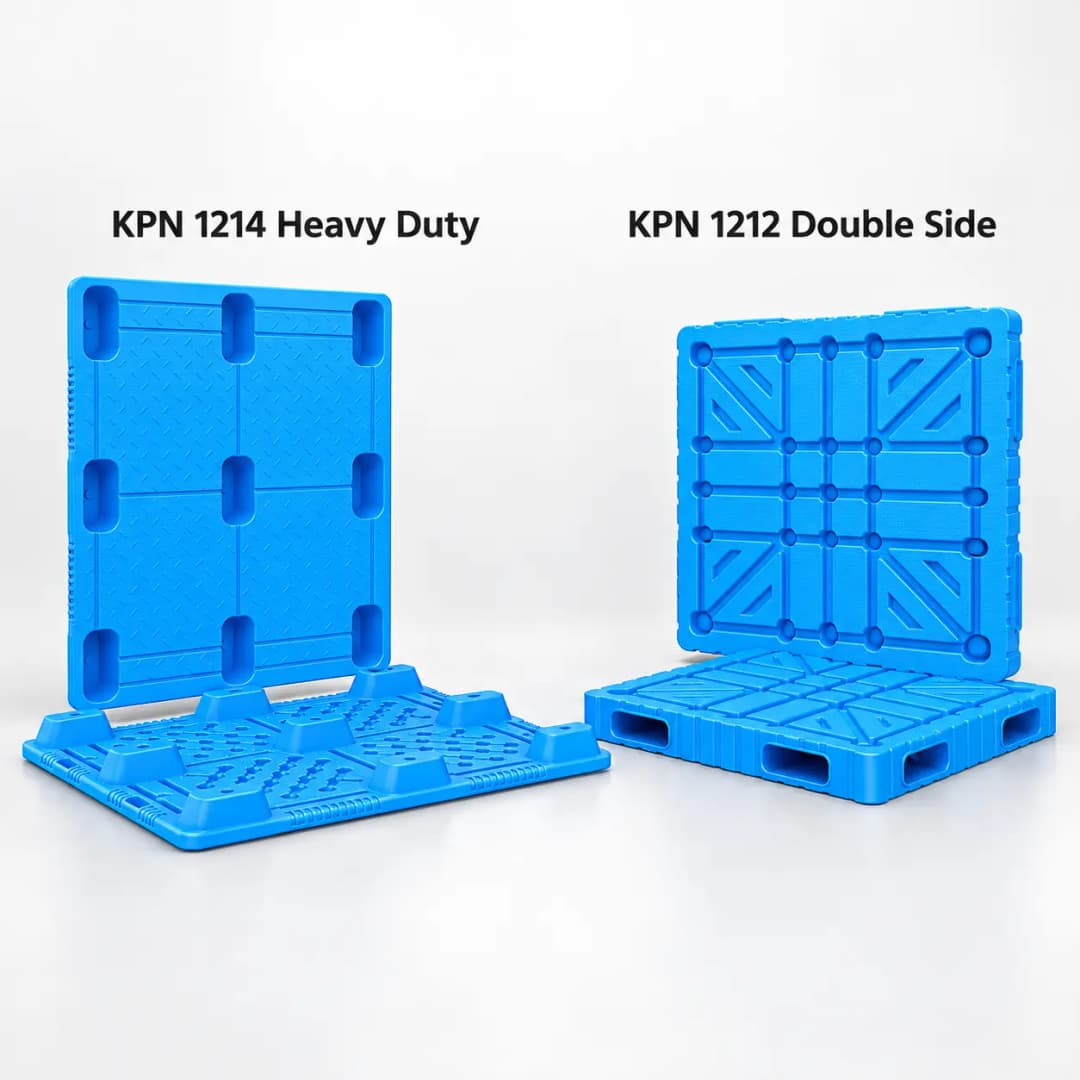
Pallet Heavy Duty KPN 1412
The KPN 1412 has dimensions of 140 × 120 × 15 cm, with weight options of 12 kg, 14 kg, and 16 kg.
The static load capacities of each variant are 2 tons, 2.5 tons, and 3 tons, respectively. Meanwhile, their dynamic load capacities are 1.5 tons, 2 tons, and 2.5 tons.
The larger surface area can be a consideration for companies handling goods that require a wider supporting base.
Pallet Double Side KPN 1212
In addition to single-side models, the KPN 1212 Double Side is also available, measuring 120 × 120 × 15 cm.
This pallet offers weight options of 16 kg, 18 kg, and 20 kg, with respective static load capacities of 2.5 tons, 3 tons, and 3.5 tons.
For dynamic load capacity, the available options are 2 tons, 2.5 tons, and 3 tons.
Double-side construction can be considered for certain material-handling systems, while still taking equipment compatibility and operational conditions into account.
Summary of KPN HDPE pallet specifications
| Model | Dimensions (cm) | Weight (kg) | Static (tons) | Dynamic (tons) |
|---|---|---|---|---|
| KPN 1080 | 100 × 80 × 15 | 5 / 7 / 8 | 2 / 2.5 / 3 | 1.5 / 2 / 2.5 |
| KPN 1210 | 120 × 100 × 15 | 8 / 8.5 / 9 / 10 / 11 / 12 | 1.3 / 1.5 / 1.7 / 2 / 2.5 / 3 | 0.8 / 1 / 1.2 / 1.5 / 2 / 2.5 |
| KPN 1412 | 140 × 120 × 15 | 12 / 14 / 16 | 2 / 2.5 / 3 | 1.5 / 2 / 2.5 |
| KPN 1212 | 120 × 120 × 15 | 16 / 18 / 20 | 2.5 / 3 / 3.5 | 2 / 2.5 / 3 |
Note: The figures in each column follow the order of the weight variants from left to right. The capacities are specifications listed in the product data and must still be matched with actual usage conditions.
All series in the table use HDPE material and are listed as having a TKDN (Domestic Component Level) value of 52.77%.
For companies requiring pallets for procurement, this information can be one of the considerations, particularly when there are requirements for the use of domestically manufactured products.
The applicable TKDN documentation and its conformity with the products offered must still be verified during the administrative process.
Further information about dimensions, availability, and product options can be found on the Karya Pilar Nusantara HDPE Plastic Pallets page.
Comparing Prices and Procurement Costs
When looking for companies that sell plastic pallets, buyers will usually contact several suppliers to request price lists.
This is a good way to get an overview of market prices. However, make sure the products being compared have equivalent specifications.
For example, two suppliers may offer pallets measuring 120 × 100 cm. The first supplier offers a lower price, while the second offers a slightly higher price.
Before making a decision, check the load capacity, pallet weight, material type, and construction design.
The two products may have different specifications even though their dimensions are identical.
In addition to the price per unit, shipping costs must also be calculated. Procuring hundreds of pallets usually requires considerable cargo space, so logistics costs can affect the total purchase cost.
Buyers should also confirm whether the quoted price includes taxes, shipping costs, and any other additional charges.
For products that will be used repeatedly, consider long-term operating costs as well. A lower initial price does not necessarily result in the lowest operating costs if the products need frequent replacement.
By comparing quotations comprehensively, companies can make decisions based on their requirements and available budgets.
Things to Check Before Issuing a PO
After selecting a suitable supplier, the next step is to ensure that all ordering details are correct.
For corporate procurement, even small errors in documents can result in differences between the goods ordered and the goods received.
Therefore, quotation letters and Purchase Orders should clearly include the following information:
Product name, model code, and variant specifications.
Dimensions, pallet weight, and load capacity.
Number of units ordered.
Unit price, taxes, and total purchase amount.
Delivery schedule and destination address.
Payment terms, warranty, and goods acceptance conditions.
If necessary, buyers may request samples for inspection before placing an order.
Inspections can include checking the pallet's physical condition, dimensional accuracy, bottom construction, and compatibility with warehouse equipment.
For applications involving heavy loads or racking systems, testing should follow appropriate technical procedures rather than simply placing heavy goods on top of the pallet.
If the order involves large quantities, the conformity between the sample and the manufactured products should also be agreed upon from the beginning.
Choosing a Manufacturer for Large-Scale Pallet Procurement
Every company has different pallet requirements. Some companies only need a few additional units for their warehouses, while others require hundreds or even thousands of pallets to support their operations.
For large-scale procurement, the supplier's ability to maintain product consistency and delivery schedules becomes important.
Buyers need to know whether the goods come from available stock or must undergo the production process first.
When dealing directly with a plastic pallet manufacturer, buyers can discuss these requirements with the party responsible for production.
However, every request must still be adjusted to the available production capacity and specifications.
HDPE pallets directly from PT Karya Pilar Nusantara
PT Karya Pilar Nusantara is an HDPE plastic pallet manufacturer that provides several models for industrial, warehousing, and goods distribution needs.
The products are available in different dimensions, weights, and load capacities, allowing companies to select options that match their intended applications.
For procurement requirements, buyers can consult regarding order quantities, model options, product availability, and delivery schedules.
Purchasing directly from a manufacturer also makes communication about the required specifications easier.
This allows the pallet selection process to be based on actual operational needs rather than simply choosing whatever products are available on the market.
For specification information or quotation requests, visit the Karya Pilar Nusantara HDPE Pallet Manufacturer page.
Frequently Asked Questions About Plastic Pallet Suppliers
What are the advantages of buying plastic pallets directly from a factory?
Purchasing directly from a factory allows buyers to communicate with the manufacturer regarding specifications, order quantities, and production schedules. However, prices and delivery times still depend on ordering conditions and product availability.
Are HDPE plastic pallets suitable for warehouse use?
HDPE pallets can be used for various warehouse applications, provided that their dimensions, construction, load capacity, and environmental conditions comply with the product specifications.
Are heavier plastic pallets always stronger?
Not necessarily. Pallet weight is one of the product's characteristics, but its actual capacity is also influenced by its design, thickness, supporting structure, and loading conditions. Check the specifications of each variant before purchasing.
Do plastic pallet suppliers accept large-volume orders?
The ability to supply large quantities varies between suppliers. Before placing an order, ask about supply capacity, production schedules, and delivery plans.
Can plastic pallets be used on warehouse racks?
Not all pallets are suitable for racking systems. Rack applications must take into account the pallet design, racking capacity, support configuration, and compatibility with the warehouse racking structure.
What information should be prepared when requesting a plastic pallet quotation?
Buyers should prepare information about pallet dimensions, goods weight, usage methods, required quantities, delivery addresses, and desired delivery schedules. This information helps suppliers prepare more suitable quotations.
Conclusion: Choose a Supplier That Meets Your Needs
Choosing a plastic pallet supplier should involve more than simply considering prices and product appearance.
Pallet dimensions, load capacity, material, construction design, and the supplier's ability to fulfill orders are factors that need to be considered before purchasing.
For companies requiring pallets for warehouses, factories, or distribution activities, determining the specifications from the beginning will make the procurement process easier.
The same applies to large-volume purchases. Clear quotations, product consistency, and delivery schedules can help companies plan their operational requirements.
PT Karya Pilar Nusantara provides HDPE plastic pallets directly from the manufacturer, with various dimensions and load capacities that can be adjusted to company requirements.
Looking for a plastic pallet supplier for procurement? Visit the Karya Pilar Nusantara HDPE Pallets page to explore available products and discuss your requirements.