In trading activities, the terms supplier, distributor, and manufacturer are certainly familiar. All three are often used to refer to companies that provide goods, especially in business-to-business transactions.
However, not all companies that sell goods perform the same activities. Some manufacture their own products, others supply the needs of other companies, while others are responsible for distributing manufactured products to various regions.
These differences are important to understand, particularly for business owners and purchasing departments that deal with procurement activities on a daily basis.
For example, a company that needs 500 plastic pallets can obtain them from a manufacturer that produces the pallets, a distributor that purchases stock from a factory, or a supplier that provides various warehouse supplies.
The goods purchased may be the same, but the ordering process, stock availability, prices, and services provided may differ.
So, what exactly is the difference between a supplier, distributor, and manufacturer? How are these three connected in the supply chain, and from whom should a company purchase its goods?
A Supplier Is a Provider: What Do They Supply?
A supplier is a party that provides or supplies goods and services to companies or other parties to meet business needs. In Indonesian, a supplier is known as a pemasok.
Goods provided by suppliers may include raw materials, production components, operational supplies, and finished products needed by companies.
In the manufacturing industry, suppliers are usually associated with raw material providers.
For example, a plastic factory needs plastic pellets or resin to manufacture its products. The factory obtains these raw materials from a supplier that can provide materials according to the required specifications and quantities.
Once the materials are received, the factory can use them in the production process.
However, the term supplier is not limited to providers of raw materials. In procurement activities, companies that supply finished goods for project or operational needs can also be referred to as suppliers.
Examples include suppliers of occupational safety equipment, construction materials, or warehouse supplies.
What Are the Responsibilities of a Supplier?
A supplier's responsibilities do not end after receiving an order from a buyer.
Suppliers must also ensure that goods are available, their quality meets requirements, and deliveries can be completed within the agreed timeframe.
Some common supplier responsibilities include:
Providing goods according to the type, specifications, and quantity ordered.
Maintaining stock availability or ensuring that supply sources remain operational.
Checking the condition and quality of goods before delivery.
Managing storage and delivery according to the buyer's needs.
Providing information regarding prices, specifications, and availability schedules.
For manufacturing companies, delays in raw material deliveries can cause production activities to be postponed.
Meanwhile, for contractors, delays in material deliveries can affect work schedules at project sites.
Therefore, choosing a supplier should not be based solely on price comparisons. The ability to fulfill orders consistently must also be considered.
A Distributor Is a Distribution Channel: How Does It Work?
A distributor is a party that distributes products from manufacturers to subsequent buyers, such as stores, retailers, resellers, companies, or end users.
Unlike manufacturers that produce goods, distributors generally obtain finished products to market or resell them.
For example, a factory produces thousands of units of industrial equipment every month.
The factory may not have a sales network covering every region. To expand its market reach, the company can cooperate with distributors that have warehouses, sales teams, and customer networks in certain areas.
The distributor then purchases or manages product inventory from the factory and distributes it to buyers.
Through this arrangement, the factory can focus more on production, while the distributor handles part of the sales and product distribution activities.
What Are the Responsibilities of a Distributor?
In practice, distributors do more than simply move goods from a factory warehouse to a buyer's warehouse.
Distributors may also carry out the following activities:
Purchasing and storing goods in certain quantities.
Marketing products to stores, companies, or customers within their sales territories.
Arranging deliveries according to orders.
Maintaining product availability in the market.
Providing product information and handling customer needs according to agreements with manufacturers.
Some distributors have official partnerships with particular brands or manufacturers. Others handle several brands at the same time.
Therefore, the term authorized distributor generally refers to a verifiable appointment or partnership relationship, rather than simply a company that sells branded products.
Distributors are not always the only purchasing channel. In certain industries, consumers can purchase products directly from manufacturers without going through distributors.
A Manufacturer Produces Goods: What Are Its Responsibilities?
A manufacturer is a party that produces goods or services through production activities. In the industrial sector, manufacturers are often referred to as manufacturing companies.
Manufacturers use raw materials, components, labor, machinery, and specific processes to create products that have functions and commercial value.
An example is a factory that processes HDPE plastic materials into pallets, road barriers, or other industrial products.
In this process, the manufacturer is responsible for transforming materials into goods according to predetermined designs and specifications.
What Does a Manufacturer Do?
Manufacturing activities generally begin with production planning.
The company needs to determine which products will be made, the materials required, the production quantity, and the quality standards that must be met.
After that, the process continues with material procurement, processing, quality inspection, and storage before the goods are shipped.
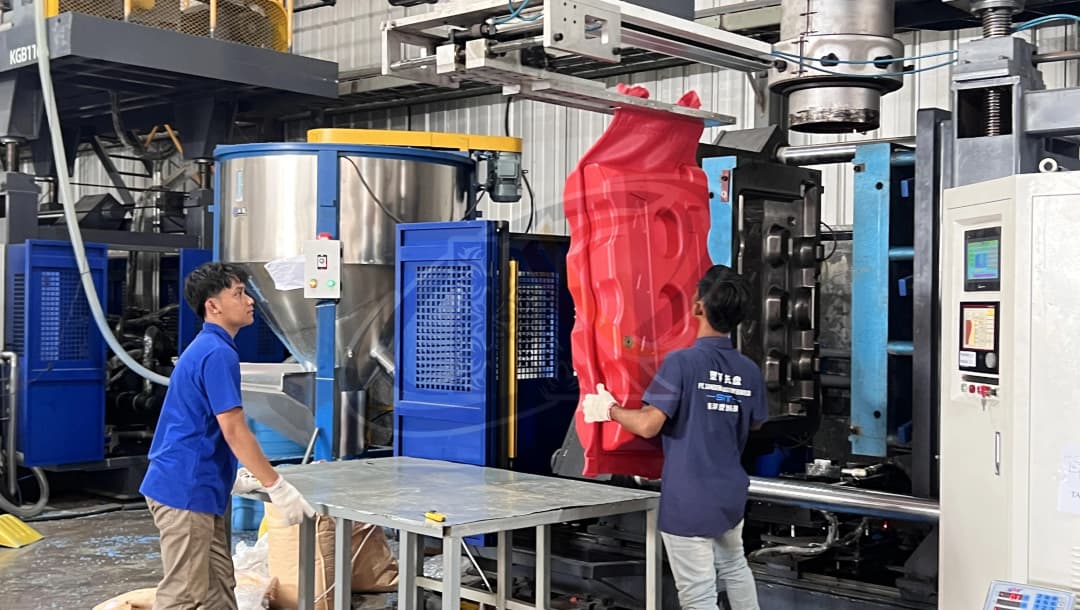
In the plastics industry, for example, materials can be processed using machinery and molds to produce the required product shapes.
The finished products are then inspected before being stored or distributed to customers.
Do Manufacturers Always Sell Directly?
Not always.
Some manufacturers market their products through distributors, others cooperate with agents, while some accept direct purchases from companies or end users.
The choice of sales channel usually depends on production scale, marketing areas, product types, and the company's ability to handle orders.
For industrial procurement, purchasing directly from a manufacturer can be an option when products require specific specifications or relatively large quantities.
However, not all manufacturers accept small orders. Some apply minimum order quantities or specific production lead times.
Differences Between Suppliers, Distributors, and Manufacturers
At first glance, suppliers and distributors may appear similar. Both provide goods and conduct transactions with buyers.
The main difference lies in the business activities they perform.
Suppliers focus on providing goods needed by other parties, distributors focus on distributing products, while manufacturers carry out the production or processing of goods.
The comparison can be seen in the following table.
| Aspect | Supplier | Distributor | Manufacturer |
|---|---|---|---|
| Main role | Supplying buyers' needs | Distributing products | Producing goods |
| Types of goods | Raw materials, components, or finished goods | Generally finished products | Manufactured products |
| Activities | Procurement and supply of goods | Purchasing, storage, and resale | Processing and manufacturing goods |
| Product sources | Manufacturers or other suppliers | Generally manufacturers or distribution networks | Own production |
| Buyers | Factories, contractors, businesses, or institutions | Retailers, resellers, businesses, or consumers | Distributors, companies, or consumers |
| Example | Plastic resin supplier for factories | Distributor of plastic products to various regions | Factory producing HDPE pallets |
The table shows general differences, rather than classifications that apply absolutely to every company.
In business practice, the boundaries between suppliers and distributors can overlap.
For example, a distribution company that regularly supplies products to a factory may also be referred to as a supplier by that factory.
The same applies to manufacturers that sell their products directly to customers. From the buyer's perspective, the manufacturer also acts as a supplier of goods.
Therefore, the difference between suppliers and distributors should be understood based on the functions they perform in a transaction, rather than merely the names or terms used by the companies.
How Are the Three Connected in the Supply Chain?
Every product used in daily life goes through a process before reaching the buyer. This process may involve material procurement, manufacturing, storage, and delivery.
This series of activities is known as the supply chain.
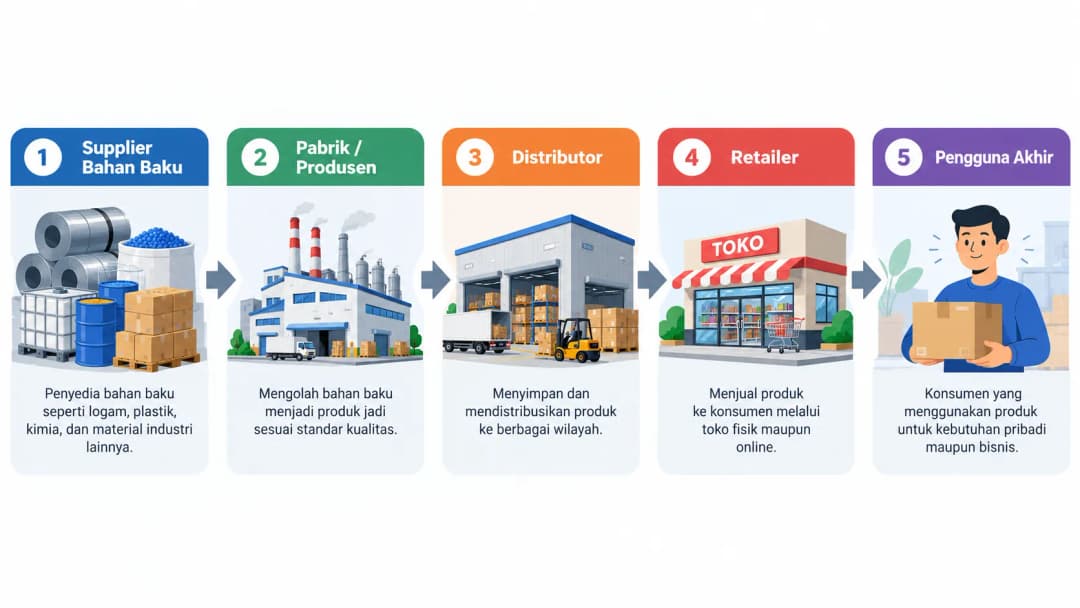
In a simplified form, the industrial supply chain can be illustrated as follows:
Raw Material Supplier → Manufacturer → Distributor → Retailer or End Buyer
From Raw Materials to Finished Products
The process usually begins when a manufacturer needs materials to produce goods.
Suppliers provide raw materials according to the factory's requirements. Once the materials are received, the manufacturer processes them into products that are ready to use or sell.
The finished products are then stored before being shipped to buyers or distribution partners.
From the Factory to the Market
Finished products can be distributed through distributors.
Distributors help make stock available closer to sales areas, so buyers do not always have to deal with factories located far away.
The products can then be sold to retailers or end users.
However, the distribution process does not necessarily have to go through every stage.
In project procurement, for example, contractors can purchase products directly from factories. In this case, distributors and retailers are not involved.
The Supply Chain Is Not Only About Goods
In addition to the movement of goods, the supply chain also involves the flow of information and payments.
When buyers need products in large quantities, order information is communicated to suppliers or manufacturers.
Manufacturers then adjust their inventory and production plans based on the orders received.
If information about requirements is not communicated properly, the risk of stock shortages and delivery delays may increase.
This is why communication between suppliers, manufacturers, distributors, and buyers also determines the smooth operation of the supply chain.
Can One Company Be Both a Supplier and a Manufacturer?
Yes. In business activities, a company does not have to perform only one function.
A factory can manufacture its own products, supply those products to other companies, and distribute them to several regions.
In this situation, the company performs manufacturing and supply activities simultaneously.
For example, a company manufactures plastic road barriers for project requirements.
When the company sells its manufactured products directly to contractors, it acts as both a manufacturer and a supplier to those contractors.
If the company also supplies products to sales networks in various regions, it also performs a product distribution function.
What About Procurement Companies?
Procurement companies or goods providers may also have different business models.
Some companies purchase products from various factories to fulfill customer requirements. Others have their own production facilities for certain products while continuing to provide goods from other manufacturers.
This business model is particularly relevant to industrial procurement because buyers often need several types of goods for a single project.
For example, a contractor may need road barriers, pallets, and operational supplies within a similar timeframe.
Rather than contacting numerous sellers separately, the contractor can work with a provider capable of assisting with the procurement of these various requirements.
However, buyers still need to confirm whether the products offered are manufactured in-house, obtained from partner factories, or provided through distributor networks.
This information can influence discussions about pricing, procurement lead times, warranties, and the possibility of specification adjustments.
Examples of Supply Chains for Industrial Products
To make the differences easier to understand, the roles of suppliers, distributors, and manufacturers can be illustrated through examples of products commonly used in industrial environments.
Example 1: HDPE Road Barrier Production
Road barriers are products used to help regulate vehicle routes and separate certain areas.
These HDPE products are manufactured through processes that require materials, production equipment, and quality inspections.
In an example of a road barrier supply chain, the process may begin with a supplier providing HDPE resin to a factory.
The manufacturer then processes the material into road barriers according to the product design.
Once production is complete, the road barriers can be marketed through distributors or delivered directly to project customers.
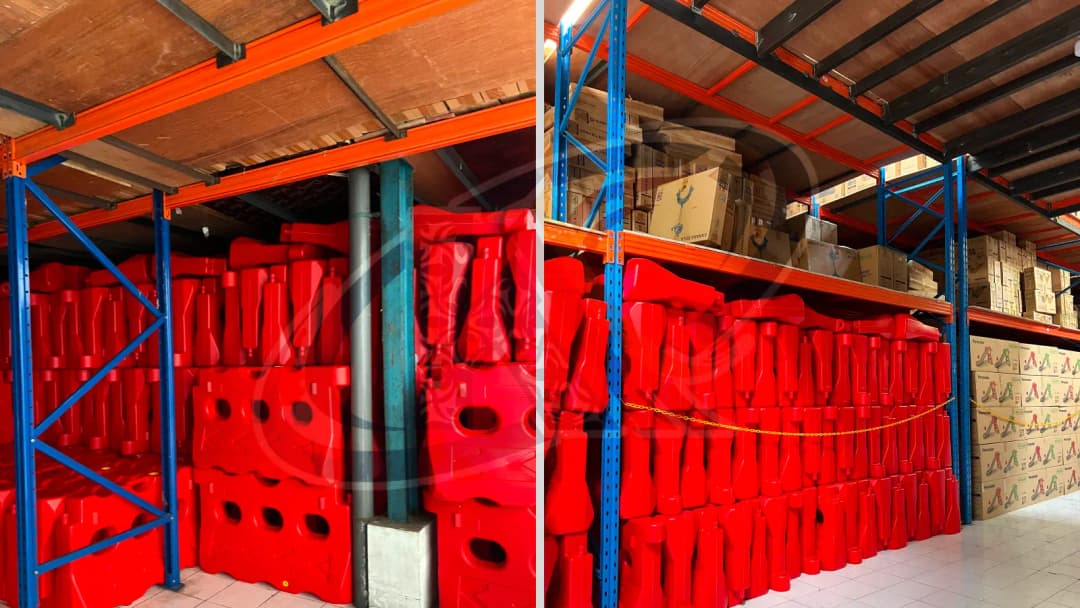
PT Karya Pilar Nusantara is an example of a company that carries out both manufacturing activities and the supply of goods for projects.
Through its production facilities in East Java, the company manufactures Karpinus HDPE Road Barriers for traffic management, work area separation, and other applications that are appropriate for the products' functions.
In this context, Karya Pilar Nusantara can act as a manufacturer when producing its own road barriers and as a supplier when supplying them to companies or project customers.
Example 2: Pallet Procurement for Warehousing
Another example can be found in HDPE plastic pallets.
Pallets are used to support the storage and movement of goods in warehouses, factories, and distribution centers.
Their manufacturing process involves plastic materials, production, quality inspections, and product storage.
When a logistics company requires pallets in large quantities, several purchasing channels are available.
The company can contact a pallet manufacturer to discuss specifications or production capacity. Another option is to purchase through a distributor that has stock matching its requirements.
The company can also contact an industrial equipment supplier that provides pallets along with various other warehouse supplies.
The choice of provider depends on pallet dimensions, load capacity, order quantity, delivery schedule, and expected service requirements.
To understand the product specifications, readers can refer to the guide to choosing HDPE pallets based on dimensions and load capacity.
From the two examples above, it is clear that the type of product does not always determine who should sell it.
The same goods can be supplied through different channels, depending on business relationships and buyer requirements.
Is It Better to Buy from a Supplier, Distributor, or Manufacturer?
After understanding the differences, the next question is from whom a company should purchase its goods.
The answer depends on the type of product and procurement requirements.
Not every purchase needs to be made directly from a manufacturer. Likewise, purchasing through a distributor does not always mean the final cost will be higher.
Several factors should be considered before making a decision.
1. When Products with Special Specifications Are Required
A manufacturer can be an option when a company needs products whose specifications require further discussion.
For example, purchasing industrial materials or products that require adjustments to dimensions, construction, color, or production quantities.
Dealing directly with a manufacturer can make technical discussions easier because the company has direct access to the manufacturing process.
However, the ability to make adjustments still depends on each manufacturer's production facilities and policies.
2. When Stock Is Needed in a Specific Region
A distributor can be an option when buyers need goods that are available at a closer location.
For example, a company that needs standard products for daily operations may find it easier to purchase from a distributor with a warehouse in its area.
In certain situations, this can shorten delivery times compared with waiting for products to be shipped from a distant factory.
Nevertheless, stock availability and delivery schedules must still be confirmed before placing an order.
3. When Various Types of Goods Are Required
Suppliers or multisector procurement companies can help when buyers need several product categories at once.
This is commonly found in project procurement, facility maintenance, and company operational requirements.
For example, a single project may require pallets for material storage and road barriers for separating work areas.
Providers with diverse product networks can assist with sourcing and procuring these goods.
4. Consider Prices and Overall Costs
The unit price is not the only cost that needs to be considered.
Purchasing directly from a manufacturer may offer an attractive pricing structure for certain quantities. However, buyers also need to consider shipping costs, minimum order quantities, and production lead times.
Meanwhile, distributors with stock located closer to buyers may offer advantages in terms of delivery time and shipping costs.
Comparisons should be based on total procurement costs, rather than just the figures listed in a price list.
5. Ensure Quality and After-Sales Support
Suppliers, distributors, and manufacturers should all be evaluated based on their ability to fulfill orders.
For industrial goods, checking specifications is important because products that appear similar do not necessarily have the same performance capabilities.
Buyers should request product information, confirm that quantities and quality meet requirements, and understand warranty terms when available.
For large-scale project requirements, the provider's ability to meet delivery schedules should also be evaluated from the beginning.
A more detailed discussion of the provider selection process can be found in the article Procurement of Goods and Services: Definition, Process, Types, and Stages.
Frequently Asked Questions About Suppliers and Distributors
Is a supplier the same as a distributor?
Not always. A supplier is a party that supplies goods or services to meet buyers' needs, while a distributor is a party that distributes products through sales or distribution networks. In practice, a distributor can also act as a supplier to its business customers.
Does a supplier need to own a factory?
No. Suppliers can obtain goods from manufacturers or other legitimate sources and then supply them to customers. Companies that own factories can also act as suppliers when they sell their manufactured products to other parties.
What is the difference between a manufacturer and a distributor?
Manufacturers produce or process products, while distributors handle product distribution and marketing. Distributors generally sell finished products without transforming them into new products.
Is purchasing directly from a manufacturer always cheaper?
Not necessarily. Prices are influenced by order quantities, specifications, delivery locations, logistics costs, and sales terms. For certain purchases, distributors with local stock may offer more suitable total costs or procurement lead times.
Can manufacturers sell directly to consumers?
Yes. This is known as direct distribution because products are supplied from manufacturers to buyers without going through distributors or retailers. However, not all manufacturers handle direct transactions for every product type and order quantity.
Conclusion: Understanding the Role of Providers Before Purchasing
Suppliers, distributors, and manufacturers are part of interconnected business activities, but they perform different functions.
Suppliers provide goods or business necessities, distributors help distribute products to the market, while manufacturers produce goods through manufacturing activities.
Together, they form relationships within the supply chain so that goods can be manufactured, supplied, and received by the parties that need them.
In practice, a single company can also perform more than one function. Therefore, buyers need to understand the business activities of a provider rather than simply looking at whether the company uses the term supplier, distributor, or manufacturer.
For companies conducting procurement activities, the most important consideration is choosing a provider capable of meeting product requirements, specifications, prices, and schedules appropriately.
PT Karya Pilar Nusantara provides various products for industrial, warehousing, construction, and project requirements, supported by manufacturing capabilities and a goods procurement network.
Information about the company's products and services can be found on the official PT Karya Pilar Nusantara website.