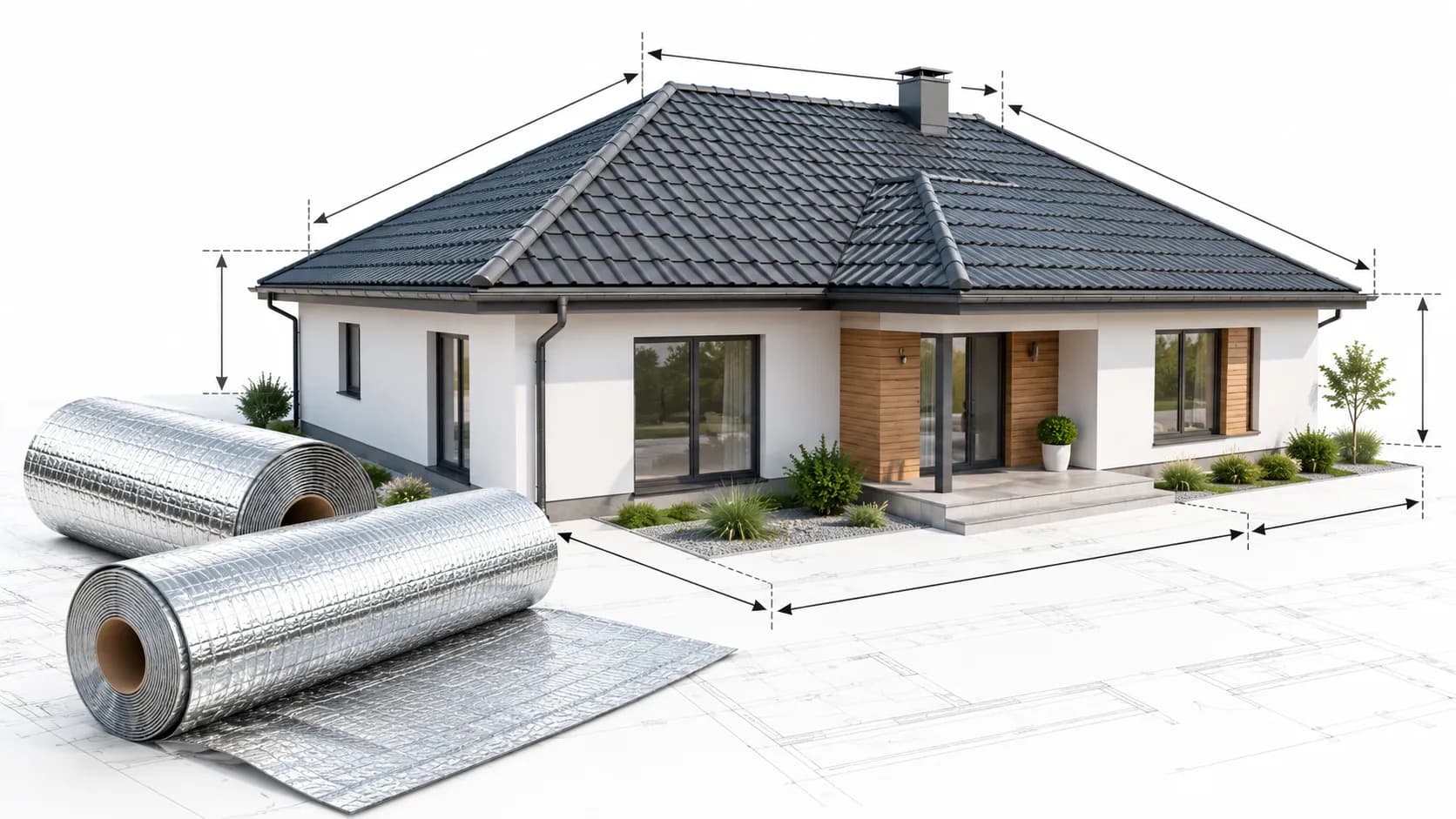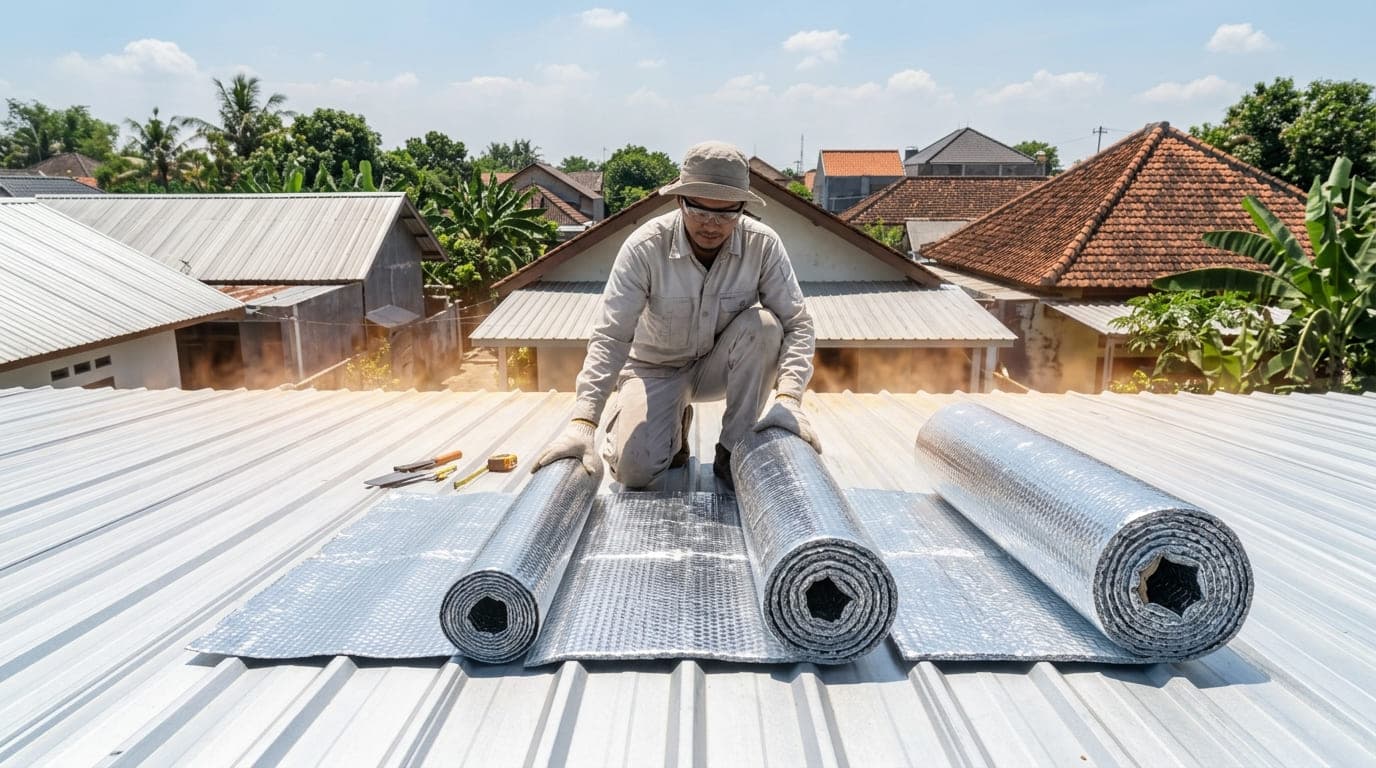
When choosing roof insulation, one of the most frequently asked questions is about thickness.
Is 5 mm insulation sufficient? When should 8 mm be used? Is 10 mm always better because it is thicker?
The answer cannot be determined by thickness alone.
Thickness does affect a material's ability to resist heat transfer. For the same type of material, a thicker layer generally provides greater thermal resistance. However, the overall performance of insulation is also influenced by the material's conductivity, roof type, air gaps, building conditions, and installation methods.
Therefore, choosing 5 mm, 8 mm, or 10 mm roof insulation should begin with the building's requirements rather than simply selecting the thickest option.
Roof Insulation Thickness: Why Does the mm Measurement Matter?
Thickness indicates how thick the insulation material layer is.
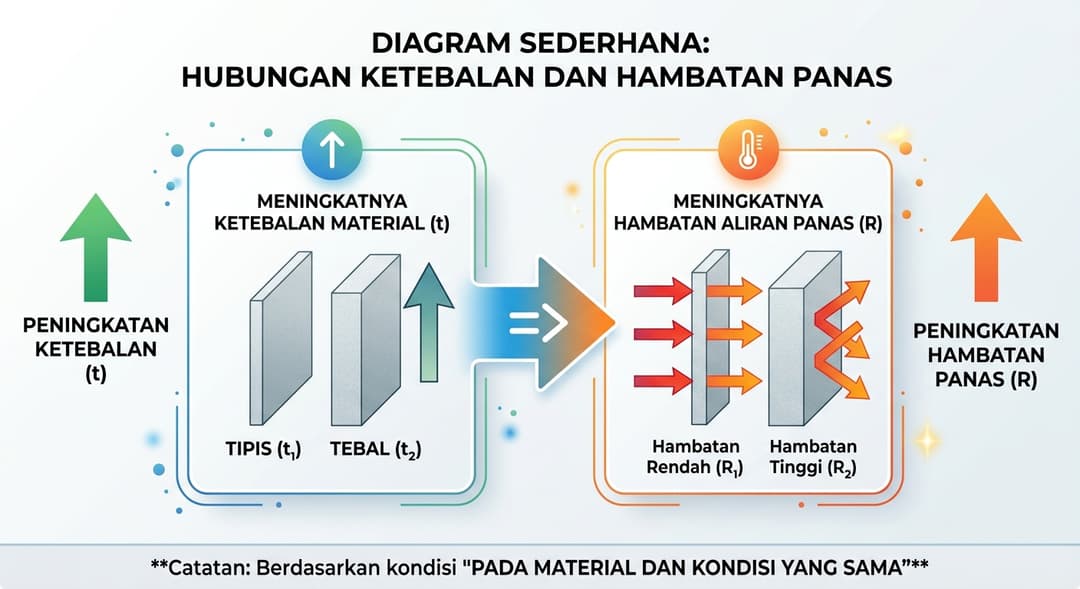
For insulation materials with the same characteristics and thermal conductivity values, increasing the thickness increases resistance to heat flow.
In simple terms, the thermal resistance of a material layer can be explained through the following relationship:
R = d ÷ k
Where:
R = thermal resistance
d = material thickness in meters
k = thermal conductivity of the material in W/m·K
This means that if the material type and thermal conductivity value are the same, a thicker material will provide a higher thermal resistance value.
However, this formula only describes the material layer. The overall roof performance is still influenced by the construction assembly, framing, air gaps, joints, ventilation, and installation conditions.
That is why choosing roof insulation requires more than simply comparing thicknesses of 5 mm, 8 mm, or 10 mm.
5 mm vs 8 mm vs 10 mm: What Are the Differences?
To understand the differences, we can view these three thicknesses as three levels of requirements.
|
|---|
These application differences do not mean that 5 mm insulation can only be used for houses or that 10 mm insulation can only be used for factories. The table is better used as an initial guide before evaluating the overall building conditions.
5 mm Roof Insulation: What Conditions Is It Suitable For?
5 mm insulation can be considered when the main requirement is to add an insulation layer without significantly increasing the thickness of the roof construction.
This thickness is relevant for lightweight buildings, renovations, or areas with limited installation space.
Examples include:
Residential houses requiring additional insulation, existing roof renovations, shop houses, simple buildings, enclosed canopies, or projects requiring lightweight and flexible materials.
For constructions that previously did not use insulation, adding a 5 mm layer can be a starting point to help control heat transfer through the roof.
However, the building conditions still need to be evaluated.
For example, a very large metal roof exposed to direct sunlight for extended periods may require a different approach compared to a residential roof with a relatively small area.
When Should 5 mm Be Considered?
When:
Installation space is limited;
The building does not experience excessively high heat loads;
The main requirement is renovation or insulation improvement;
The construction requires relatively thin materials;
The roof area is not too large.
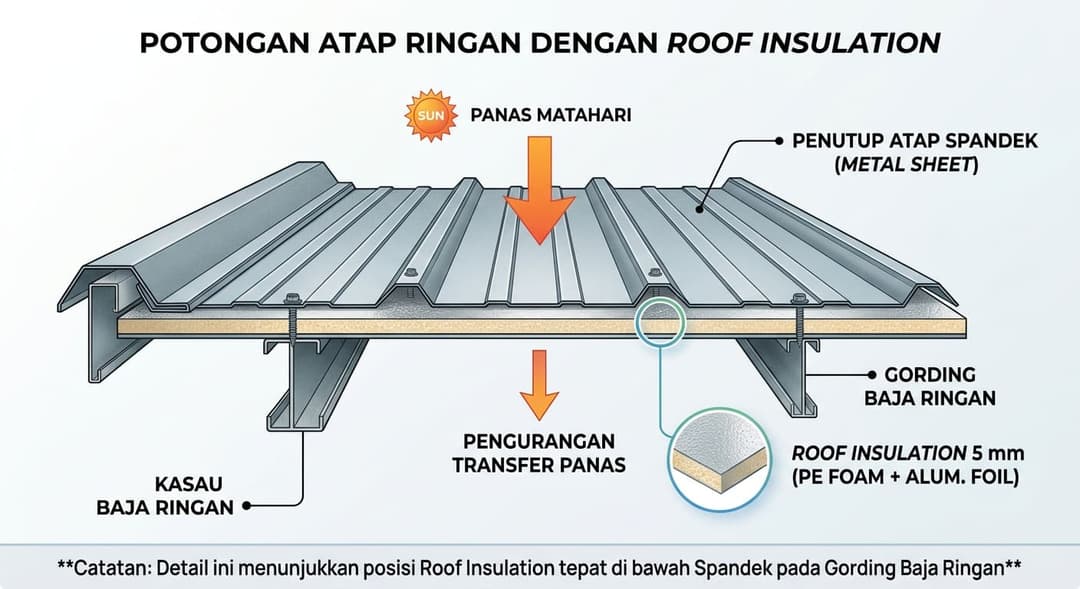
8 mm Roof Insulation: A More Flexible Middle Option
8 mm insulation falls between the thinner and thicker variants.
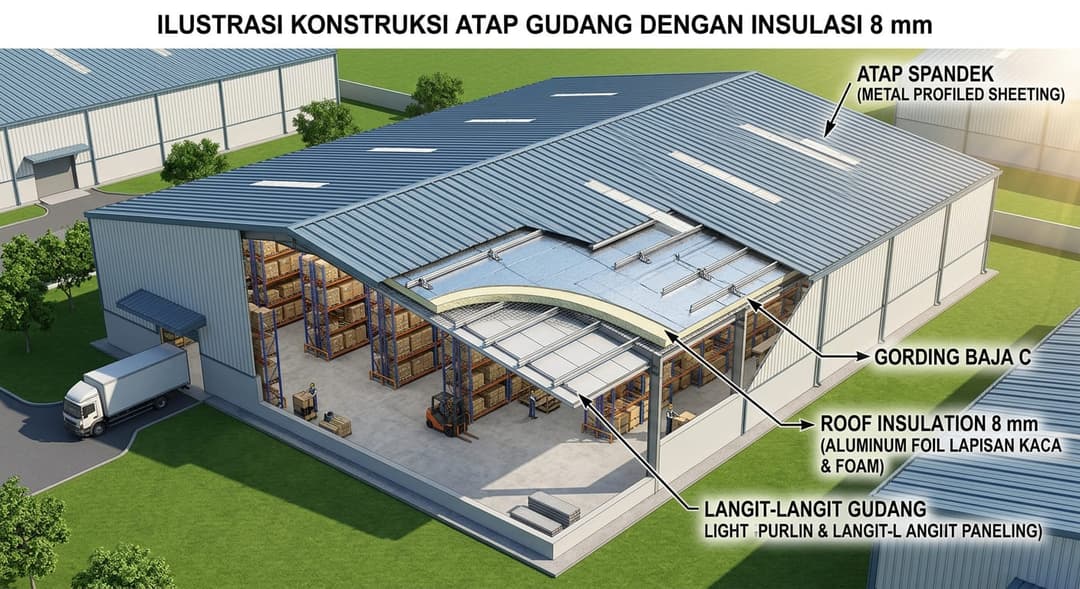
This thickness can be an option for buildings with larger roof areas or higher levels of indoor activity compared to ordinary residential houses.
Examples of applications include:
Warehouses, workshops, large shop houses, storage facilities, and commercial buildings.
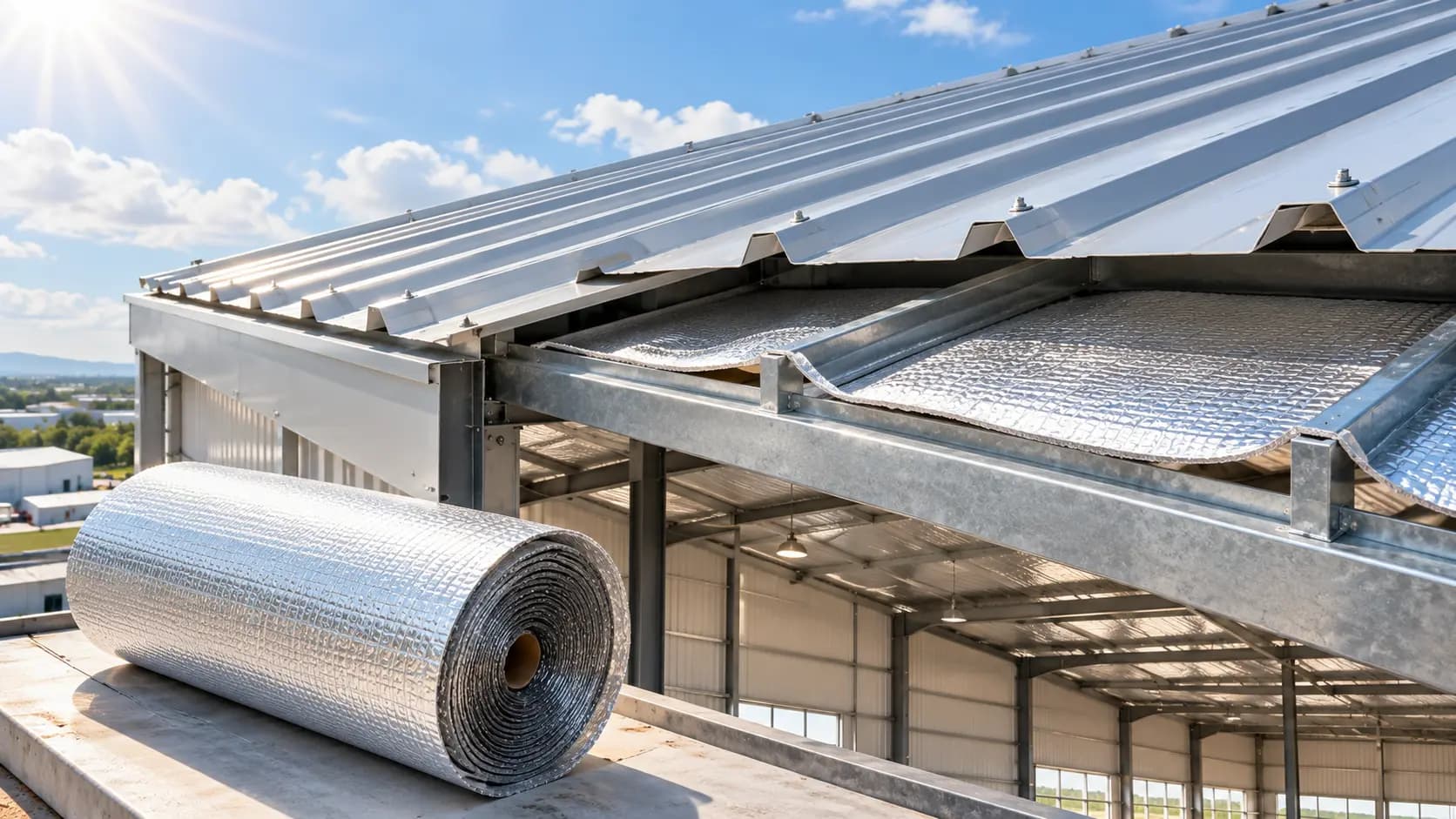
In warehouses or workshops, roof areas are generally quite large and often use materials such as spandek, galvalume, or metal roofing.
Metal materials can conduct heat, so the roofing system needs to be evaluated as a whole, including insulation, ventilation, air gaps, and building height.
The 8 mm thickness can serve as a middle option for projects requiring a thicker foam layer than 5 mm but not yet requiring a 10 mm configuration.
When Should 8 mm Be Considered?
When:
The building is a warehouse or workshop;
The roof area is relatively large;
Regular activities take place inside the building;
A balance between thickness and ease of installation is required;
Heat control requirements are at a moderate level.
10 mm Roof Insulation: For Higher Requirements
10 mm insulation provides a thicker material layer compared to both 5 mm and 8 mm.
For materials with the same thermal conductivity, increasing the thickness provides greater thermal resistance.
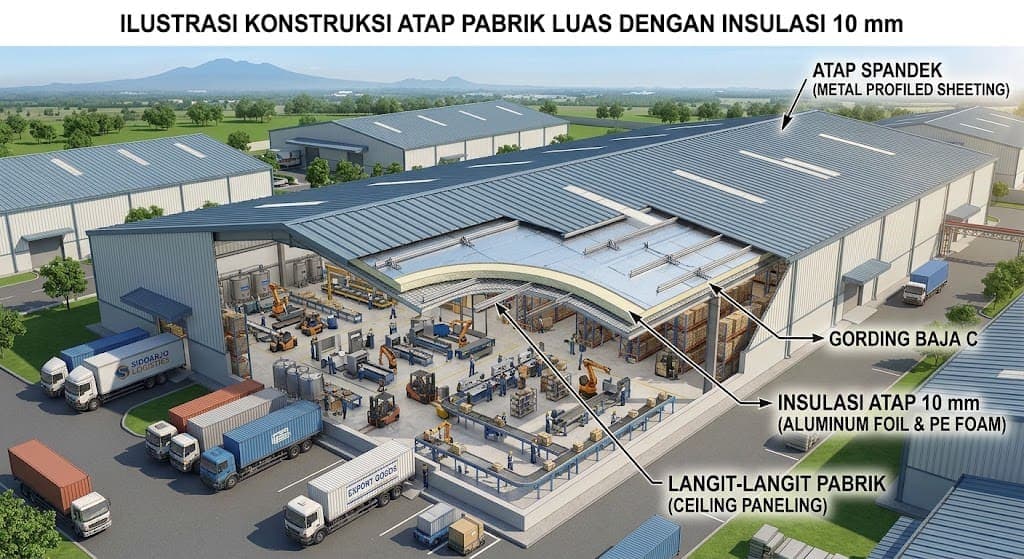
Therefore, 10 mm insulation can be considered for buildings with more challenging heat conditions, such as:
Factories, production facilities, large workshops, industrial buildings, large-scale warehouses, or work areas with extensive roof surfaces.
In industrial buildings, heat sources do not always come from sunlight.
Machinery, production processes, lighting, worker activities, and other equipment can generate heat from inside the building.
Therefore, the use of thicker insulation materials needs to be combined with ventilation planning and the overall building system.
When Should 10 mm Be Considered?
When:
The building is a factory or industrial facility;
The roof area is large;
There are additional heat sources from production activities;
The building is used for long periods every day;
A thicker foam layer is required.
Is Thicker Insulation Always Better?
Not always.
The statement that thicker insulation provides greater thermal resistance is correct when comparing the same materials under the same conditions.
However, choosing insulation for a building is not simply about finding the greatest thickness.
Several other factors need to be considered.
Material Type
10 mm insulation made from one type of material cannot automatically be compared directly with 10 mm insulation made from a different material.
Each material has its own characteristics and thermal conductivity.
Roof Conditions
Concrete, tile, and metal roofs have different heat transfer characteristics.
Spandek or galvalume roofs, for example, are commonly used in warehouses and factories, so their insulation configurations need to be adjusted to the structure.
Roof Area
The larger the roof area exposed to sunlight, the greater the surface area that may receive heat energy.
Ventilation
Insulation and ventilation have different functions, but both influence the thermal comfort of a building.
Insulation helps reduce heat transfer through the building envelope, while ventilation helps manage the air inside the space.
Installation Quality
Gaps at joints, insulation sections that are not fully covered, or installation methods that do not follow the design can affect system performance.
Therefore, thicker insulation that is poorly installed may not necessarily provide better overall system performance than insulation installed with the correct configuration.
Don't Just Look at Thickness: Consider Aluminum Foil and Air Gaps
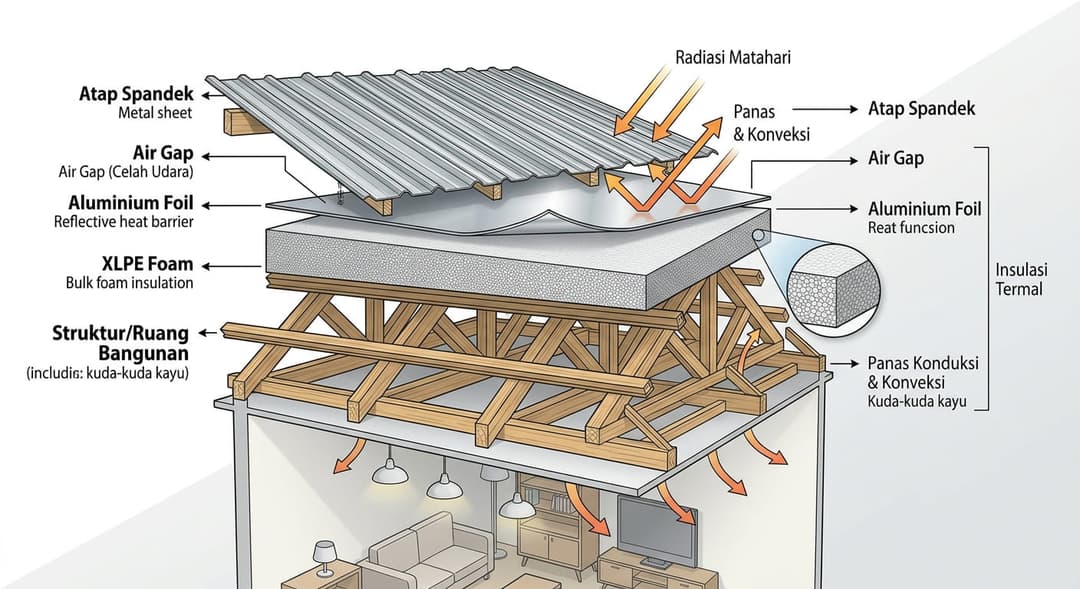
In foam-based insulation combined with aluminum foil, there are two mechanisms that need to be distinguished.
The foam layer helps provide resistance to heat transfer through the material.
Meanwhile, the aluminum foil surface acts as a reflective surface to help reduce heat transfer through radiation.
However, reflective surfaces work most effectively when facing an air space.
ASHRAE explains that reflective insulation requires a reflective surface facing an air layer for the reduction of radiant heat transfer to work as designed.
This means that choosing between 5 mm, 8 mm, and 10 mm must still take into account how the material is positioned within the roof construction.
How to Choose Insulation Thickness Based on Building Type?
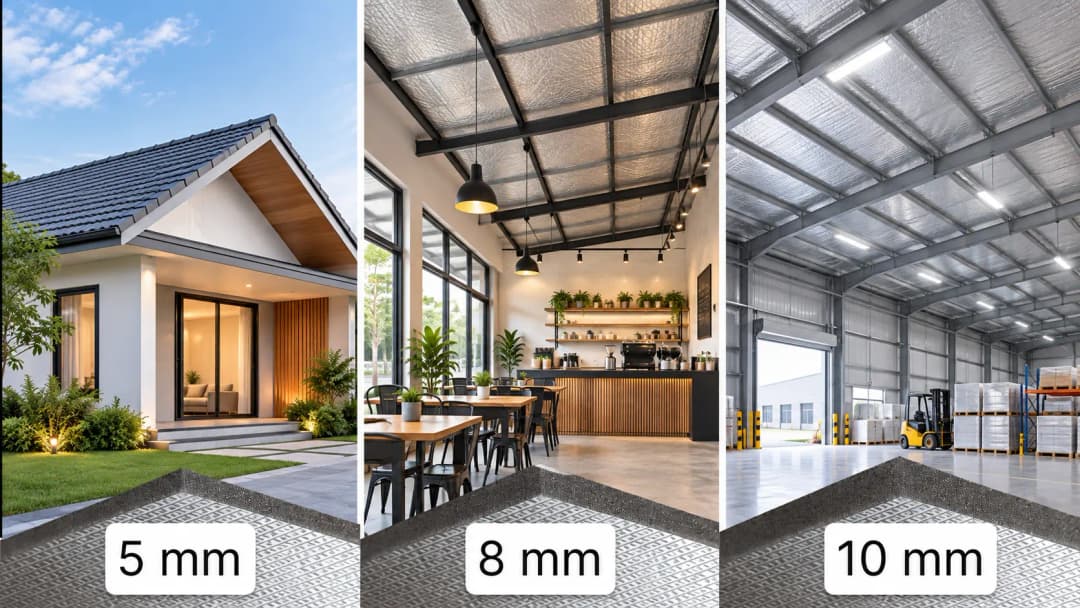
As an initial guide, the approach can be outlined as follows.
Houses or Minor Renovations
Consider 5 mm if installation space is limited and heat control requirements are not too high.
If the house has a large metal roof area or high heat exposure, the specifications can be upgraded after considering the construction conditions.
Warehouses
8 mm thickness can serve as a balanced starting point for warehouses with large roof areas.
However, warehouse height, ventilation, types of stored goods, and duration of activities still need to be taken into account.
Workshops
Workshops can consider 8 mm or 10 mm, depending on the building size and activities taking place inside.
Workshops with heat-generating machinery naturally have different requirements compared to workshops used only for storage or light assembly.
Factories
For factories or production facilities, 10 mm can be considered when a thicker foam layer is required.
However, thickness should not be the only deciding factor because internal heat, ventilation, cooling systems, and building configurations also need to be analyzed.
Commercial Buildings
Commercial buildings can use 5 mm, 8 mm, or 10 mm, depending on the construction type, air conditioning usage, roof area, and indoor comfort targets.
Single Side or Double Side: Does It Affect the Choice?
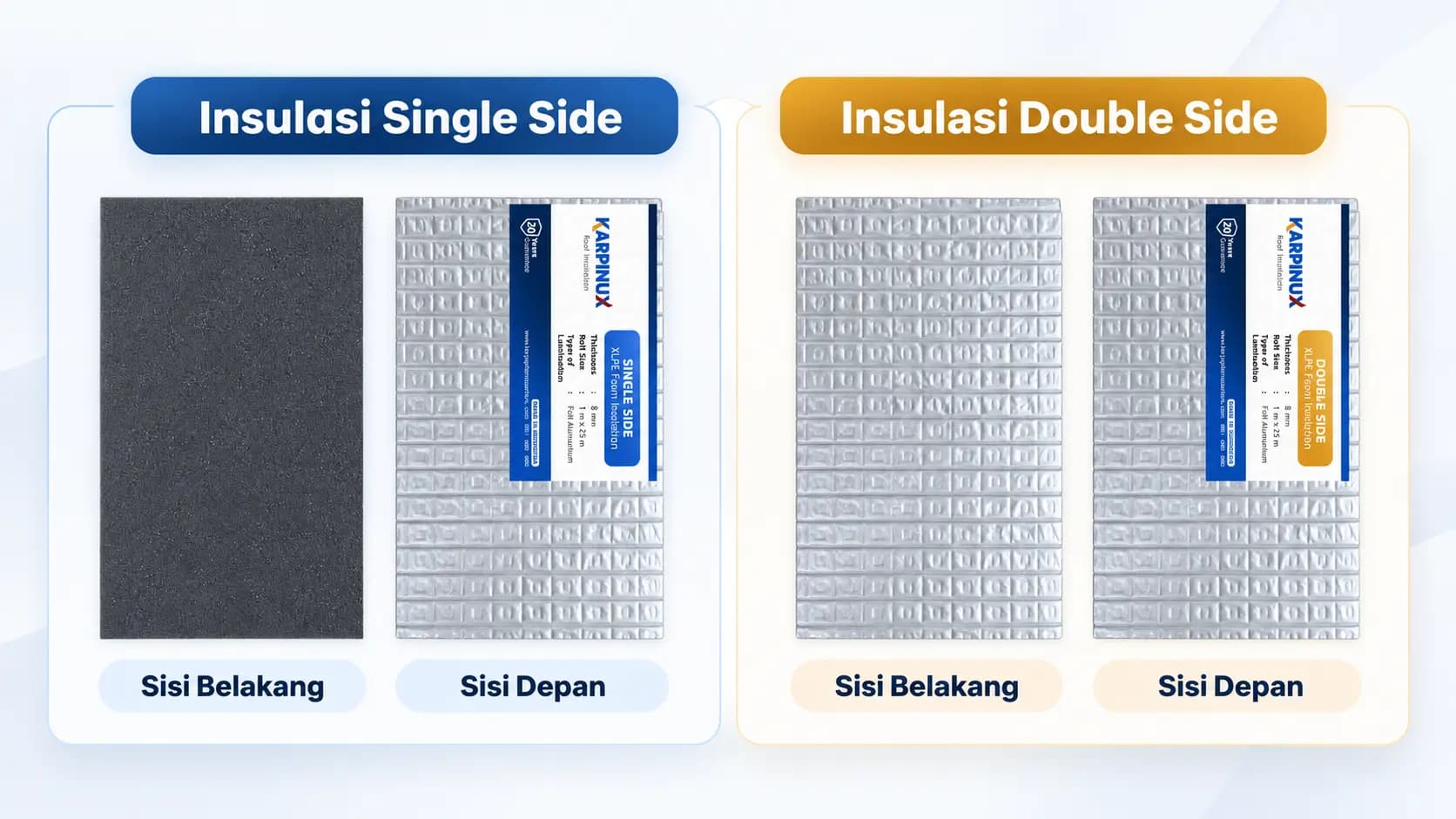
In addition to thickness, some foam insulation products are available in single-side and double-side options.
Single-side insulation has a layer on one side, while double-side insulation has layers on both sides of the material.
However, double-side insulation does not automatically mean that its performance is twice as good.
The effectiveness of a reflective surface depends heavily on the position of the foil layer relative to the air space and the construction assembly.
Therefore, the choice between single-side and double-side insulation should be made after determining the insulation installation position and the overall roof design.
Checklist Before Choosing 5 mm, 8 mm, or 10 mm
Before determining the insulation thickness, first check:
The type of roofing material;
The total roof area;
The building's function;
The duration of building usage each day;
The presence of machinery or internal heat sources;
Ventilation conditions;
Available installation space;
Single-side or double-side configuration;
Installation methods and joints between rolls;
The thermal specifications of the material used.
With this approach, thickness is selected based on the actual requirements of the building rather than simply assuming that the thickest layer is always the best option.
Conclusion: Should You Choose 5 mm, 8 mm, or 10 mm?
There is no single roof insulation thickness that is most suitable for every building.
In simple terms:
5 mm is worth considering for renovations, lightweight buildings, and areas with limited installation space.
8 mm can be a balanced option for warehouses, workshops, and various commercial buildings.
10 mm is more relevant for factories, industrial facilities, and buildings with higher heat control requirements.
Karpinux Roof Insulation is available in 5 mm, 8 mm, and 10 mm thicknesses, using XLPE foam-based material with an aluminum foil layer and a choice of single-side or double-side configurations. Each roll measures 1 × 25 meters.
However, the final decision should still consider the roof type, building area, heat conditions, ventilation, and installation system.
Therefore, the question is not just:
"Which insulation is the thickest?"
But rather:
"Which thickness is most suitable for the building's requirements?"