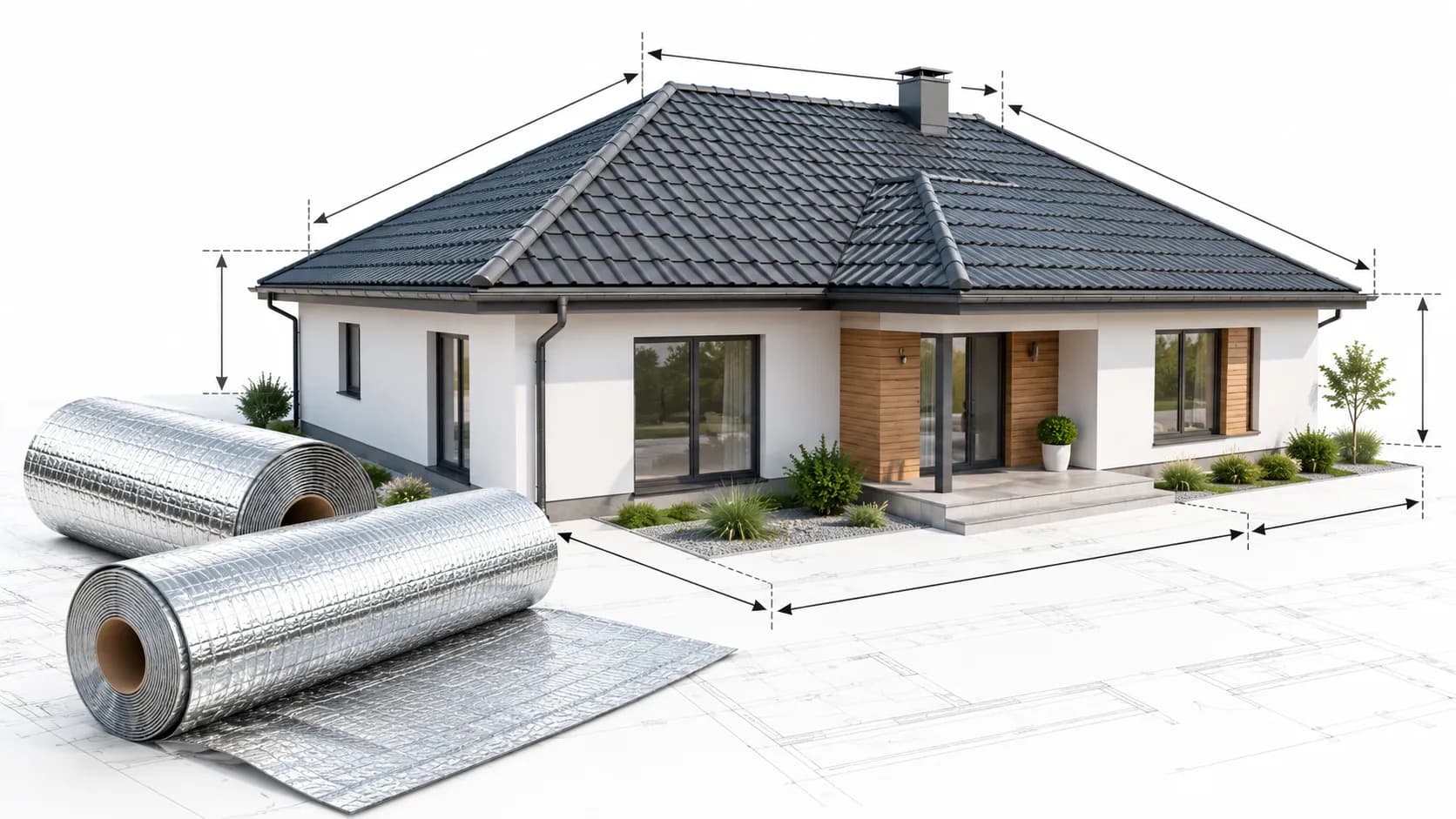
Installing roof heat insulation has become one of the most popular ways to reduce heat inside the house. Especially in buildings that use spandek, galvalume, or other metal roofing materials.
However, what if the insulation has already been installed, but the house still feels hot during the day?
This situation can raise several questions. Is the insulation material not good enough? Was it installed incorrectly? Or are there other parts of the house that are actually contributing to the heat?
In fact, roof heat insulation not working at its maximum effectiveness is not always caused by the quality of the material. Several factors can affect the results, ranging from insulation thickness and installation conditions to air circulation inside the building.
Before deciding to replace the insulation that has already been installed, it is worth understanding the following seven causes.
Why Is the House Still Hot After Installing Roof Insulation?
It is important to understand that the main function of roof heat insulation is not to make a house as cold as it would be when using an air conditioner.
This material works by helping reduce heat transfer from the roof to the rooms below.
When sunlight hits the roof, its surface absorbs heat. Some of that heat then moves through the roofing material, radiates into the space below, or is carried by air movement.
Home roof insulation helps slow down this heat transfer. However, heat can also enter through walls, windows, and other parts of the building.
That is why a house that already uses insulation may not immediately feel cool throughout the day.
The results depend on the materials used, the roof construction, installation quality, and the overall condition of the house.
Here are several causes that need attention.
1. Insulation Thickness Does Not Match the Requirements
One fairly common mistake is choosing home roof heat insulation based only on price or roll size.
In fact, every material has different characteristics.
Aluminium foil, for example, is used to help reduce heat transfer through radiation. Meanwhile, materials such as polyethylene foam or XLPE foam have structures that help slow down heat conduction through the material.
For the same type of material, differences in thickness can also affect its ability to resist heat transfer.
A thicker layer generally provides greater thermal resistance than a thinner layer, as long as the material and installation conditions are equivalent.
However, this does not mean that every house must use the thickest insulation available.
Houses with tile roofs, buildings with spandek roofs, and rooms located directly beneath metal roofing may have different requirements.
Therefore, insulation thickness should be selected based on the type of roof, surface area, and building conditions, rather than simply choosing the product with the largest dimensions.
If the insulation used does not match the building's heat control requirements, the results may be less satisfactory.
2. The Aluminium Foil Layer Is Not Working Optimally
Aluminium foil is often used as a reflective layer in roof heat insulation.
Its function is to help reduce heat transfer through radiation. However, this benefit is strongly influenced by the position of the foil layer during installation.
A reflective surface generally works well when it faces an air space or air gap.
If the aluminium foil layer is in direct contact with solid materials on both sides, its ability to reduce radiant heat transfer does not work in the same way as when the foil faces an air space.
This is important to consider, especially in metal roof construction.
Some people assume that as long as the foil surface is attached beneath the roof, heat will automatically be reduced as much as possible. In reality, the arrangement of the layers must also be taken into account.
In addition, products with single-sided and double-sided reflective layers do not necessarily provide the same results in every type of construction.
The position of the layers, air space, and manufacturer's installation instructions must be considered so that the insulation can work according to its design.

3. Insulation Joints Still Leave Gaps
The next cause is an installation that does not cover the roof surface evenly.
During installation, insulation sheets usually need to be joined together to match the size and shape of the roof area.
These joints require particular attention.
If there are unintended gaps, heat can pass through parts of the construction that are not properly protected.
Similar problems can also occur around edges, roof intersections, or sections that must be cut to fit the shape of the roof frame.
At first glance, the installation may look neat from below. However, certain sections may still be uncovered, or the joints may not be properly fitted.
To reduce these problems, installation must take into account material coverage and joint details.
If the system requires special joint adhesive, use materials that comply with the product recommendations. Do not cover ventilation openings, drainage channels, or construction elements that are specifically designed to remain open.
A simple inspection of the joints can help identify problems without having to replace all the insulation material immediately.
4. Hot Air Is Trapped Beneath the Roof
Have you ever noticed that a room feels increasingly hot toward the late afternoon, even though the sunlight is starting to weaken?
One possible cause is heat that remains stored in the roof and the space beneath it.
In houses with ceilings, there is usually a space between the roof covering and the ceiling.
This space can receive heat from the roof surface throughout the day.
If air exchange is inadequate, hot air can become trapped in this space and affect the temperature of the building sections below.
This condition is more noticeable in buildings with metal roofing that receives considerable sunlight exposure.
Installing heat insulation does help reduce heat transfer into the room. However, insulation does not replace the function of ventilation.
Therefore, besides checking the condition of the insulation, pay attention to whether the space beneath the roof has suitable air exchange pathways.
In certain roof constructions, ventilation along the roof edges or ridge can help release accumulated hot air.
Additional ventilation must be adapted to the roof design to avoid causing leaks or moisture problems.
5. The Roof Structure Still Conducts Heat
Insulation that has already been installed does not necessarily block every heat transfer pathway within the building structure.
For example, in roofs that use metal frames, heat can travel through sections of materials that are in direct contact with each other.
This condition is known as thermal bridging.
This means that certain parts of the construction continue to act as heat conduction pathways even though other areas have already been insulated.
Besides the frame, the distance between the roof covering and the ceiling also needs attention.
In buildings where the ceiling is very close to the roof covering, the space separating the heat is more limited. Meanwhile, roofs with dark colors or surfaces that absorb large amounts of solar radiation can increase the heat load that needs to be managed.
Therefore, roof heat problems cannot always be solved simply by adding a single layer of material.
In some situations, structural improvements, additional suitable insulation layers, adjustments to air spaces, or the use of reflective roof coatings can be considered after an inspection has been carried out.
6. Solar Heat Enters Through Walls and Windows
Not all heat inside a house comes from the roof.
Walls exposed to direct sunlight can also absorb heat and transfer it into the room.
The same applies to glass windows facing the direction of incoming sunlight.
For example, a room with west-facing windows may receive fairly intense sunlight during the afternoon.
As a result, the room may still feel hot even though the roof is already equipped with insulation.
In this situation, replacing the roof insulation may not necessarily solve the main problem.
What actually needs to be inspected are the walls, window areas, and protection against direct sunlight.
Using canopies, exterior curtains, window shades, or adjusting openings can help reduce heat entering from the sides of the building.
Thus, installing roof heat insulation should be viewed as one part of controlling heat inside the house, rather than the only solution.
7. Activities Inside the House Add Heat
Besides coming from outside the building, heat can also come from everyday activities.
Cooking, using electronic appliances, turning on certain types of lights, and having many people in one room can all increase the heat inside a house.
In houses with limited ventilation, heat and humidity from these activities can make rooms feel increasingly stuffy.
This is often overlooked because the heat sources are not always obvious.
For example, a kitchen located close to the living room can make the surrounding area feel warmer when cooking activities are taking place.
If hot and humid air does not have a proper way to escape, indoor comfort may also decrease.
Therefore, pay attention to air exchange inside the house.
Opening windows when the outdoor air is cooler, using cross ventilation, and providing suitable exhaust ventilation in kitchens or humid areas can help.
Roof heat insulation reduces heat entering through the roof, but it cannot eliminate heat generated by all activities inside the house.
How to Check the Causes Before Replacing Insulation
After understanding the seven causes above, the next step is to find out which factors have the greatest influence on the condition of the house.
There is no need to immediately dismantle the roof or purchase new insulation.
Start with the following simple inspections.
Pay Attention to When the Room Feels Hottest
If the room starts feeling hot when the sun is high, pay attention to the roof condition and sunlight exposure.
However, if the heat feels stronger in the afternoon, try checking whether the walls or windows receive direct sunlight.
The time when the heat occurs can provide an initial clue about which parts of the building need to be inspected.
Inspect the Condition of the Installed Insulation
If there is safe access for inspection, check whether the insulation covers the roof area as planned.
Pay attention to the joints, sheet edges, and areas that may not be fully covered.
If any sections are found to be loose or damaged, carry out an evaluation before deciding on repairs.
Inspections in hard-to-reach roof areas should be carried out by experienced personnel.
Check Air Circulation
Pay attention to whether the room has sufficient openings and whether air can flow from one side to another.
For houses with space above the ceiling, also inspect the roof ventilation system if possible.
Make sure that ventilation openings intended to allow airflow are not accidentally blocked by additional materials.
Compare Conditions at the Same Time
If you want to measure temperature changes more accurately, use a room thermometer and make observations over several days with comparable weather conditions.
Record the room temperature, measurement time, and ventilation conditions.
These observations can help distinguish suspected causes of heat from changes that are actually measurable.
With these inspections, decisions about repairing the installation or replacing the material can be made more effectively.

Choosing More Suitable Home Roof Insulation
If the inspection results show that the insulation material does not meet the building's requirements, selecting a replacement product should take into account the material type, thickness, and installation system.
One material that can be considered is XLPE foam-based insulation with an aluminium foil layer.
XLPE foam has a closed-cell structure that helps slow down heat transfer through the material. Meanwhile, the aluminium foil layer helps reduce radiant heat in suitable installation configurations.
This combination is used in Karpinux Roof Insulation from PT Karya Pilar Nusantara.
Karpinux is available in three thickness options:
5 mm: For applications requiring a relatively thin layer, such as renovations and lightweight buildings.
8 mm: A medium-thickness option for insulation requirements in various types of buildings.
10 mm: A thicker layer intended for applications requiring higher levels of heat control, including industrial buildings.
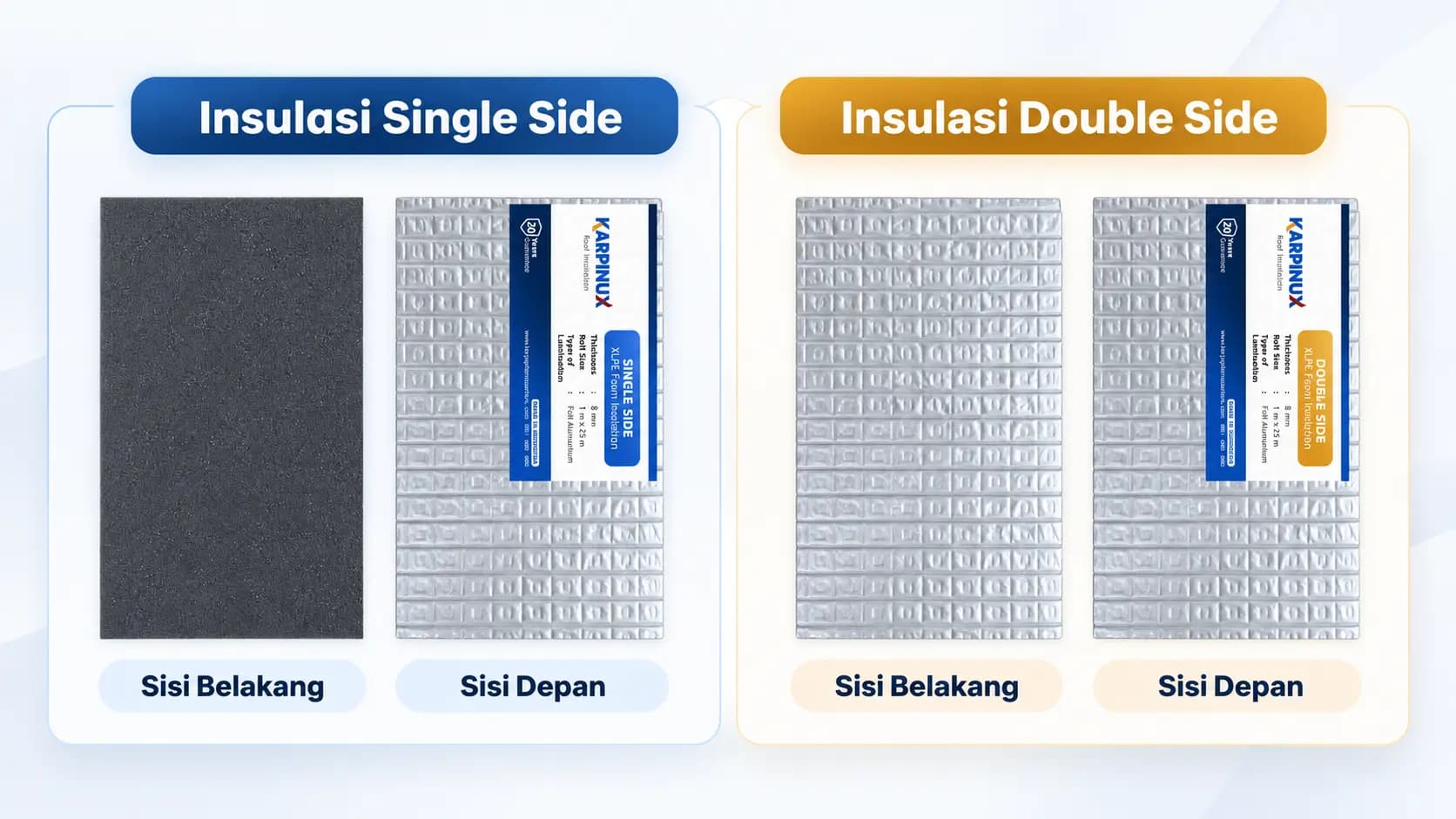
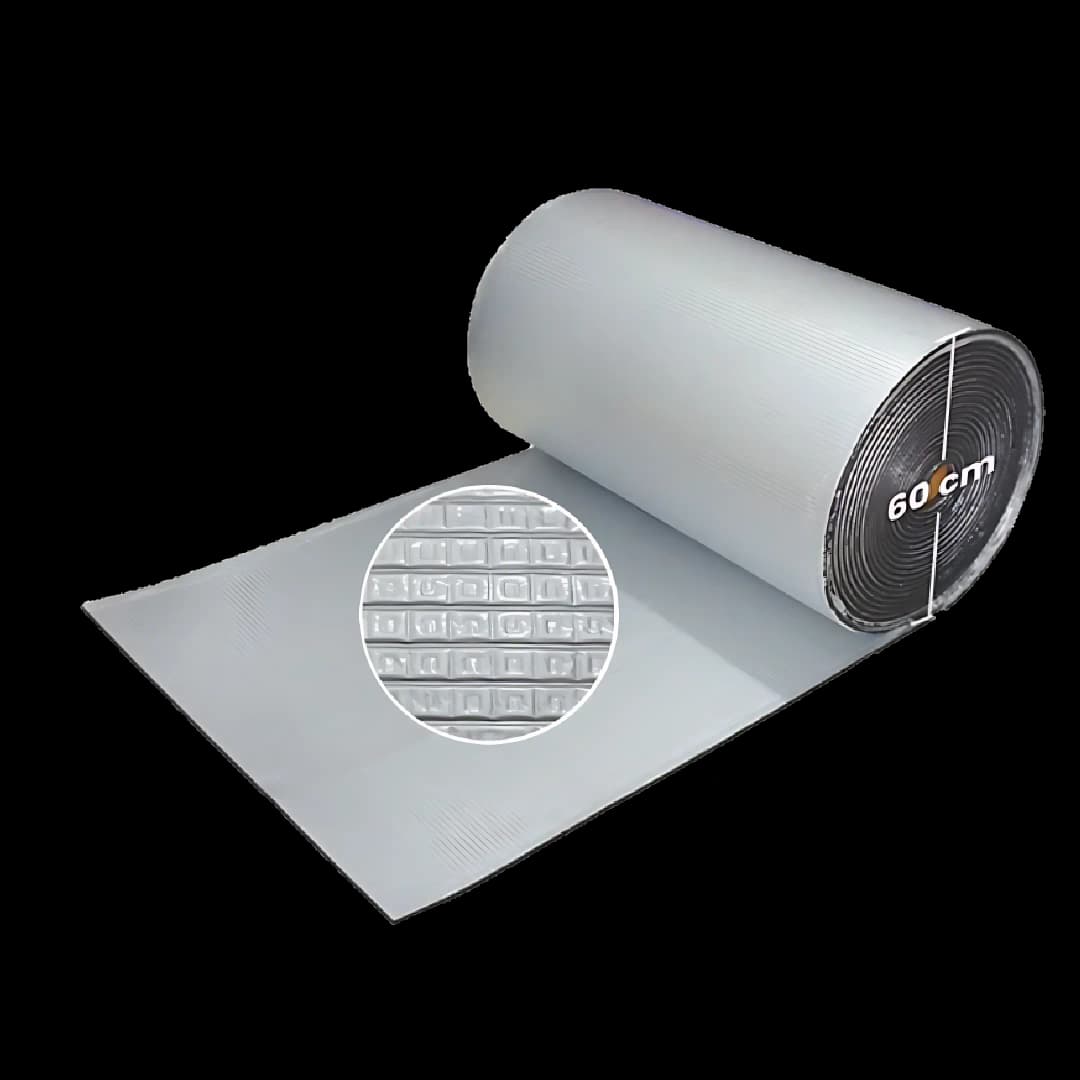
This product is also available in single-sided and double-sided options, with roll dimensions of 1 × 25 meters.
These options allow material requirements to be adjusted according to the roof structure and installation design.
Even so, it is important to remember that choosing thicker materials or using aluminium foil on both sides does not automatically make the entire house cooler.
The final results are still influenced by the type of roof, ventilation, air spaces, and installation quality.
To learn about the specifications, thicknesses, and product options, you can visit the Karpinux Roof Insulation from PT Karya Pilar Nusantara page.
Frequently Asked Questions About Roof Heat Insulation
Will a house with roof heat insulation definitely be cooler?
Not always. Insulation helps reduce heat transfer through the protected parts of a building. The final room temperature is still influenced by weather, ventilation, heat entering through walls and windows, and activities inside the house.
Is thicker roof heat insulation always better?
For the same material, greater thickness generally increases resistance to heat flow. However, installation results still depend on the material's characteristics and the roof construction conditions. Thickness should be selected based on requirements, not simply by choosing the largest size.
Can roof insulation be installed in an existing house?
In some types of construction, insulation can be added without dismantling the entire roof. However, the installation method depends on access, ceiling conditions, roof type, and the specifications of the material used.
Why is the room still hot even though aluminium foil has been installed beneath the roof?
Possible causes include incorrect positioning of the reflective layer, the absence of a suitable air gap, joints that leave gaps, or heat entering through other parts of the house.
Can roof insulation replace home ventilation?
No. Insulation and ventilation have different functions. Insulation helps reduce heat transfer, while ventilation helps exchange air. Both need to be considered to improve indoor comfort.
Conclusion: Fix the Causes, Rather Than Simply Adding More Layers
A house that still feels hot despite having roof heat insulation does not necessarily mean that all the installed insulation materials have failed to work.
The problem may come from unsuitable thickness, aluminium foil positioning, poorly finished joints, or inadequate ventilation beneath the roof.
In addition, heat entering through walls and windows, as well as activities inside the house, can also affect indoor comfort.
Therefore, when roof heat insulation seems ineffective, the first step should be to inspect the building conditions and identify the main causes.
If insulation replacement or additional insulation is required, choose materials based on the roof characteristics and application requirements.
PT Karya Pilar Nusantara provides Karpinux Roof Insulation made from XLPE foam with an aluminium foil layer, available in several thicknesses and configurations for various building requirements.
Explore the available materials and complete specifications on the Karpinux Roof Insulation page before determining your roof insulation requirements.