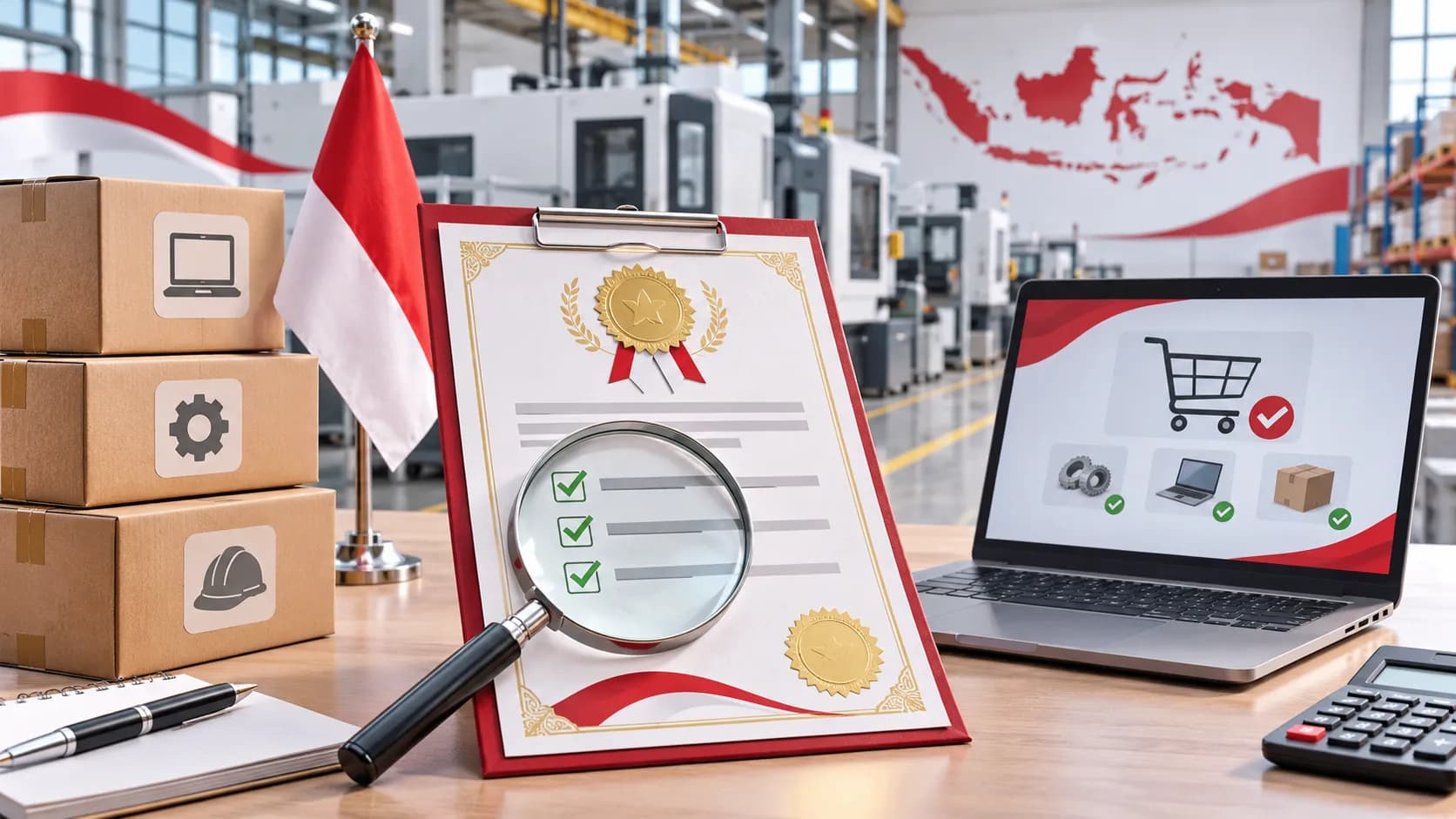
Procurement of goods and services is an important part of the operational activities of companies and government institutions. From purchasing office supplies to providing materials for infrastructure projects, everything requires a well-planned procurement process.
In practice, procurement is not as simple as finding a seller and purchasing goods. There are requirements to calculate, specifications to confirm, budgets to prepare, and suppliers to evaluate.
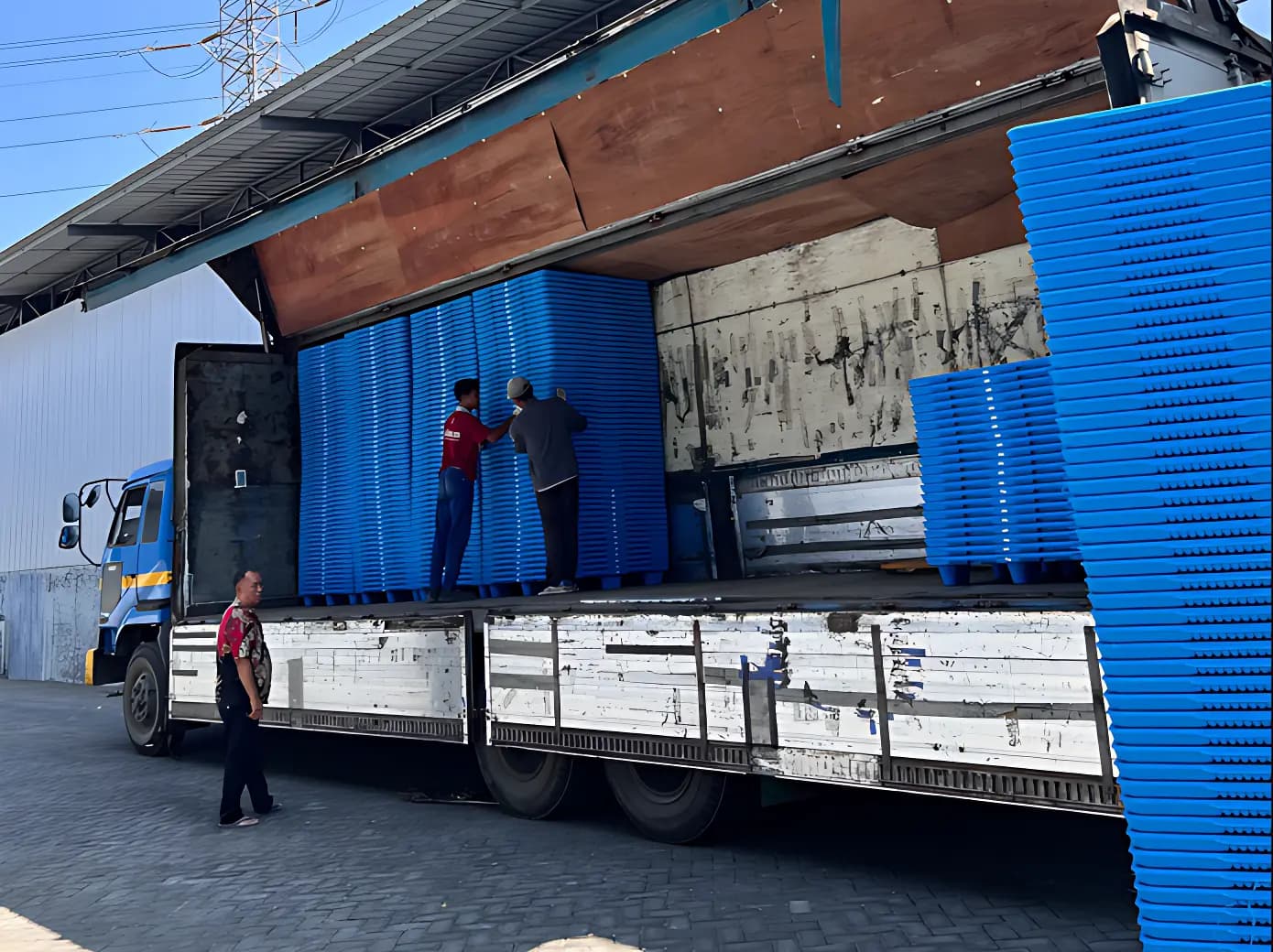
For example, a company that needs hundreds of pallets for a new warehouse must consider more than just the price per unit. Load capacity, dimensional suitability, product availability, and delivery schedules also determine whether the procurement process goes according to plan.
So, what exactly is procurement of goods and services? How does the process work, and what stages need to be considered?
What Is Procurement of Goods and Services?
This process includes identifying requirements, planning budgets, searching for suppliers, evaluating quotations, purchasing, and accepting the completed work or delivered goods.
In the business sector, procurement is often handled by the purchasing or procurement department. Meanwhile, in government institutions, these activities are carried out according to applicable procurement procedures and regulations.
Goods procurement focuses more on fulfilling product requirements, whether in the form of supplies, materials, equipment, or industrial goods.
Examples include procuring computers for offices, construction materials, pallets for warehousing, and road barriers for infrastructure projects.
Service procurement, on the other hand, involves obtaining services or work, such as consulting services, facility maintenance, and various forms of professional services.
Although they differ in terms of what is purchased, both share a similar objective: obtaining results that meet requirements while ensuring accountable budget utilization.
Procurement and Purchasing: Are They the Same?
The terms procurement and purchasing are often used interchangeably. However, they cover different scopes of work.
Procurement refers to the entire acquisition process, from understanding an organization's requirements to evaluating procurement results and supplier performance.
Meanwhile, purchasing is part of procurement and focuses more specifically on buying activities.
The differences can be seen in the following table.
|
|---|
Once the pallet specifications have been determined and a supplier has been selected, the purchasing team handles the ordering process according to the agreed terms.
Therefore, purchasing is not an entirely separate process from procurement, but rather one of its components.
Why Is Procurement Important for Companies and Institutions?
Well-managed procurement helps organizations maintain smooth operations while controlling budget utilization.
One of its most noticeable benefits is ensuring the availability of goods. Delays in materials or equipment can disrupt production schedules, construction work, and even service activities.
In construction projects, for example, delays in material deliveries can cause subsequent work to be postponed. As a result, operational costs may increase.
Procurement also plays a role in ensuring product quality.
Two products that look similar do not necessarily have the same specifications or performance capabilities. Therefore, purchasing decisions should not be based solely on the lowest price offered.
On the other hand, properly organized procurement documentation makes it easier for companies and institutions to trace transactions, evaluate suppliers, and account for budget utilization.
The point is that good procurement is not simply about successfully purchasing goods, but also about ensuring those goods are suitable and can be used as intended.
Types of Procurement of Goods and Services
Procurement types can be distinguished based on the items or services required. In Indonesia's government procurement system, the main classifications consist of the following four categories.
1. Goods Procurement
Goods procurement is the activity of obtaining products or physical items that can be used for specific purposes.
These goods may include operational supplies, machinery, vehicles, materials, and project support equipment.
Examples include procuring HDPE plastic pallets for warehouses, computers for workplaces, or road barriers for managing project areas.
In this type of procurement, product specifications, required quantities, quality, and delivery schedules are usually the main considerations.
2. Construction Works Procurement
Construction works procurement involves the implementation of construction, maintenance, demolition, or other construction-related activities.
Examples include the construction of buildings, bridges, infrastructure networks, and public facilities.
Unlike purchasing readily available goods, construction work generally involves activities performed on-site and inspection of the completed work based on contractual requirements.
3. Consulting Services Procurement
Consulting services are professional services that rely on expertise or analysis in a particular field.
Examples include building design services, engineering consulting, feasibility studies, and project supervision.
The evaluation does not focus solely on cost, but also on the supplier's competence, experience, and suitability of expertise for the required work.
4. Other Services Procurement
This category covers non-consulting services that require certain skills, equipment, or methods to complete the work.
Examples include cleaning services, security services, transportation, and facility maintenance.
In private companies, the classification of requirements may differ according to organizational structures and internal policies.
In addition to classifications based on requirements, government procurement also recognizes implementation through Swakelola (self-managed procurement) and suppliers. Swakelola refers to work carried out by parties permitted under applicable regulations, while procurement through suppliers involves businesses providing the required goods or services.
How Does the Goods Procurement Process Work?
The goods procurement process essentially connects the needs of users with suppliers capable of fulfilling them.
The process can be simple for routine requirements, but it may become more extensive when goods require special specifications, large quantities, or delivery to multiple locations.
In general, the process can be understood through three main phases.
Requirements Planning
The process begins when the requesting department submits a request for goods.
The relevant team then assesses whether the goods are actually needed, how many are required, when they must be available, and what budget can be allocated.
At this stage, specifications are an important consideration to ensure that the purchased goods match operational requirements.
Supplier Selection and Purchasing
Once the requirements are clear, the company begins searching for suppliers capable of fulfilling the request.
Quotations can be compared in terms of price, specifications, supply capacity, and delivery requirements.
The selected supplier then receives an order or contract according to the company's purchasing procedures.
Receipt and Evaluation
When the goods arrive, the procurement process is not immediately complete.
The goods must be inspected to ensure that their quantities and conditions match the order.
If any discrepancies are found, the company may request clarification or resolution from the supplier based on the applicable agreement.
This evaluation also serves as a reference when the company needs to conduct future procurement.

Stages of Goods Procurement: From Requirements to Handover
After understanding the overall process, the following are the common stages of goods procurement in companies. The sequence and documents used may vary according to each organization's policies.
1. Identifying Goods Requirements
The first stage is to clearly identify what is needed.
The requesting department must explain what goods are required, the quantity, their intended use, and when they must be available.
For example, a warehouse needs 200 pallets to support an increase in storage capacity.
The request should include information about pallet dimensions, the weight of the goods to be stored, and whether the pallets will be used on the floor, moved with forklifts, or placed in a racking system.
Complete initial information will make the following stages easier.
2. Preparing Specifications and Budgets
After the requirements have been identified, the company determines the product specifications and estimates the required budget.
Specifications may include dimensions, materials, load capacity, color, quality standards, and other technical requirements.
The budget must also consider additional costs such as shipping, loading and unloading, applicable taxes, or installation when required.
Calculations that focus only on product prices risk causing the final costs to exceed the planned budget.
3. Searching for Suppliers or Providers
The company then searches for suppliers, distributors, or manufacturers that provide products matching its requirements.
The search can be conducted through business referrals, product catalogs, company websites, or networks of suppliers with whom the company has previously worked.
At this stage, buyers need to ensure that suppliers have the ability to fulfill the request.
For large procurement quantities, production capacity and delivery readiness are factors that should be checked from the beginning.
4. Requesting and Evaluating Quotations
After identifying potential suppliers, the company can request price quotations.
A quotation should include product details, quantities, unit prices, delivery times, and payment terms.
If several quotations are available, comparisons should not be based solely on the total price.
Compliance with specifications, product quality, supply capacity, and the risk of delays must also be considered.
The supplier offering the lowest price is not necessarily the most efficient choice if the products do not meet requirements or delivery problems disrupt work schedules.
5. Issuing a Purchase Order or Contract
Once the quotation has been approved, the buyer issues an ordering document.
In business transactions, this document is commonly called a purchase order (PO).
For certain procurement activities, the parties may also use a work order or contract that explains their respective obligations.
These documents serve as references for the goods to be supplied, order quantities, prices, delivery schedules, and other agreed terms.
6. Delivery and Inspection of Goods
After the goods have been shipped, the receiving department conducts an inspection.
The inspection covers the quantity of goods, physical condition, compliance with specifications, and completeness of delivery documents.
When purchasing HDPE pallets, for example, inspections may cover dimensions, structural design, number of units, and load capacity specifications according to the ordering documents.
Goods that meet the requirements can then be accepted and recorded according to company procedures.
7. Payment and Supplier Evaluation
The final stage includes completing payment according to the transaction terms and evaluating the procurement results.
The evaluation may record delivery punctuality, product quality, document completeness, and the supplier's response when problems occur.
The results are useful for determining whether the supplier is suitable for future procurement activities.

Documents Required for Procurement
Procurement documents help ensure that every transaction has a clear basis.
The types and completeness of these documents depend on transaction value, company policies, and the regulations applicable to each organization.
The following documents are commonly used in corporate procurement.
| Document | Function |
|---|---|
| Purchase Requisition (PR) | Purchase request from the requesting department |
| Request for Quotation (RFQ) | Request for quotations from suppliers |
| Quotation | Details of prices and terms offered by the supplier |
| Purchase Order (PO) | Goods ordering document |
| Contract or Work Order (SPK) | Regulates agreements and work obligations |
| Delivery Note | Records the goods being delivered |
| Handover Certificate (BAST) | Proof of handover according to the transaction terms |
| Invoice | Payment billing document |
Additional documents may be required, such as tax invoices, testing certificates, warranty documents, or information on the Domestic Component Level (Tingkat Komponen Dalam Negeri or TKDN), where relevant.
Not all transactions require every document listed above. Small-value routine purchases may have different procedures from large-scale industrial material procurement.
For government procurement, documents and procedures follow applicable procurement regulations, including the use of technical specifications, Terms of Reference (Kerangka Acuan Kerja or KAK), or Owner's Cost Estimates (Harga Perkiraan Sendiri or HPS) under the required conditions.
Government Procurement of Goods and Services: Regulations and Methods
Government procurement of goods and services is subject to more specific regulations than ordinary corporate purchasing transactions.
In Indonesia, one of the primary legal foundations is Presidential Regulation Number 16 of 2018 concerning Government Procurement of Goods/Services, as amended by Presidential Regulation Number 12 of 2021 and Presidential Regulation Number 46 of 2025.
These provisions cover procurement activities carried out by government entities within the scope of the regulations, from identifying requirements to handing over the completed work.
In 2026, the Government Goods/Services Procurement Policy Agency (LKPP) also issued LKPP Regulation Number 3 of 2026 concerning Guidelines for the Preparation and Implementation of Government Procurement of Goods/Services Through Suppliers, as well as LKPP Regulation Number 2 of 2026 concerning the Electronic Catalog.
Supplier Selection Methods
In government procurement, supplier selection methods are determined based on applicable regulations and the characteristics of the procurement.
Some of the recognized methods include:
E-purchasing
Purchasing through an electronic catalog system in accordance with applicable regulations. This method allows procurement to use product information and transaction mechanisms available within the system.
Direct Procurement
A supplier selection method for procurement that meets the value limits and requirements specified in the regulations.
Direct Appointment
Supplier selection under certain circumstances permitted by regulations. This method does not mean that every requirement can be directly assigned to a supplier without meeting the applicable conditions.
Tender and Fast Tender
Selection methods used for procurement with certain conditions and requirements. Tender and Fast Tender each have their own implementation procedures.
Selection
A selection method used to obtain consulting service providers in accordance with applicable regulations.
Each method has different procedures, requirements, and evaluation mechanisms.
Therefore, parties conducting government procurement need to review the applicable regulations before determining the procurement method.
Official regulatory information and guidelines can be accessed through the LKPP Legal Documentation and Information Network.
The Role of Domestic Products in Procurement
The use of domestic products is also an important consideration in government procurement policies.
For procurement that requires the use of domestic products or compliance with TKDN requirements, supporting documents and product conformity must be examined based on applicable regulations.
For both institutions and suppliers, this makes information about product origin, specifications, and supporting documents an important part of procurement preparation.
It is important to remember that private companies do not automatically follow all government procurement procedures. Private-sector procurement mechanisms generally follow internal policies, contracts, and other regulations relevant to their business activities.
How to Choose the Right Supplier or Goods Provider
Selecting a supplier is one of the important decisions in procurement.
Price is certainly a consideration, but several other factors are equally important.
Product Specification Compliance
Make sure the products offered match their intended use.
In industrial material procurement, differences in dimensions, materials, or capacity can affect product performance in the field.
Technical information should be reviewed before the transaction is approved.
Legality and Document Completeness
For business-to-business transactions, supplier legality information can support the verification process.
Documents such as business entity identification, Business Identification Number (NIB), Taxpayer Identification Number (NPWP), and supporting product documents may be requested according to the needs and requirements of the transaction.
If procurement requires specific certificates or test results, ensure that the documents provided are relevant to the products offered.
Ability to Fulfill Order Quantities
Suppliers must have the capacity to provide the required quantity of goods.
An order of 20 units is certainly different from an order of 2,000 units, particularly in terms of production, product availability, and delivery.
For projects with tight schedules, confirmation of supply capacity should be obtained before ordering.
Delivery Schedule and Coverage
Check the estimated delivery time, destination, and which party is responsible for logistics costs and processes.
For intercity or interisland procurement, these factors can have a significant impact on total costs and project schedules.
After-Sales Support
Warranty terms, complaint submission procedures, and the handling of nonconforming goods should also be understood from the beginning.
Suppliers who can provide clear information will make coordination easier, especially for repeat procurement.
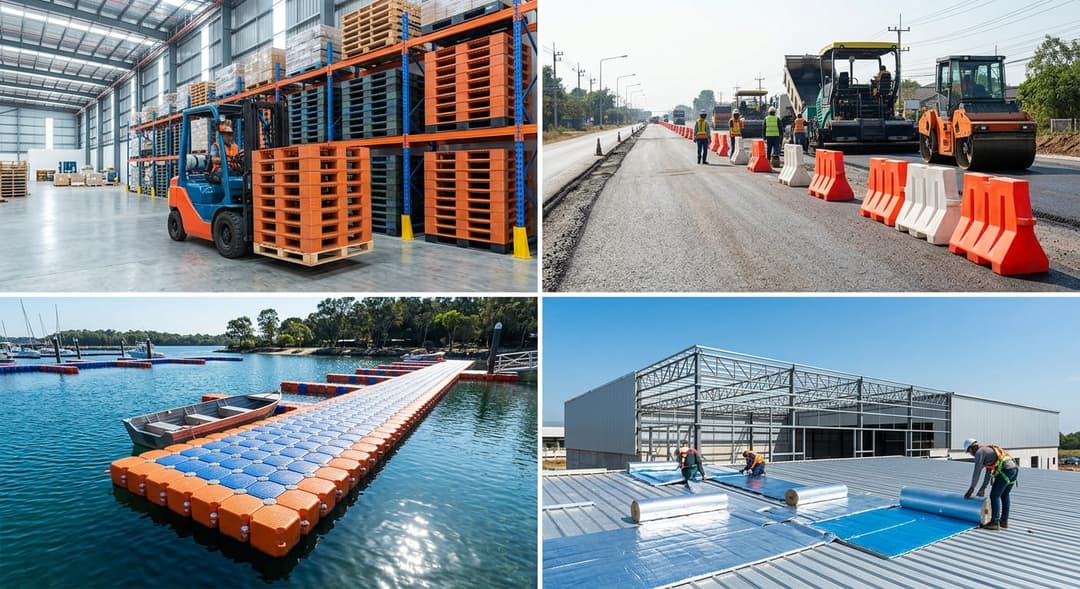
Examples of Goods Procurement for Project and Industrial Requirements
Each industry has different procurement requirements.
For example, logistics companies deal more frequently with warehousing equipment, while infrastructure contractors require materials or equipment to support field operations.
The following examples can help clarify their applications.
Procurement of HDPE Pallets for Warehousing
Pallets are used to support, store, and move goods in logistics operations.
When procuring pallets, dimensions alone are not sufficient as the basis for selection.
Buyers also need to consider static, dynamic, and racking load capacities according to how goods will be stored and moved.
As a reference, HDPE pallets from Karya Pilar Nusantara are available for various warehousing and industrial requirements.
Procurement of Road Barriers for Road Projects
Construction projects and vehicle traffic management areas often require barriers to help manage traffic lanes or separate work areas.
In procurement, the number of units, length of the installation area, material, and placement system need to be calculated.
HDPE road barriers are one category of products that can be used for temporary barriers according to their functions and specifications.
If a project requires protection against vehicle impacts, the selected products must meet the appropriate safety and testing requirements.
Procurement of Floating Cubes for Water Infrastructure
For dock, floating bridge, or other water facility projects, material procurement requires more specific considerations.
The number of modules, required area, buoyancy, operational loads, and water conditions are important factors in planning.
HDPE floating cube systems are an example of modular products used for various floating facility applications.
Procurement of Roof Insulation for Industrial Buildings
Warehouses, factories, and workshops may require insulation materials to help control heat transfer through the roof.
For this type of procurement, buyers need to know the installation area, roof construction type, insulation material, thickness, and installation requirements.
One product category is XLPE foam-based roof insulation, which can be used in various buildings according to the material characteristics and roof design.
These four examples show that goods procurement cannot be treated the same way for every requirement.
Technical specifications must always be adjusted to the intended use, site conditions, and requirements of each project.
Common Mistakes in the Procurement Process
Although procurement procedures may seem straightforward, implementation does not always go according to plan.
One common problem is incomplete product specifications when requests for quotations are sent.
As a result, quotations from different suppliers become difficult to compare because each supplier offers products with different characteristics.
Another mistake is focusing too heavily on unit prices.
Goods that are cheaper at the time of purchase do not necessarily result in lower operating costs. Maintenance, damage, replacement, and delivery costs can also affect overall expenditure.
Procurement schedules that are too close to the intended usage date also risk causing delays, especially if the goods must be manufactured or shipped from distant locations.
Another issue concerns communication between the goods users, the purchasing team, and suppliers.
Changes in quantities or specifications that are not properly documented can lead to misunderstandings when the goods are received.
To reduce these risks, companies need to agree on requirements from the beginning, clarify ordering documents, and ensure that every change is communicated to the relevant parties.
A well-organized procurement process in the early stages is generally easier to control when it reaches the delivery and handover stages.
FAQ: Frequently Asked Questions About Procurement
What is meant by procurement of goods and services?
Procurement of goods and services is the process of obtaining products, works, or services required by an organization, from identifying requirements and selecting suppliers to purchasing and accepting the results.
What is the difference between procurement and purchasing?
Procurement covers the entire acquisition process, including planning and supplier evaluation. Purchasing focuses more on buying activities, ordering, and transaction administration.
What are the stages of goods procurement?
In general, the stages include identifying requirements, preparing specifications and budgets, searching for suppliers, evaluating quotations, ordering or contracting, receiving goods, and completing payment and evaluation.
Must goods procurement always go through a tender?
Not always. For private companies, supplier selection methods follow company policies and requirements. In government procurement, several selection methods are available, and their use is determined by regulations.
What should be considered when selecting a supplier?
Factors that need to be examined include specification compliance, legality, supply capacity, price, delivery schedules, and after-sales services.
Is goods procurement always carried out in large quantities?
No. Procurement can be conducted for small, routine requirements as well as large-scale projects. The procedures and documents used are usually adjusted to the characteristics and value of the transaction.
Conclusion: Good Procurement Starts with Planning
Procurement of goods and services is not merely about purchasing, but involves a series of activities to ensure that organizational requirements are properly fulfilled.
From determining specifications and preparing budgets to selecting suppliers and inspecting delivered goods, every stage plays a role in maintaining quality and smooth operations.
For companies and institutions, clear planning makes it easier to control costs, reduce the risk of product nonconformity, and maintain operational or project schedules.
Particularly for industrial goods procurement, selecting suppliers who understand technical requirements, supply capacity, and delivery conditions is an important part of the process.
To explore examples of products supporting project, construction, and industrial requirements, further information is available through the PT Karya Pilar Nusantara website.