When building docks, floating bridges, or facilities over water, choosing the right pontoon material is one of the important decisions to make from the beginning. Two options worth considering are plastic floating pontoons and concrete pontoons.
Both serve almost the same purpose: providing a floating surface to support activities on the water. However, there are considerable differences in their materials, installation methods, maintenance requirements, and construction needs.
Pontoons made from HDPE plastic are generally chosen because their modules are lightweight and easy to assemble. Concrete pontoons, on the other hand, have a heavier structural design and can be engineered for specific applications that require greater structural rigidity.
So, which one is the better choice? The answer depends on the type of project, water conditions, and the loads the pontoon will need to support.
Plastic and Concrete Floating Pontoons: What's the Difference?
A pontoon is a structure designed to float on the water's surface. It can serve as a platform for docks, connecting walkways, working areas, or other facilities supporting activities on the water.
The main differences between plastic and concrete pontoons lie in their materials and structural designs.
Plastic Floating Pontoons
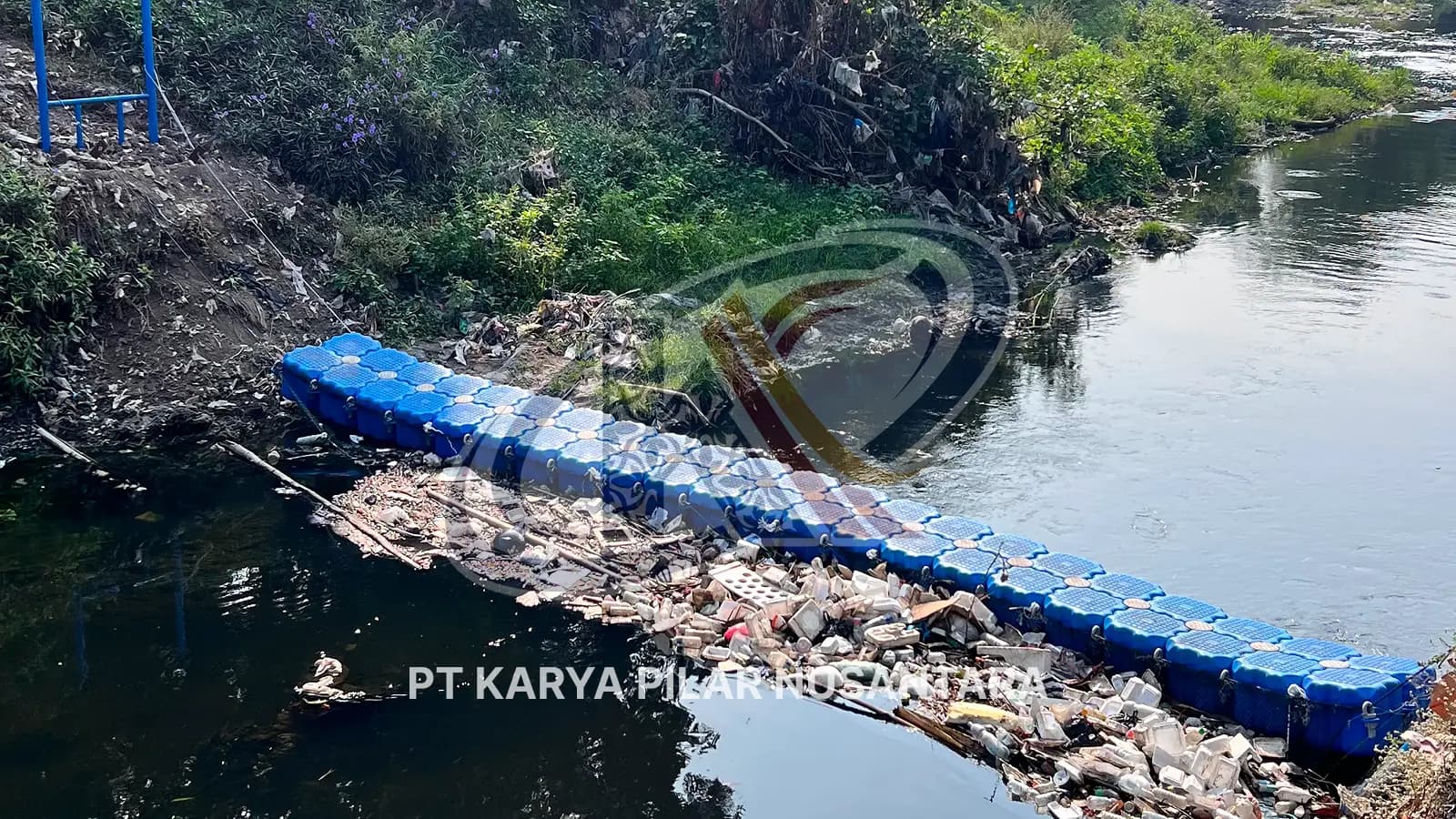
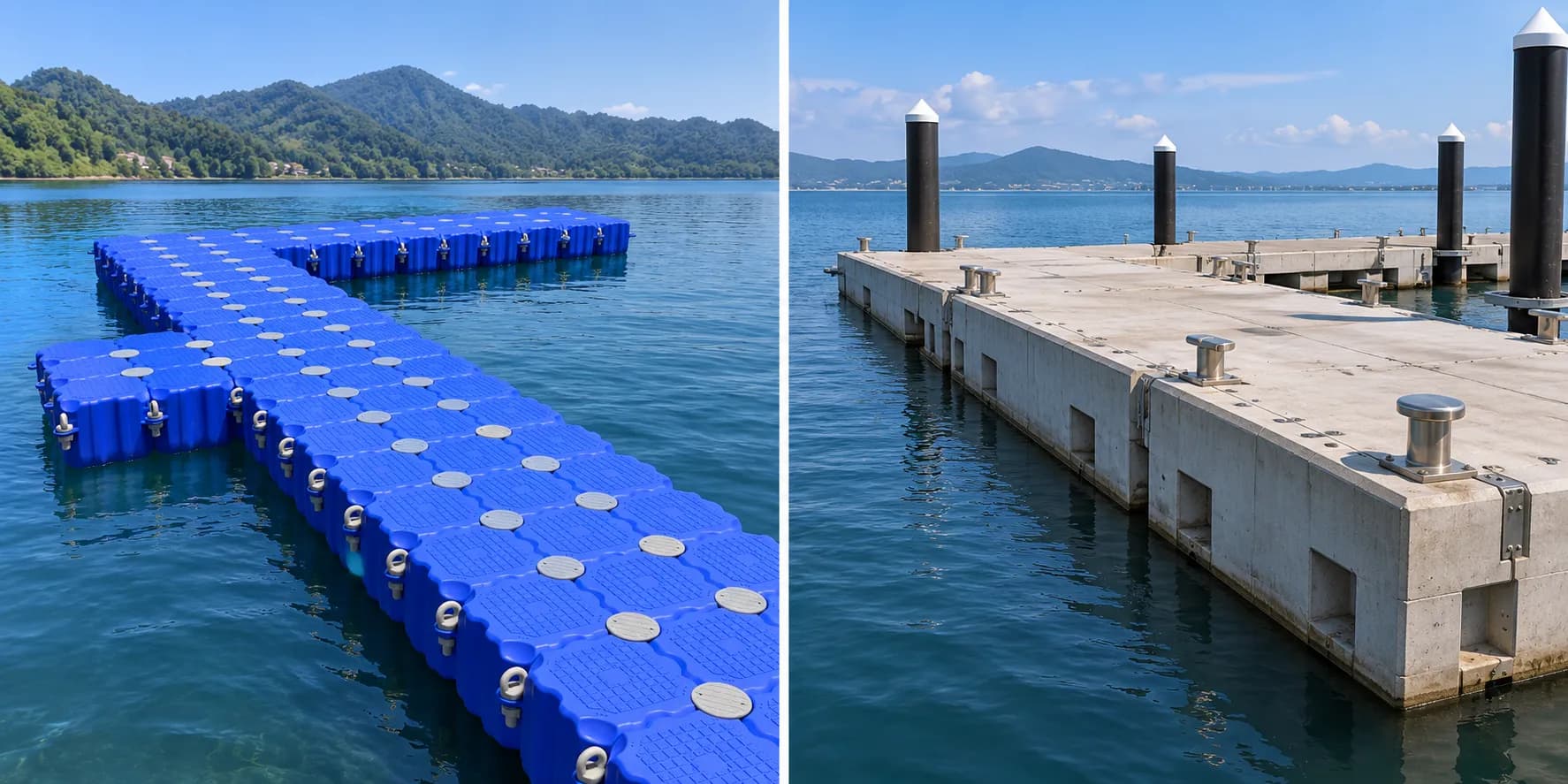
A plastic floating pontoon is a floating structure made from polymer materials, one of which is High Density Polyethylene (HDPE).
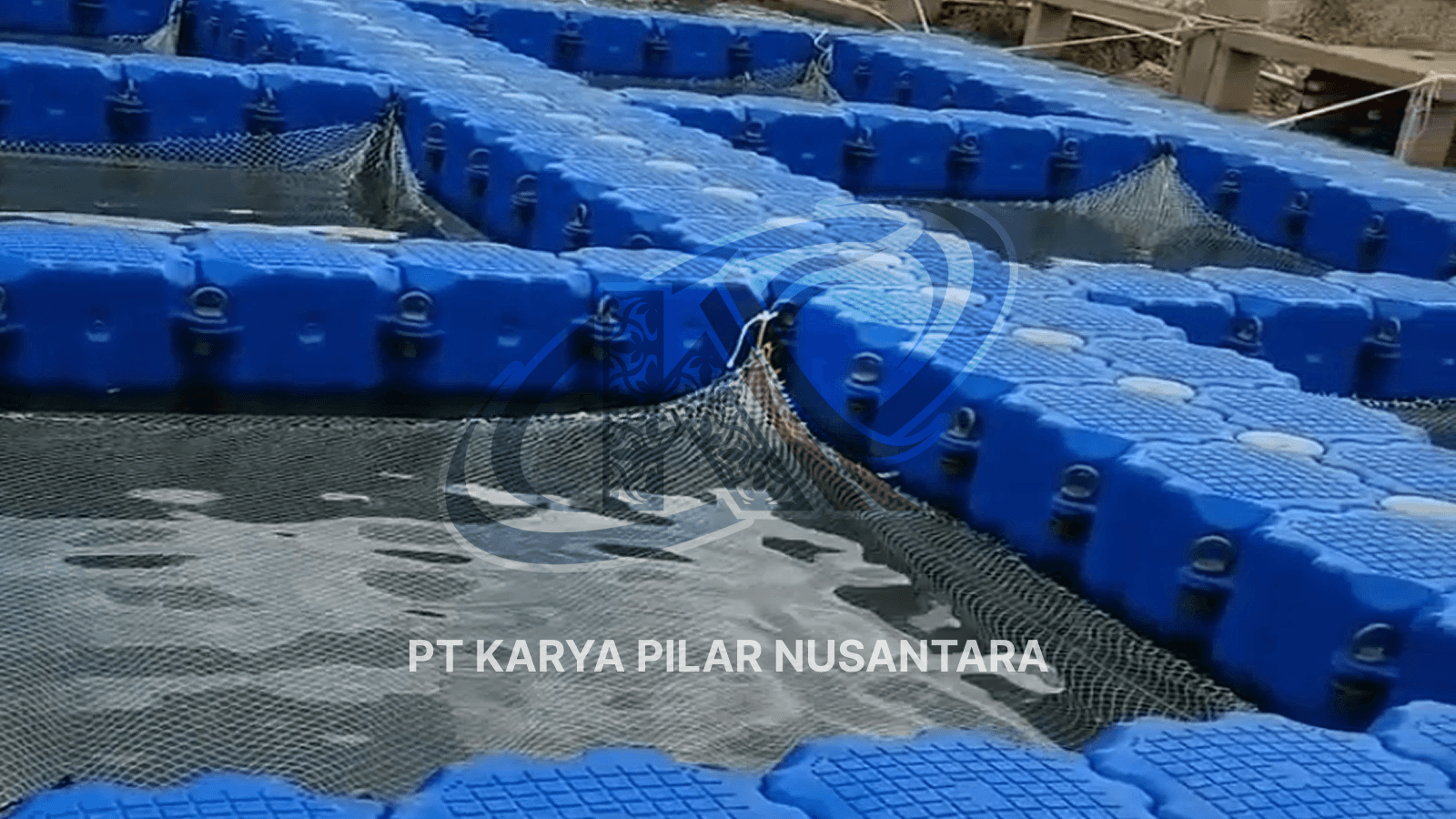
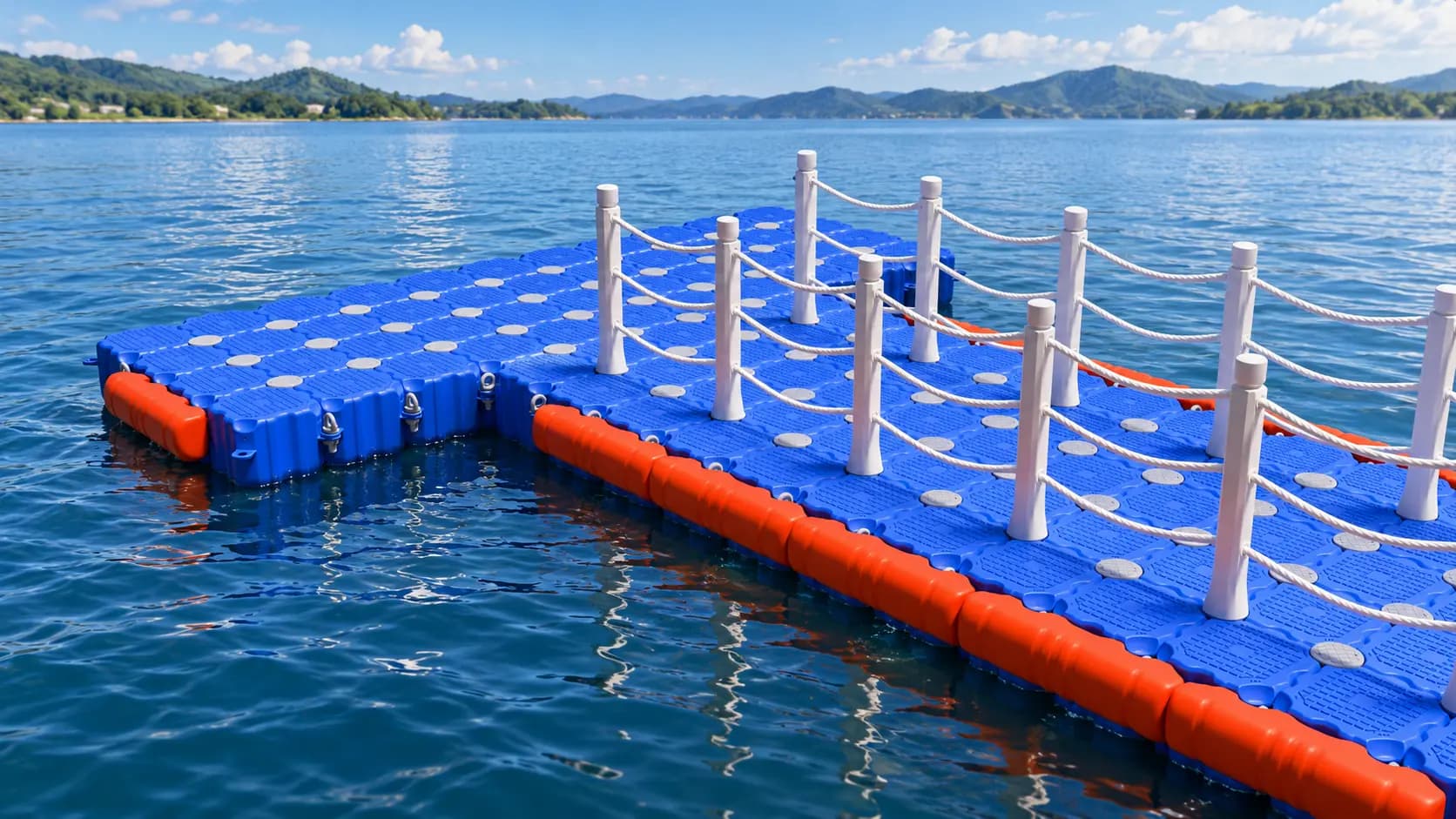
In a modular system, the pontoons are manufactured as hollow cubes. Each cube is then connected using special locking components to create a floating platform of the required size and configuration.
One of the advantages of this system is that it can be dismantled, reassembled, or rearranged when project requirements change.
For this reason, plastic pontoons are widely used for floating docks, connecting bridges, fish cages, and water tourism facilities.
Concrete Pontoons
A concrete pontoon is a floating structure that uses concrete as its main construction material. Unlike ordinary solid concrete blocks, floating concrete pontoons are designed with buoyancy chambers or special construction systems that allow them to float.
This type of pontoon generally has larger dimensions and greater weight. In practice, concrete pontoons can also be constructed from several precast modules connected into a single structure.
Therefore, concrete pontoons can also use modular systems, although their transportation and installation processes differ from those of HDPE plastic cubes.
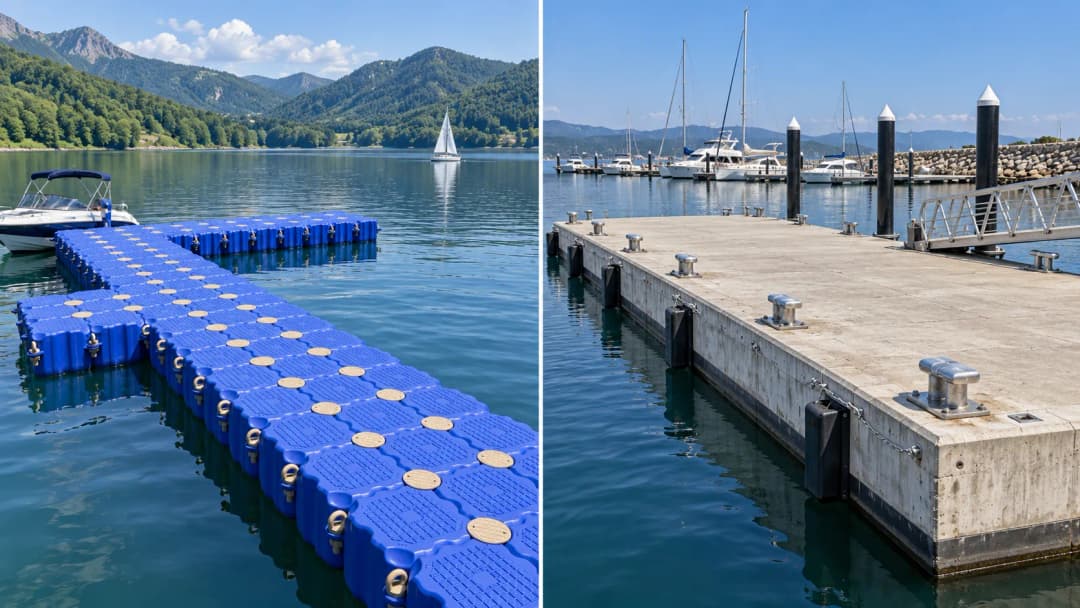
It is also important to distinguish between floating concrete pontoons and permanent concrete docks. Permanent docks generally use piles as their supporting structures, while concrete pontoons remain afloat and move with changes in water levels according to their mooring or guiding systems.
Installation and Transportation: Which Is More Practical?
The most noticeable difference between plastic and concrete pontoons can be seen in how they are transported and installed.
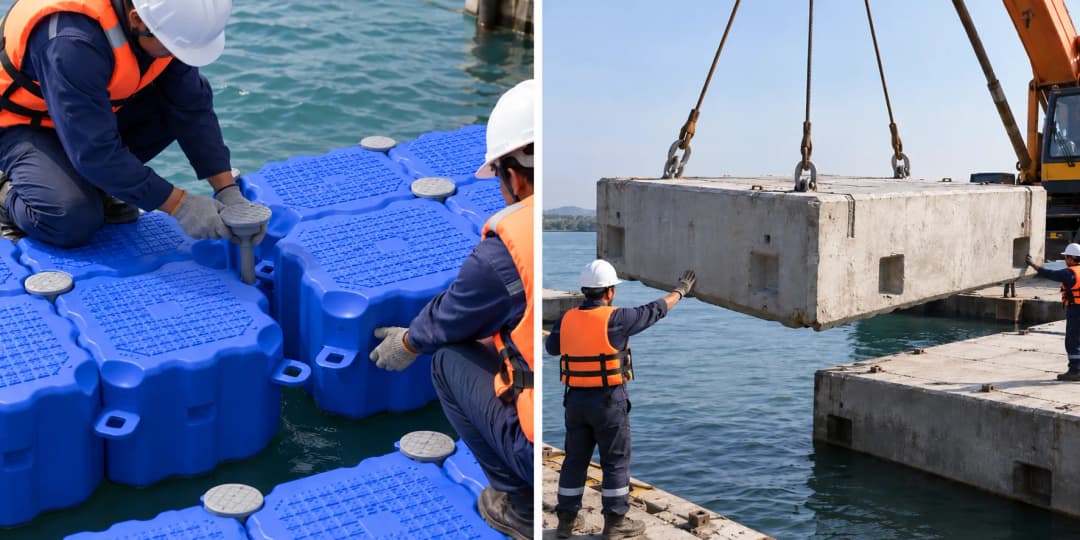
Modular HDPE pontoons consist of relatively small units, making them easier to transport to a project location. Once they arrive, the modules can be arranged and connected using the appropriate locking system.
This approach is especially helpful for projects with limited access, such as lakes, riverbanks, or tourist destinations that are difficult to reach with heavy lifting equipment.
Installation can also be carried out in stages. If the dock needs to be extended or the platform configuration needs to change, the modules can be rearranged accordingly.
Concrete pontoons, meanwhile, generally require heavier material handling. Transporting and positioning large modules may require cranes, workboats, or other lifting equipment.
However, precast concrete pontoons have their own advantages because part of the construction work can be completed before the modules are transported to the installation site.
Therefore, for projects that prioritize easy transportation and flexible configurations, modular plastic pontoons tend to be more practical. Even so, the total installation time still depends on the project's size, site accessibility, and the mooring system used.
How Do Both Types Handle Changing Water Levels?
In rivers, reservoirs, and coastal areas, water levels may change due to seasonal conditions, river discharge, or tides.
This is one of the reasons floating dock systems are used.
Unlike permanent docks, which generally maintain a relatively fixed deck elevation, floating pontoons can move up and down with the water's surface.
Both plastic and floating concrete pontoons have this capability. In other words, the ability to follow tidal movements is not an advantage exclusive to either material.
What distinguishes them is their movement characteristics, structural dimensions, and positioning systems.
Modular HDPE pontoons have multiple connection points. This arrangement allows relatively flexible platform configurations, but every connection is still affected by water movement and the loads placed on the structure.
Concrete pontoons can have different movement characteristics due to their dimensions and structural rigidity. However, greater weight does not necessarily mean that a pontoon will be more stable under every wave condition.
Both plastic and concrete pontoons require suitable mooring or anchoring systems to keep their positions under control.
In waters with strong currents, large waves, or heavy vessel traffic, more detailed planning is necessary before selecting a pontoon type.
Strength and Load Capacity: Material Isn't Everything
The assumption that concrete is always stronger than plastic cannot be used directly to determine which pontoon is best.
Concrete is well known as a construction material with good compressive strength. HDPE, meanwhile, is lightweight, tough, and resistant to corrosion unlike metals.
However, a pontoon's ability to support loads is not determined solely by the strength of its material.
For floating structures, load capacity is influenced by buoyancy volume, structural weight, load distribution, and water conditions.
For example, a pontoon used as a pedestrian walkway will have different requirements from one intended to support machinery, project equipment, or loading and unloading activities.
Loads are not always distributed evenly. When several people gather along one side, the load distribution changes and may affect the platform's inclination.
In modular pontoon systems, the condition of the connections between units is also an important consideration.
For this reason, HDPE and concrete pontoons should be compared based on the planned or tested capacity of the complete system, rather than simply the type of material used.
What About Karpinus HDPE Floating Cubes?
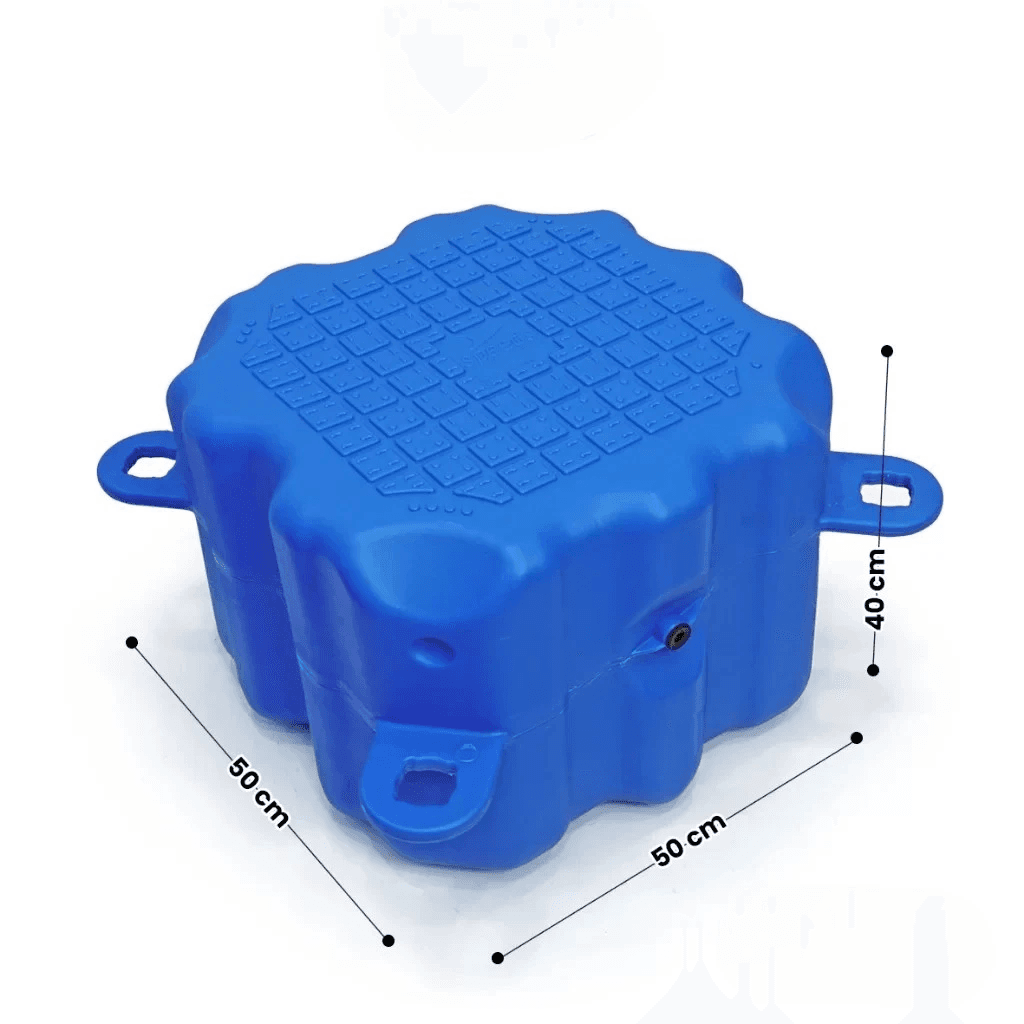
Karpinus Floating Cubes are made from HDPE material, with each module measuring 50 × 50 × 40 cm.
These units can be assembled into floating platforms using pins and locking components. Their surfaces also feature textured patterns to help provide grip in wet conditions.
The system allows floating docks and walkways to be constructed in configurations that can be adapted to specific project requirements.
For operational use, the load capacity must still follow the product specifications and calculations for the complete structure, including the number of modules, load distribution, and anchoring system.
Maintenance and Durability for Long-Term Use
Waterfront environments have different conditions from those on land. Structures used in these areas must withstand water exposure, changing weather conditions, sunlight, and, in some locations, high salt concentrations.
HDPE offers advantages because it does not rust or rot like wood. These characteristics make it suitable for various waterfront applications.
However, plastic pontoons still require maintenance.
The module surfaces need to be cleaned of algae and dirt. Locking components must also be inspected regularly, including checking for possible damage caused by impacts, movement, or improper use.
Long-term sunlight exposure must also be considered because a plastic material's ultraviolet resistance depends on its quality and formulation.
For concrete pontoons, inspections focus more on structural conditions, such as cracks, connections, and potential deterioration or corrosion in reinforcement and metal components.
Concrete pontoons that are properly designed and maintained can be used for long-term applications. However, structural damage may require more complex repair procedures.
Therefore, it would be inaccurate to assume that one type of pontoon is always more durable than the other.
Actual durability depends on construction quality, environmental conditions, operating loads, and maintenance throughout the service period.
Cost Comparison: Look Beyond the Initial Price
When planning a project, material prices are often a major consideration. However, the cost of building a pontoon does not end with purchasing the floating units.
Modular HDPE plastic pontoons generally offer advantages in transportation and assembly. In certain projects, these characteristics can help reduce the need for heavy lifting equipment and on-site construction work.
However, a large number of modules may be required, particularly for larger platforms. The cost of connectors, gangways, handrails, fenders, and anchoring systems must also be included in the budget.
Concrete pontoons require cost calculations for structural fabrication, module transportation, lifting operations, and installation.
For certain applications, the initial cost of concrete pontoons may be higher due to their dimensions and handling requirements. However, this difference cannot be used as a general rule for every project.
Concrete pontoons manufactured at a certain scale or installed using efficient construction methods may have different economic considerations.
Other factors include costs throughout the service period, such as inspection, cleaning, repairs, and potential modifications or structural extensions.
For this reason, cost comparisons should cover the project's total requirements, from initial installation through operation, rather than focusing only on the unit price of the material.
When Should You Choose an HDPE or Concrete Pontoon?
Not every project requires the same pontoon construction system. The following table compares the characteristics of both types to help with the selection process.
Projects Suitable for Plastic Pontoons |
|---|
HDPE plastic pontoons are worth considering for projects that require relatively straightforward installation, flexible configurations, and less complicated material transportation.
Examples include small docks, floating pedestrian bridges, fish cage working platforms, and water tourism facilities where site conditions have been assessed as suitable.
Modular systems are also useful when the platform's size or shape may need to change in the future.
Projects That May Consider Concrete Pontoons
Floating concrete pontoons may be considered for projects requiring larger modules, structures with particular rigidity characteristics, or specialized designs for operational activities.
For example, concrete pontoons are used in dock facilities and maritime infrastructure developments that require specific structural calculations.
However, their selection must still account for site accessibility, lifting equipment capacity, wave conditions, construction costs, and maintenance requirements.
In other words, concrete pontoons are not automatically the better choice for heavy loads, just as plastic pontoons are not always the most economical option.
Both should be compared based on the same project requirements and technically supported specifications.
What to Check Before Building a Floating Pontoon
Before deciding on a material, several site conditions should be examined.
First, determine the pontoon's intended function. Will it be used as a pedestrian walkway, boat mooring platform, aquaculture facility, or operational platform? Its intended purpose will influence the required size and structural characteristics.
Second, consider the water conditions. Information about water depth, currents, waves, tidal variations, and seabed or riverbed conditions is necessary to determine whether a pontoon system can be used safely.
Third, calculate the expected loads. The weight of users, equipment, additional facilities, and the effects of moored vessels must be considered. Do not rely solely on platform area when determining load capacity.
Fourth, examine access to the location. Sites that are difficult to reach with heavy equipment may influence the installation method and the type of material that can reasonably be selected.
Fifth, prepare a mooring or anchoring system design. Although pontoons float, their positions must still be controlled to prevent excessive movement caused by currents, wind, waves, or vessel activities.
For modular HDPE pontoons, planning must also account for the platform configuration, locking system, and supporting accessories.
Using the floating cube layout design feature available on this page, an initial platform configuration can be developed before calculating the required materials in greater detail.
However, the visual layout must still undergo technical assessment before being used as a final structural design.
FAQ: Common Questions About Floating Pontoons
Are plastic floating pontoons strong enough for docks?
HDPE plastic pontoons can be used for docks when the number of modules, configuration, connection system, and load capacity have been designed to meet the project requirements. Structural strength cannot be determined solely by the plastic material used.
Can HDPE pontoons be used in seawater?
As a material, HDPE is suitable for use in seawater environments. However, the suitability of the complete pontoon system must be evaluated based on waves, currents, wind, tides, and vessel mooring requirements.
Can concrete pontoons also follow tidal movements?
Yes. Floating concrete pontoons are designed to remain afloat and can follow changes in water levels. This is different from permanent concrete docks that are supported by fixed structures.
Which is cheaper, plastic or concrete pontoons?
Costs depend heavily on project size, load requirements, transportation, installation equipment, anchoring systems, and maintenance. Plastic pontoons may be more economical under certain conditions, but neither material is always the cheapest option.
Can modular pontoons be dismantled and relocated?
In HDPE floating cube systems, modules can generally be dismantled and reassembled as long as the components remain in suitable condition. Relocation must still consider the condition of the connectors, platform configuration, and anchoring system.
Conclusion: Choose a Pontoon That Fits Your Project
Plastic floating pontoons and concrete pontoons have different characteristics in terms of materials, transportation, installation, and maintenance requirements.
Modular HDPE plastic pontoons offer advantages in assembly and configuration flexibility. These characteristics make them attractive for various waterfront facilities that require adaptable layouts.
On the other hand, floating concrete pontoons remain a suitable option for certain construction applications when supported by an appropriate structural design.
Material selection should not be based on assumptions that plastic is always cheaper or concrete is necessarily stronger. Site conditions, pontoon functions, operating loads, and overall project costs are more important considerations.
For projects requiring a modular system, Karpinus Floating Cubes can be one of the options worth considering. These HDPE products are manufactured directly at the factory and can be assembled using locking components and supporting accessories.
Information about dimensions, product options, and accessories is available on this page. For procurement requirements, consult the PT Karya Pilar Nusantara team regarding platform dimensions, intended use, and water conditions so the configuration and material requirements can be planned more accurately.