Does your home feel hot during the day even though it already has a ceiling? One source of heat that needs attention is the roof.
The roof surface is directly exposed to sunlight. This heat energy can then transfer to the area beneath the roof through radiation, conduction, and air movement, eventually affecting the indoor conditions of the house.
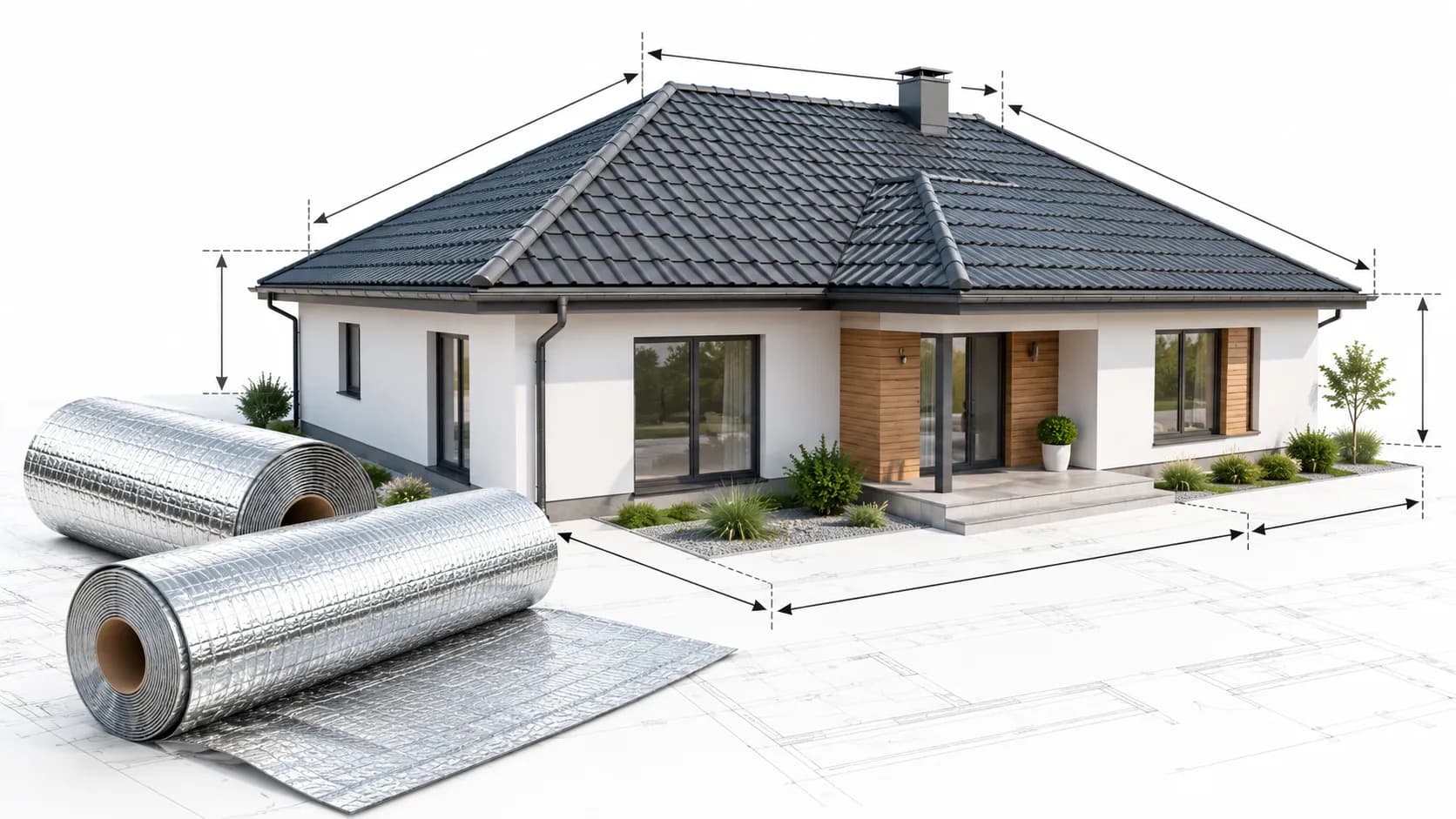
Therefore, using home roof heat insulation is one way to help control this heat transfer.
However, when searching for materials, several options often appear almost identical: aluminium foil, foam insulation, and bubble foil.
All three can be used in roofing systems, but their working mechanisms and characteristics are not entirely the same.
So, which one should you choose?
Why Can Your Roof Make Indoor Spaces Feel Hot?
Before comparing materials, we first need to understand how heat from the roof can enter a house.
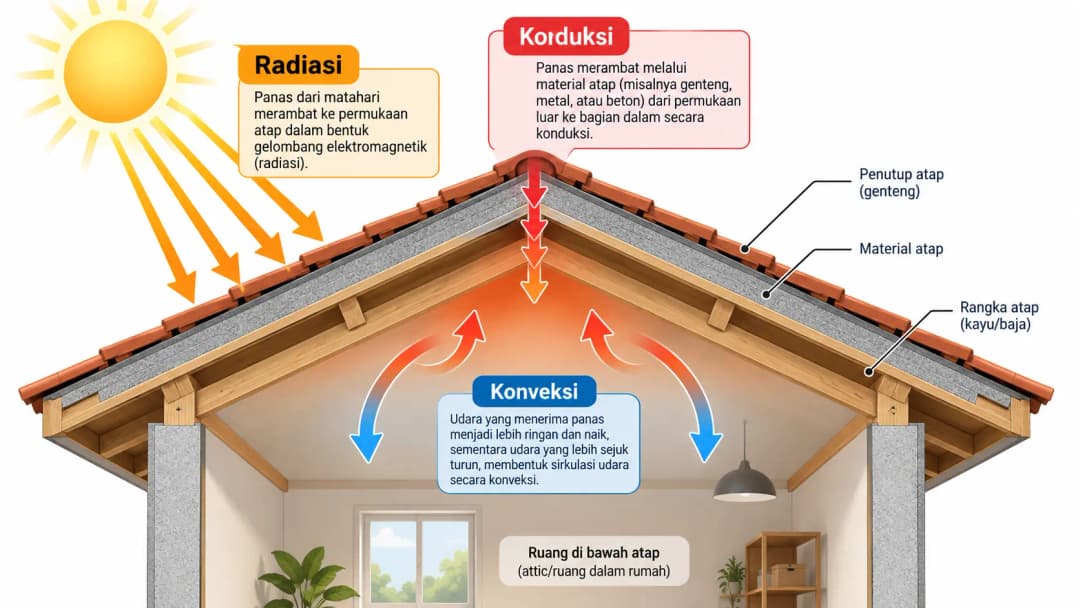
In general, there are three mechanisms of heat transfer.
Radiation occurs when a heated roof surface emits energy toward the area beneath it.
Conduction occurs when heat travels through solid materials, for example, from roofing sheets to the frame or layers in direct contact with them.
Meanwhile, convection occurs when heated air moves and carries energy to other areas.
Because several mechanisms occur simultaneously, the effectiveness of roof heat insulation is not determined solely by how shiny a material is.
The type of roof, ventilation, air space, material thickness, ceiling structure, and installation method also determine the overall performance of the system.
Aluminium Foil, Foam, and Bubble Foil Work Differently
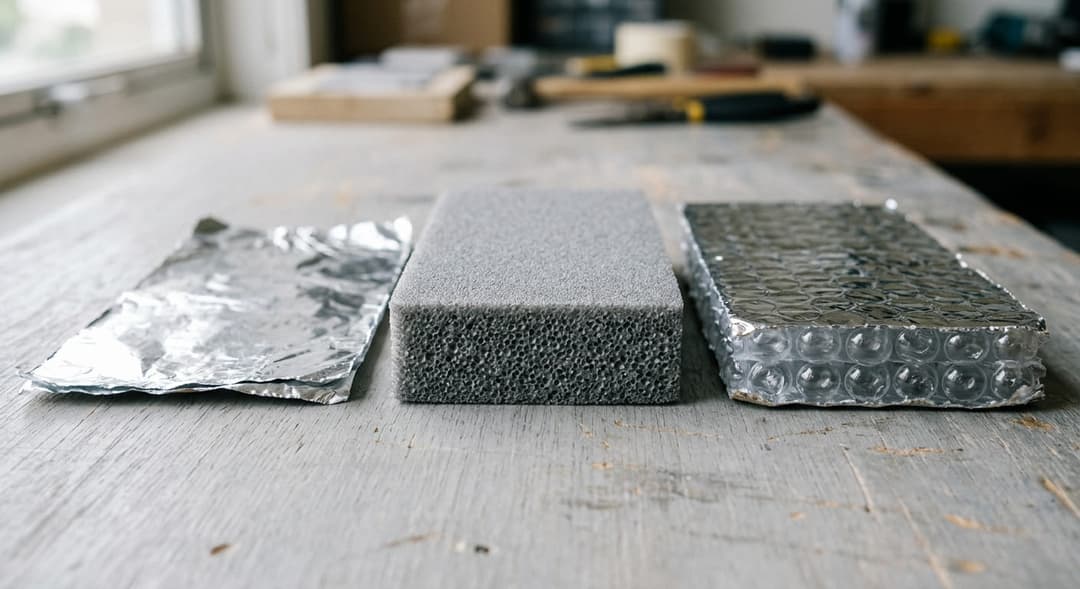
Although they are often grouped into the same product category, aluminium foil, foam, and bubble foil are not identical.
Aluminium foil in insulation systems primarily functions as a reflective surface.
Foam uses a material structure with low thermal conductivity to help resist heat flow through the material layer.
Meanwhile, bubble foil combines a reflective surface with a layer of air bubbles.
Because their mechanisms are different, comparing them based only on price per meter or thickness is not enough.
Let's examine them one by one.
Aluminium Foil: Controlling Radiant Heat
Aluminium foil is commonly used as a reflective layer in roof construction.
Aluminium surfaces have low emissivity, which helps reduce energy transfer through radiation.
This is why aluminium materials are frequently used in radiant barriers and reflective insulation.
However, there is an important factor to consider.
A reflective surface works optimally in controlling radiation when it faces an air space or air gap. If the foil surface is directly sandwiched between two solid materials, its reflective mechanism does not work in the same way.
Advantages of Aluminium Foil
The material is relatively thin and lightweight, so it does not require a thick insulation layer.
Aluminium foil can also be combined with various other materials, such as foam and bubble layers.
Because its primary function is to control radiation, foil can be an option for roof constructions that provide a suitable air gap configuration.
Things to Consider
Thin aluminium foil does not automatically provide the same thermal insulation capability as foam materials with physical thickness.
Therefore, do not compare products based solely on their reflectivity levels.
The installation configuration remains an important factor in determining performance.
Foam Insulation: Resisting Heat Transfer Through Materials
Foam insulation works differently from aluminium foil.
Foam consists of numerous small cells that help resist heat flow through the material.
One material used for this application is Cross-Linked Polyethylene, or XLPE foam.
XLPE is polyethylene that has undergone a cross-linking process, resulting in a more stable foam structure.
In certain products, foam is then combined with aluminium foil.
This configuration allows one system to provide two different functions:
Foam helps resist heat transfer through the material, while the aluminium surface helps reduce heat transfer through radiation.
This is why foam foil is widely used in roof insulation systems.
Advantages of Foam Insulation
Foam provides physical thickness that thin foil does not have.
Closed-cell materials also have a closed-cell structure, giving them characteristics that differ from fibrous insulation materials.
Foam thickness can be adjusted according to construction requirements.
Things to Consider
Thicker foam is not automatically the best choice for every home.
Thickness must still be adjusted according to the type of roofing, available installation space, heat intensity, ceiling construction, and the intended use of the building.
Bubble Foil: A Reflective Surface with an Air Bubble Structure
The next option is bubble foil.
This material usually consists of a reflective surface with a middle layer made of plastic air bubbles.
This structure creates an air layer that serves as an additional separation within the material.
Because it is lightweight and flexible, bubble foil is commonly used in houses, shop buildings, lightweight structures, and several types of metal roof construction.
Bubble foil is also easy to recognize because its middle layer resembles bubble wrap.
Advantages of Bubble Foil
The material is relatively lightweight.
Its flexible sheet form allows it to follow the shape of roof structures.
In addition, bubble foil combines a reflective surface with an air structure in its middle layer.
Things to Consider
The presence of bubbles does not mean that all bubble foil products have the same performance.
Surface materials, bubble sizes, thickness, product construction, number of reflective sides, and installation methods may vary.
Therefore, the technical specifications of each product must still be examined.
Aluminium Foil vs Foam vs Bubble Foil: What Are the Differences?
In simple terms, the differences can be seen in the following table.
| Material | Main Mechanism | Characteristics | Suitable for Consideration |
|---|---|---|---|
| Aluminium foil | Reduces radiant heat | Thin and lightweight | Roofing systems with an air gap configuration |
| Foam | Resists heat flow through the material | Has physical thickness | Additional thermal insulation requirements |
| Foam + foil | Thermal resistance + radiation reflection | Combined system | Metal roofs, houses, commercial buildings |
| Bubble foil | Reflection + air structure | Lightweight and flexible | Houses and lightweight buildings |
This table does not mean that one material is always better than another.
The right choice depends on the problem that needs to be addressed and how the material will be installed.
Which Material Is Suitable for Residential Roofs?
To determine the right roof heat insulation material for a home, it is best to start by examining the building's condition.
Houses with Sufficient Roof Space
If there is space between the roof covering and the ceiling, reflective materials can be used as part of a heat control system, particularly when the installation configuration provides a suitable air gap.
Ventilation within the roof space must also be considered to prevent hot air from becoming trapped.
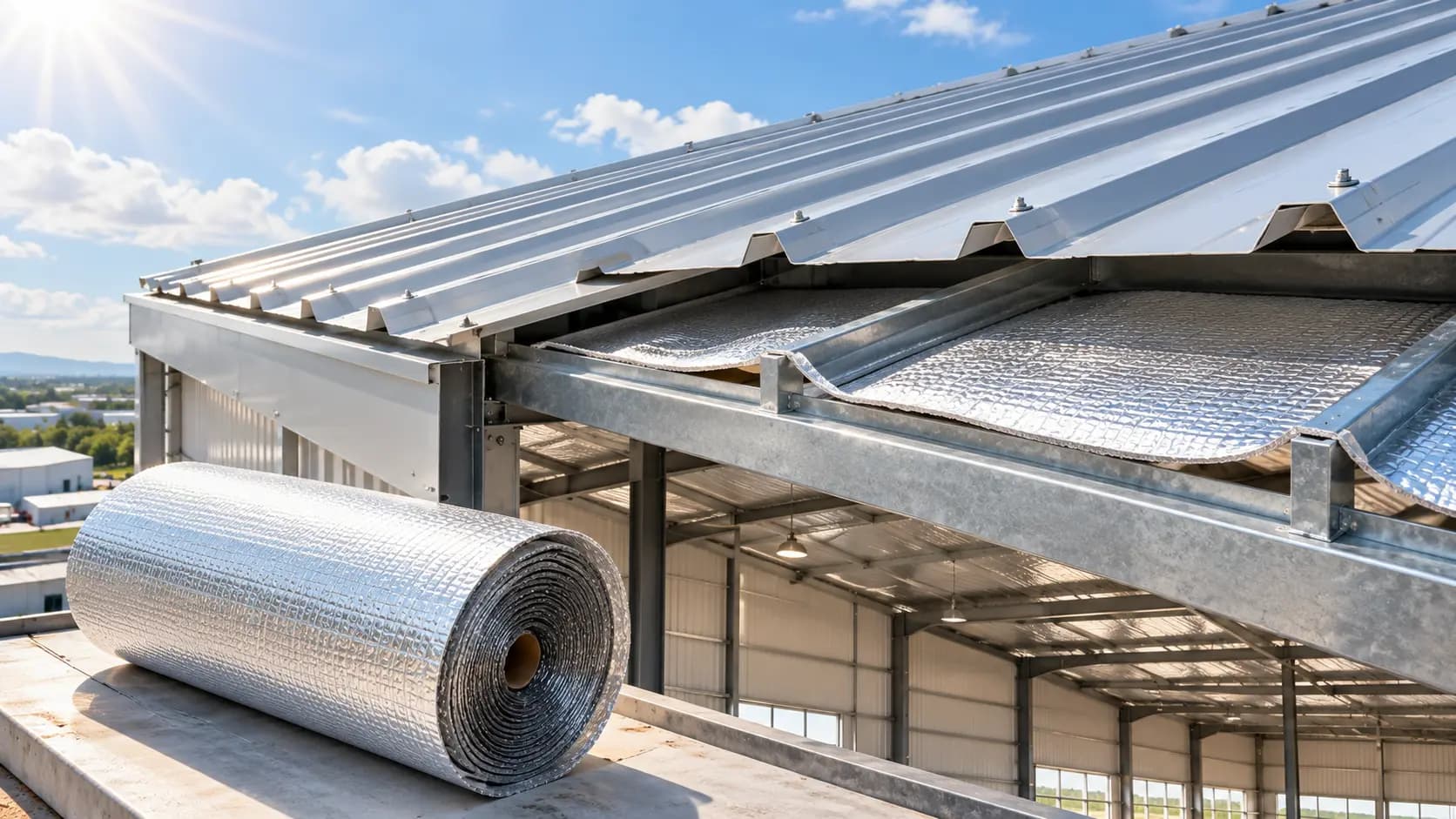
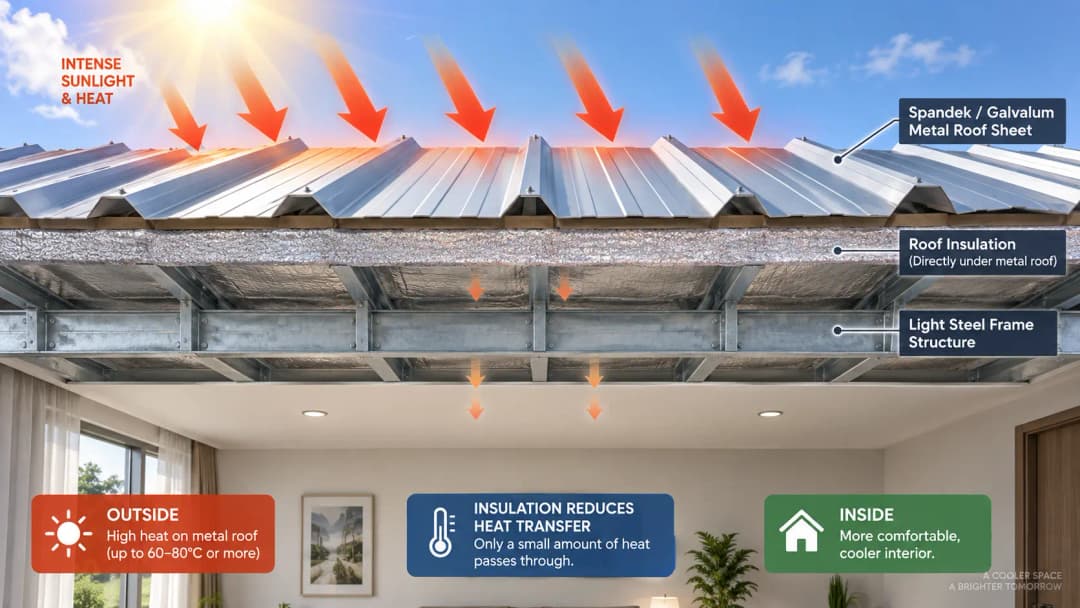
Houses with Spandek, Galvalum, or Metal Roofs
Metal roofs can transfer heat from their surfaces to the area beneath the roof.
Under these conditions, using a foam system combined with a reflective layer can be an option because it does not rely solely on reflection.
The foil layer helps control radiation, while the foam provides additional resistance to heat flow.
Houses with Limited Space Between the Roof and Ceiling
When installation space is limited, insulation thickness becomes an important factor.
Materials must be selected by considering the available construction space so that installation does not interfere with the roof frame or other roofing components.
Houses That Use Air Conditioning
Reducing heat gain from the roof can help lower the heat load that the cooling system must handle.
However, using insulation does not mean that electricity bills will automatically decrease by a specific amount.
The final results are still influenced by room size, air conditioner capacity, ventilation, openings, building orientation, installation quality, and the condition of other building envelope components.
Shiny Foil Does Not Necessarily Mean Better Insulation
One of the most common mistakes when choosing heat insulation is judging a material solely by its surface appearance.
Products with very shiny foil may have good reflective properties, but the performance of an insulation system is not determined by a single parameter.
Several other factors must also be considered:
core material
thermal conductivity
thickness
lamination quality
number of foil sides
air space
surface condition
installation method.
This also explains why two products that both use aluminium foil can have different characteristics.
Does 97% Reflectivity Mean That Heat Inside the House Is Reduced by 97%?
No.
The reflectivity or radiation reflection value indicates the characteristics of a material's surface in relation to radiant energy.
This value does not mean that indoor temperatures decrease by 97%, the building's overall heat is reduced by 97%, or air conditioning usage automatically decreases by 97%.
Heat can still transfer through several other pathways within a building, including conduction and convection.
Therefore, reflectivity specifications should be understood as one of the material's technical parameters, not as the percentage reduction in indoor temperature.
This is an important distinction when comparing roof insulation products.
How to Determine the Right Foam Thickness for a Roof?
Thickness is one of the parameters that should be considered when selecting foam insulation.
In general, increasing the thickness of insulation material can increase resistance to heat flow when the material type and construction are the same.
However, decisions should not be based on thickness alone.
Also check:
type of foam
thermal conductivity value
type of lamination
roof structure
installation space
building requirements.
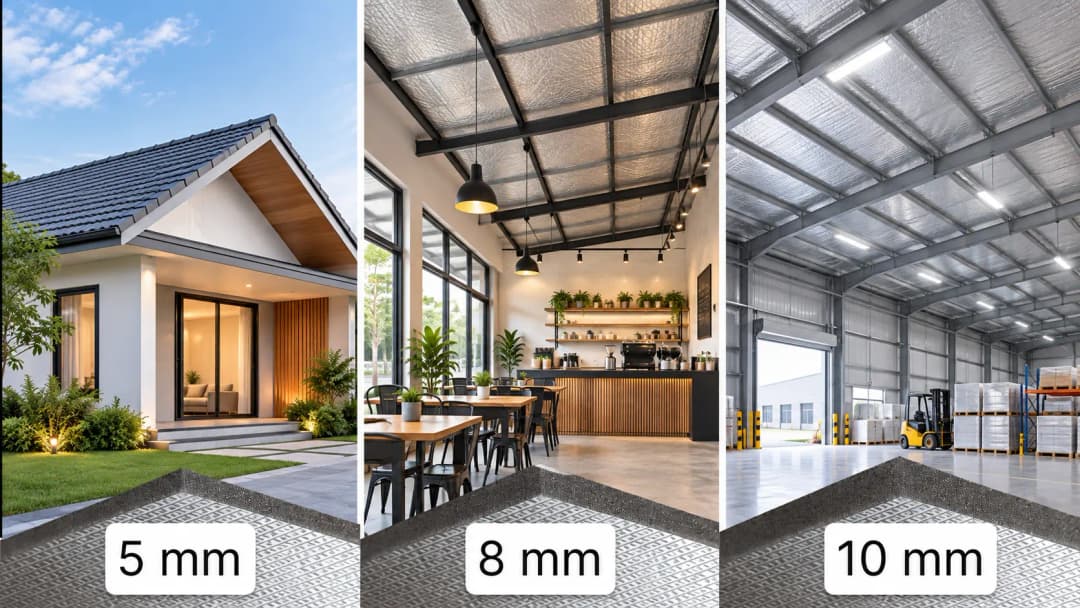
For example, Karpinux Roof Insulation uses an XLPE foam-based system available in several thickness options.
5 mm — Light
Can be considered for renovations, lightweight buildings, and applications that require a relatively thin insulation layer.
8 mm — Balanced
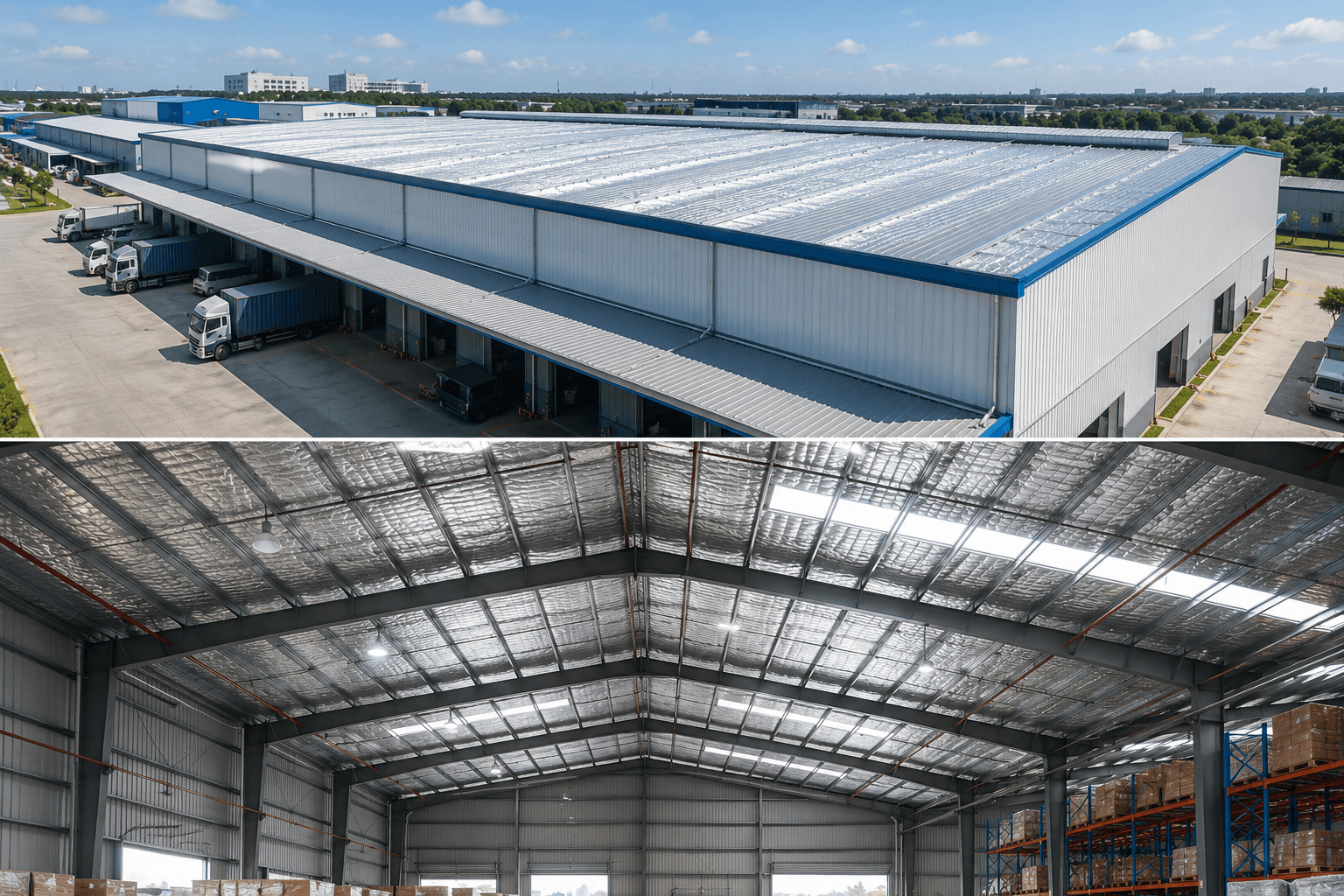
Used for applications requiring a thicker foam layer and intended for buildings such as commercial properties, workshops, and warehouses.
10 mm — Heavy Duty
Intended for applications with higher heat loads, such as production facilities and industrial applications.
For residential buildings, the selection of thickness should still be based on actual construction conditions rather than simply choosing the thickest variant.
5 Mistakes When Choosing Roof Heat Insulation for Your Home
The first mistake is assuming that all aluminium-coated materials have the same performance.
The second mistake is choosing materials based only on price per meter without considering specifications and installation methods.
The third mistake is assuming that foil can work at maximum effectiveness without considering the air gap configuration.
The fourth mistake is assuming that the reflectivity percentage is equal to the percentage reduction in indoor temperature.
And the fifth mistake is immediately choosing the thickest material without examining the condition of the roof structure.
Insulation should be viewed as part of the building system, not merely as a sheet of material installed beneath the roof.
Introducing Karpinux Roof Insulation for Roofing Systems
One of the available foam foil insulation systems is Karpinux Roof Insulation from PT Karya Pilar Nusantara.
This material uses an XLPE foam structure with an aluminium foil layer, combining thermal insulation and reflective surface functions within one system.
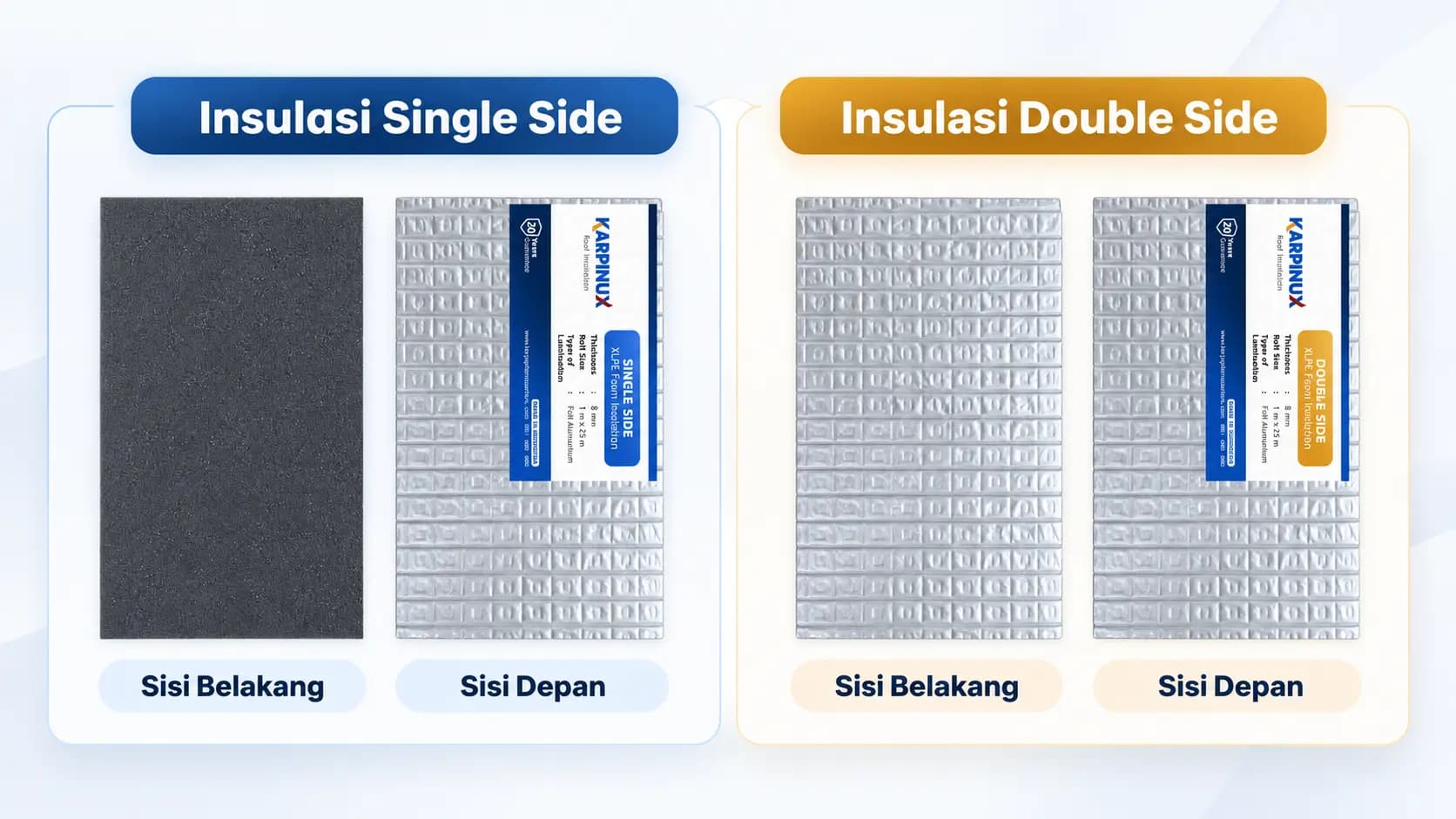
Karpinux is available in thicknesses of 5 mm, 8 mm, and 10 mm, with roll dimensions of 1 × 25 meters, and offers both single-side and double-side configurations.
Based on its product specifications, the material has a thermal conductivity of 0.030 W/m·K and radiation reflectivity of up to 97%.
The selection must still be adjusted according to the type of roof, surface area, building structure, and insulation requirements.
For houses or lightweight building renovations, the 5 mm variant can be an initial option to consider. Meanwhile, applications with higher heat loads and larger building scales may require different configurations.
 So, Aluminium Foil, Foam, or Bubble Foil?
The answer depends on the roofing system and the needs of the home.
Aluminium foil focuses on controlling radiant heat and requires the correct installation configuration for its reflective surface to work effectively.
Bubble foil combines a reflective surface with a lightweight and flexible air bubble structure.
Meanwhile, foam insulation, especially when combined with aluminium foil, provides two mechanisms simultaneously: the foam layer helps resist heat transfer through the material, while the foil helps control radiant heat.
Therefore, do not simply ask, "Which material is the best?"
A more appropriate question is:
"Which material is most suitable for my roof, construction, installation space, and home's thermal requirements?"
With this approach, the selected heat insulation is based not only on price or material appearance but also on how the system will perform after installation.
FAQ About Home Roof Heat Insulation
Can Aluminium Foil Make a House Cooler?
Aluminium foil can help reduce heat transfer through radiation when installed with the correct configuration. The final indoor conditions are still influenced by the roof, ventilation, ceiling, openings, and other building factors.
Which Is Better, Foam or Bubble Foil?
Both have different structures and working mechanisms. Foam provides a material layer that resists heat flow, while bubble foil uses an air bubble structure and a reflective surface. Choose based on the building's construction and requirements.
What Type of Heat Insulation Is Suitable for Spandek Roofs?
A foam system combined with a reflective layer can be an option for spandek roofs because it combines thermal resistance with radiation control. The selection of specifications must still be adjusted according to the roof construction.
Does Aluminium Foil Need a Gap Between It and the Roof?
To function as a reflective surface against radiant heat transfer, foil needs to face an air space. Therefore, the installation configuration and air gap are important parts of a reflective insulation system.
Is Thicker Foam Always Better?
Thickness can increase thermal resistance for materials with the same characteristics, but it is not the only parameter. Thermal conductivity, foam structure, installation methods, and building requirements must still be taken into account.