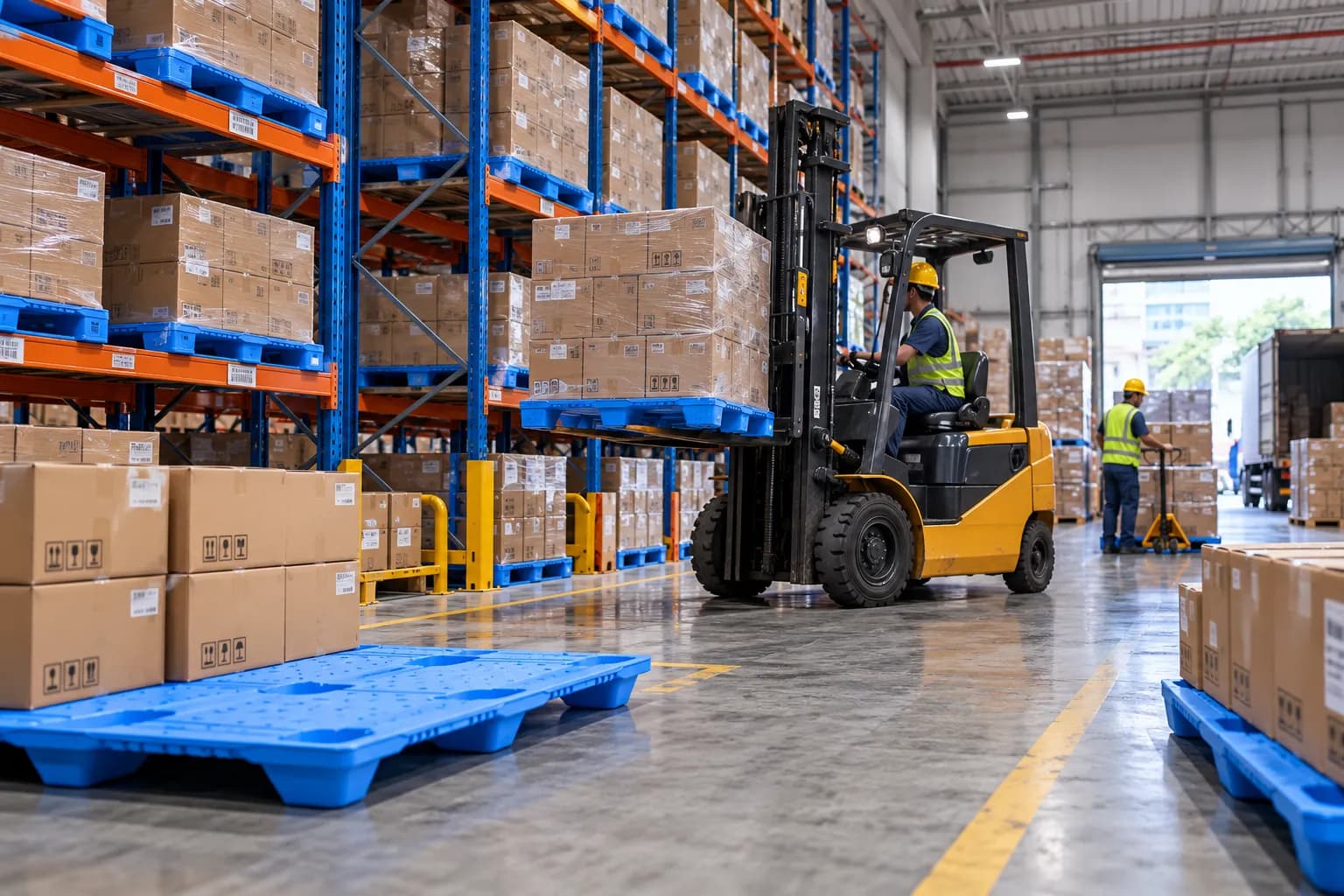
Pallets may seem like simple components in warehouse operations. However, in practice, choosing the wrong pallet can affect storage processes, goods handling, forklift operations, racking systems, and overall distribution efficiency.
Two pallets with nearly identical dimensions do not necessarily have the same load capacity. Pallet weight, bottom structure, material, deck design, and load-supporting mechanisms can result in different static, dynamic, and racking load capacities.
Therefore, choosing an HDPE pallet should not be based solely on dimensions or price. Pallets must be selected according to the weight of the goods, handling methods, storage systems, and operating environment.
What Is an HDPE Pallet?
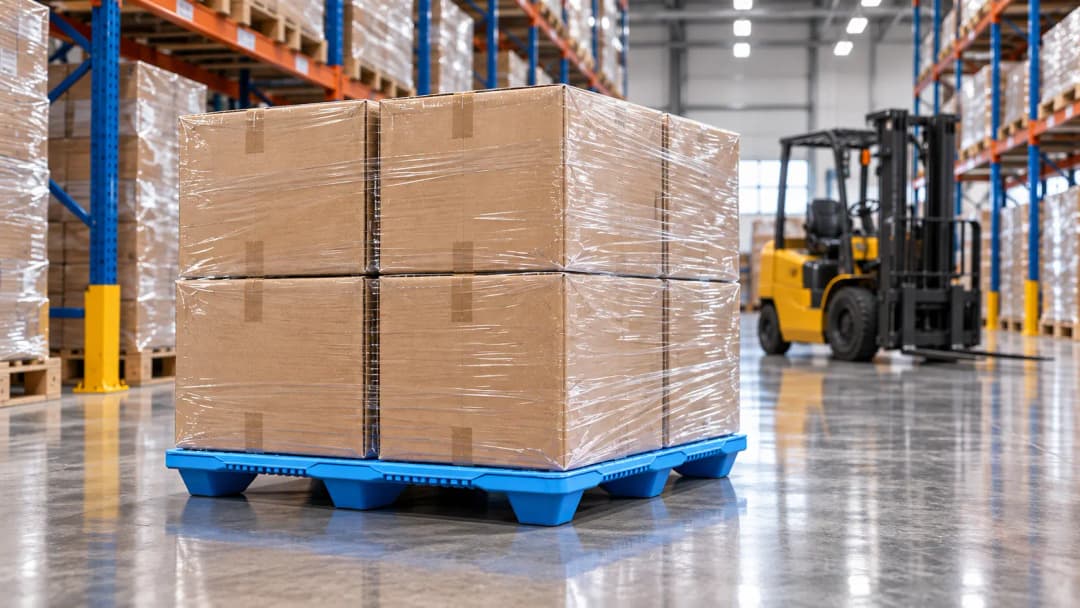
An HDPE pallet is a plastic pallet made primarily from High-Density Polyethylene. Plastic materials are widely used in industrial pallets because they can be manufactured with consistent shapes and structures and reused throughout various material handling processes.
In industrial applications, plastic pallets are available in various configurations, ranging from lightweight pallets for distribution to heavy-duty pallets designed to handle substantial loads.
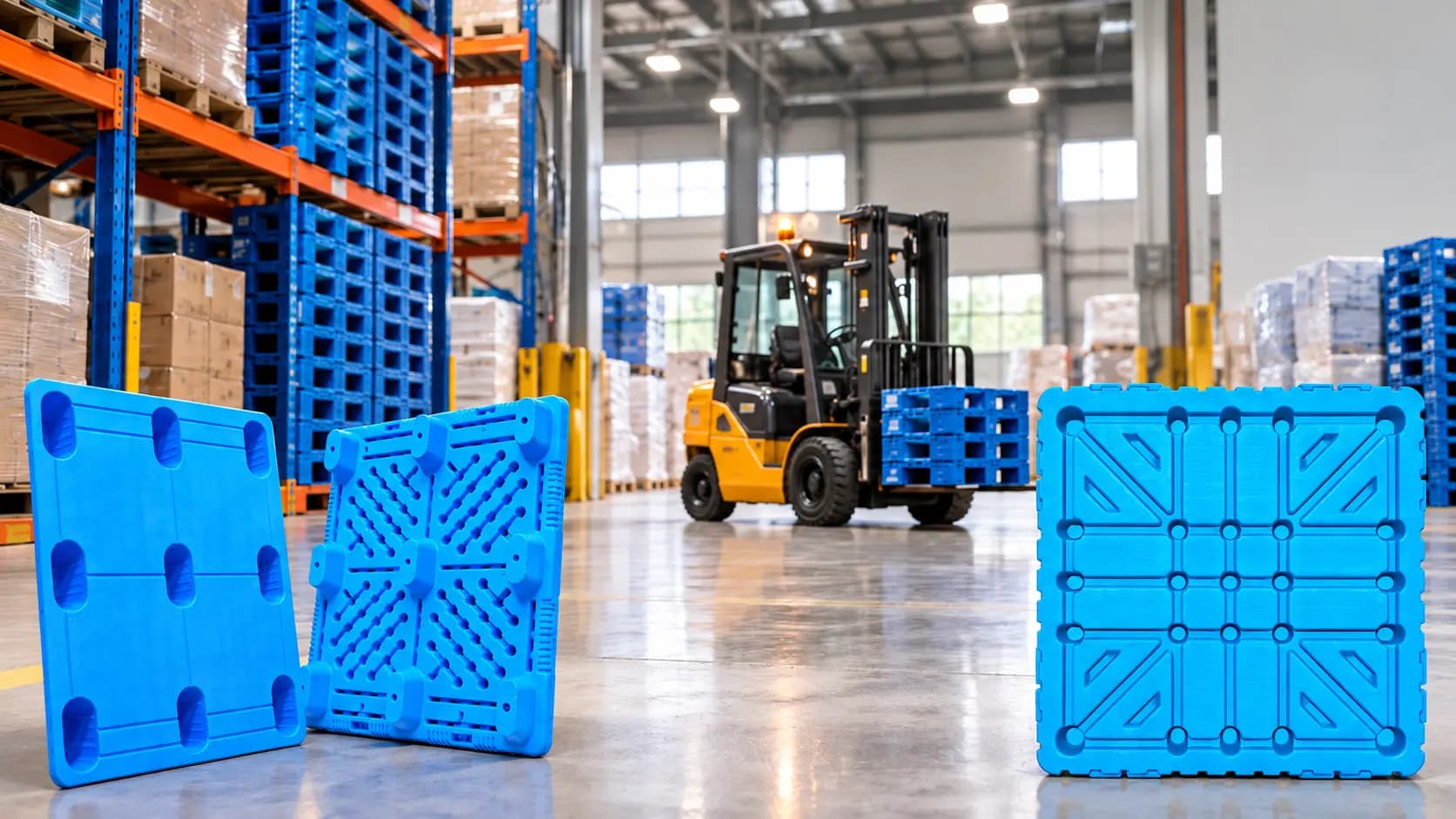
An important point to understand is that HDPE material alone does not determine a pallet's strength. Structural design, thickness, pallet weight, runners, reinforcement, manufacturing methods, and load distribution all contribute to its actual load capacity.
For example, the Karpinus technical catalog shows that plastic pallets with identical dimensions can have different static, dynamic, and racking load capacities depending on their construction and reinforcement.
Why Are Pallet Dimensions Important?
Pallet dimensions affect more than just the available surface area for storing goods.
Dimensions must be considered in relation to product sizes, warehouse layouts, forklift or pallet jack openings, storage racks, transportation vehicles, and stacking arrangements.
ISO has established ISO 6780, which specifies the principal dimensions and tolerances of flat pallets used in international material handling. The standard also covers aspects related to pallet trucks, forklifts, openings, clearances, and other handling requirements. ISO 6780:2003 was last reconfirmed in 2026 and remains active.
Some commonly used pallet dimensions in international logistics include 1,200 × 1,000 mm and 1,200 × 800 mm.
However, the most suitable pallet dimensions ultimately depend on a company's logistics system, rather than simply choosing the most commonly used size.
Available Karpinus HDPE Pallet Sizes
PT Karya Pilar Nusantara offers several HDPE pallet configurations designed for different operational requirements. Based on the current product specifications:
|
|---|
Understanding Static Load, Dynamic Load, and Racking Load
This is one of the most important aspects to understand before selecting a pallet.
A common mistake is seeing a specification such as "2-ton capacity" and assuming that the pallet can support 2 tons under all conditions. In reality, the type of load must be considered.
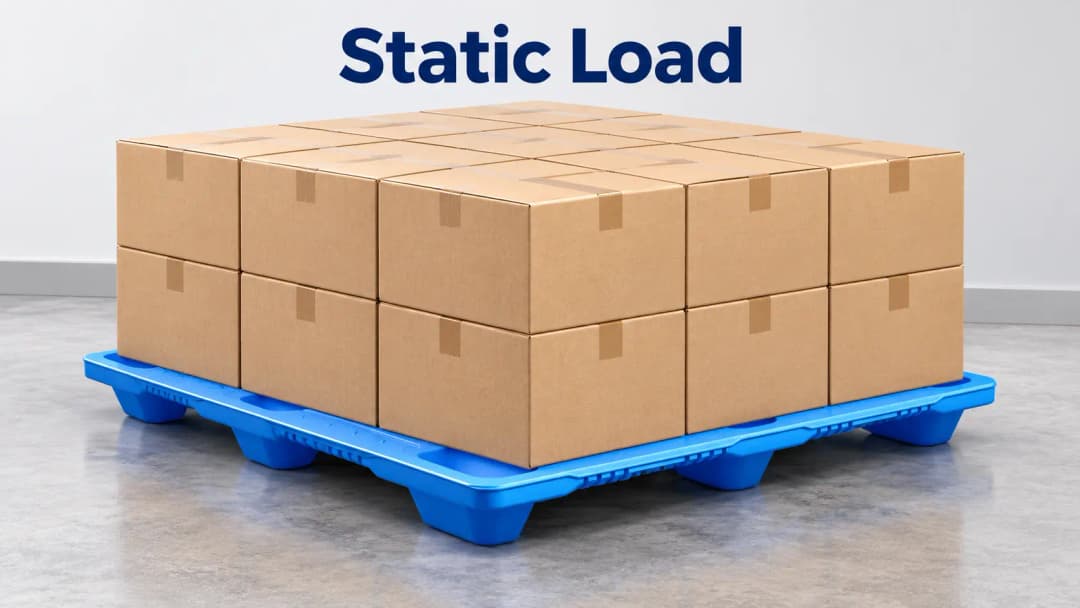
1. Static Load
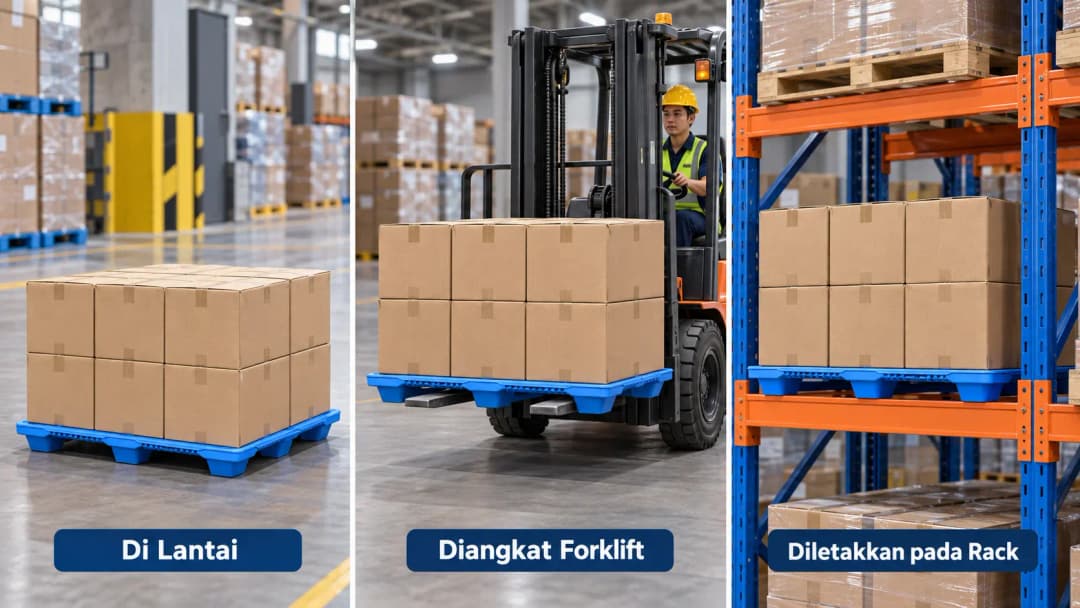
Static load refers to the load capacity of a pallet when it is placed on a flat surface and is not being moved.
Static load can also be understood as the pallet's ability to withstand pressure on a flat surface with an evenly distributed load under specific testing conditions.
For example, a pallet is placed on a warehouse floor with several cartons or bags stacked on top of it.
Because the entire bottom structure of the pallet receives support from the floor, static load capacity is usually the highest rating.
2. Dynamic Load
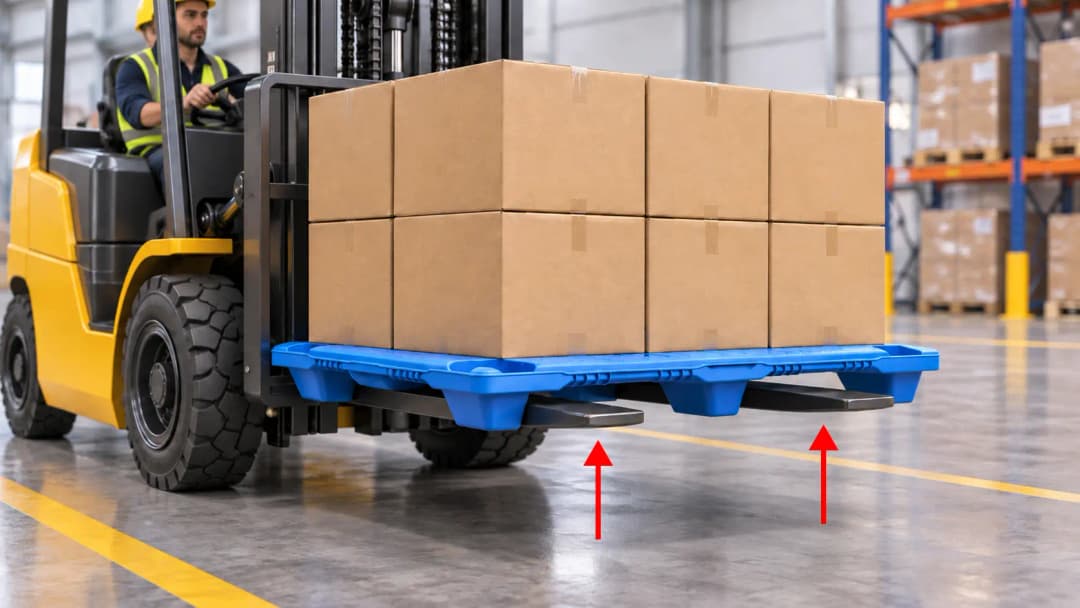
Dynamic load describes a pallet's ability to carry goods while being moved, such as when transported using a forklift.
When the pallet is lifted, its support points change. The load is no longer supported by the entire floor surface but instead by specific sections of the pallet that come into contact with the forklift forks.
Therefore, dynamic load capacity is generally lower than static load capacity. Craemer also defines dynamic capacity based on the condition of a pallet being supported by a forklift under a specified load distribution.
3. Racking Load
Racking load refers to the load capacity of a pallet when placed on a storage rack and supported only at specific points or beams.
This condition is different from placing a pallet directly on a flat floor.
In other words:
Static load ≠ dynamic load ≠ racking load.
Never use static load capacity as the basis for determining racking load capacity.
Do Not Choose a Pallet Based Only on Maximum Load Capacity
In addition to understanding pallet load capacities, it is important to consider how goods are positioned on the pallet.
ISO 8611-1:2025 provides testing methods for evaluating new pallets, including nominal load, maximum working load, and durability comparisons. ISO also emphasizes that load capacity testing does not replace the need for field testing for specific pallet designs and applications.
This is important because a 1,000 kg load distributed evenly does not necessarily exert the same pressure as a 1,000 kg item with a small contact area concentrated at the center of the pallet.
For example, drums, machinery, bulk bags, cartons, and long materials can create different load distribution patterns even when their total weights are identical.
Therefore, before purchasing pallets, it is advisable to determine the weight of goods per pallet, product dimensions, weight distribution, stacking arrangements, handling methods, and whether the pallets will be used in a racking system.
Choosing Pallets Based on Their Applications
For Warehouse Floor Storage
If pallets are primarily placed directly on the warehouse floor, static load becomes one of the main factors to consider.
However, the frequency of movement and the type of handling equipment used must also be taken into account.
Pallets do not only support loads while stationary. In most warehouse operations, they eventually need to be lifted during inbound handling, picking, or outbound processes.
For Distribution and Forklift Operations
If pallets are frequently moved using forklifts, prioritize dynamic load capacity, structural design, and compatibility with forklift fork openings.
Do not choose a pallet simply because it has a high static load capacity.
In warehouses with intensive goods movement, the ability of pallets to maintain their shape and withstand repeated handling becomes increasingly important.
For Racking Systems
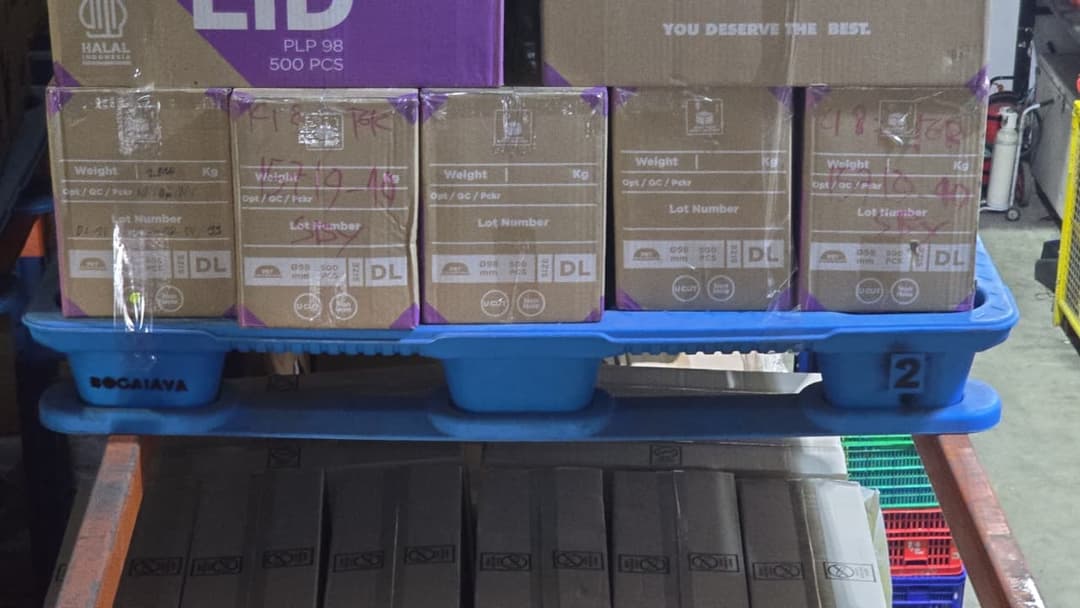
For racking applications, ensure that the pallet is specifically designed or confirmed to be suitable for the intended storage system.
Do not assume that a pallet with a high static load capacity is automatically safe for use on racks.
KPN also provides a Strip Pallet, a component installed underneath the pallet to help improve stability and load distribution when used in racking systems. Its application requirements and specifications should be confirmed based on the actual rack configuration and load conditions.
For Cold Storage
Cold storage environments require consideration of operating temperatures in addition to load capacity.
The properties and performance of plastic pallets may change depending on the material and operating temperature. International pallet manufacturers even include temperature stability as part of their technical specifications.
Therefore, for low-temperature applications, always confirm the appropriate operating temperature range according to the pallet specifications.
For Food, Beverage, and Pharmaceutical Industries
Plastic pallets are widely used in applications where easier cleaning is an important consideration.
However, there is one important point:
A pallet made from HDPE is not automatically food-grade or compliant with specific food and pharmaceutical industry requirements.
For applications with special hygiene or food-contact requirements, always verify the material, certifications, pallet design, and standards required by the company or relevant regulatory authorities.
What About HDPE Pallets for Export?
Plastic pallets can be an attractive option for export operations because certain phytosanitary regulations primarily focus on wood packaging materials.
ISPM 15 from the International Plant Protection Convention establishes phytosanitary measures to reduce the spread of pests associated with raw wood packaging materials in international trade.
The United States Department of Agriculture's Animal and Plant Health Inspection Service (USDA APHIS) also explicitly identifies plastic pallets as an alternative that is not subject to its Wood Packaging Material regulations.
This means plastic pallets do not require wood treatment solely to comply with ISPM 15.
However, export requirements must still be aligned with the destination country's regulations, the type of goods being shipped, and the importer's specifications.
Single-Sided or Double-Sided Pallets?
In addition to dimensions and load capacity, pallet construction also determines its suitability for different applications.
A single-sided pallet has one primary surface for placing goods and generally features a simpler structure and lighter weight.
A double-sided pallet has a more substantial upper and lower structure, making it an option for applications requiring heavier-duty construction.
In the KPN product range, for example, the KPN 1212 Double Side series is available in weights ranging from 16 to 20 kg, with static load capacities of 2.5 to 3.5 tons depending on the variant.
The best choice ultimately depends on the handling and storage systems being used.
What Pallet Load Capacity Should You Choose?
It is advisable not to select a pallet with a load capacity exactly equal to the maximum weight of the goods.
In real-world operations, variations in product weight, changes in stacking patterns, forklift impacts, goods movement, and environmental conditions may occur.
Therefore, choose pallets based on actual working loads and operating conditions, rather than simply aiming for the highest available load capacity.
ISO 8611-3 also distinguishes the concept of maximum working load based on payload and handling environment.
For projects or operations involving heavy loads, conduct testing under actual operating configurations before large-scale implementation.
Example of Choosing a Pallet Based on Operational Needs
Suppose a warehouse requires pallets to transport goods weighing approximately 900 kg using a forklift.
A pallet with a static load capacity of 2 tons is not automatically suitable. Its dynamic load capacity must also be evaluated.
If the pallet has the following specifications:
Static load: 2,000 kg
Dynamic load: 1,000 kg
Then the dynamic load capacity is the relevant specification when the pallet is lifted by a forklift.
If the pallet will subsequently be placed on a storage rack, the evaluation is not yet complete. Racking load capacity must be confirmed separately.
This simple example demonstrates why reviewing complete pallet specifications is far more important than focusing on a single "maximum capacity" figure.
Checklist Before Choosing an HDPE Pallet
Before purchasing pallets, determine at least the following information:
Dimensions of the goods to be placed on the pallet.
Maximum weight of goods per pallet.
Load distribution pattern.
Whether the pallet will be used for floor storage or racking.
Whether the pallet will be moved using a forklift, pallet jack, or stacker.
Frequency of pallet movement.
Operating temperature and environmental conditions.
Requirements for single-sided or double-sided pallets.
Hygiene requirements for specific industrial applications.
Destination country requirements for export applications.
With this information, pallet selection can be based on actual operational requirements rather than dimensions or price alone.
HDPE Pallet Options for Different Operational Requirements
The HDPE pallet range from Karya Pilar Nusantara is currently available in sizes ranging from 80 × 100 cm to 120 × 140 cm, with different load capacities and weight options.
The KPN 1080 Light can be considered for relatively light-duty applications, while the KPN 1210 Standard, measuring 100 × 120 cm, provides an option for more general logistics operations. For heavier load requirements, the KPN 1214 Heavy Duty is available, while the KPN 1212 features a double-sided construction.
The appropriate pallet type should be selected after determining the weight of the goods, handling methods, warehouse layout, and storage system.
Conclusion
Choosing an HDPE pallet is not simply about finding the thickest pallet or the one with the highest load capacity.
Consider pallet dimensions, static load, dynamic load, racking requirements, load distribution, forklift compatibility, environmental conditions, and warehouse operating procedures.
Understanding the differences between static, dynamic, and racking load capacities is particularly important because each condition involves different support points and load pressures on the pallet.
By identifying these requirements from the beginning, companies can select pallets that are better suited for storage, manufacturing, distribution, cold storage, export, and various other industrial applications.
To determine the most suitable KPN HDPE Pallet type, specifications can be matched to the dimensions of the goods, required load capacity, and intended operating conditions.