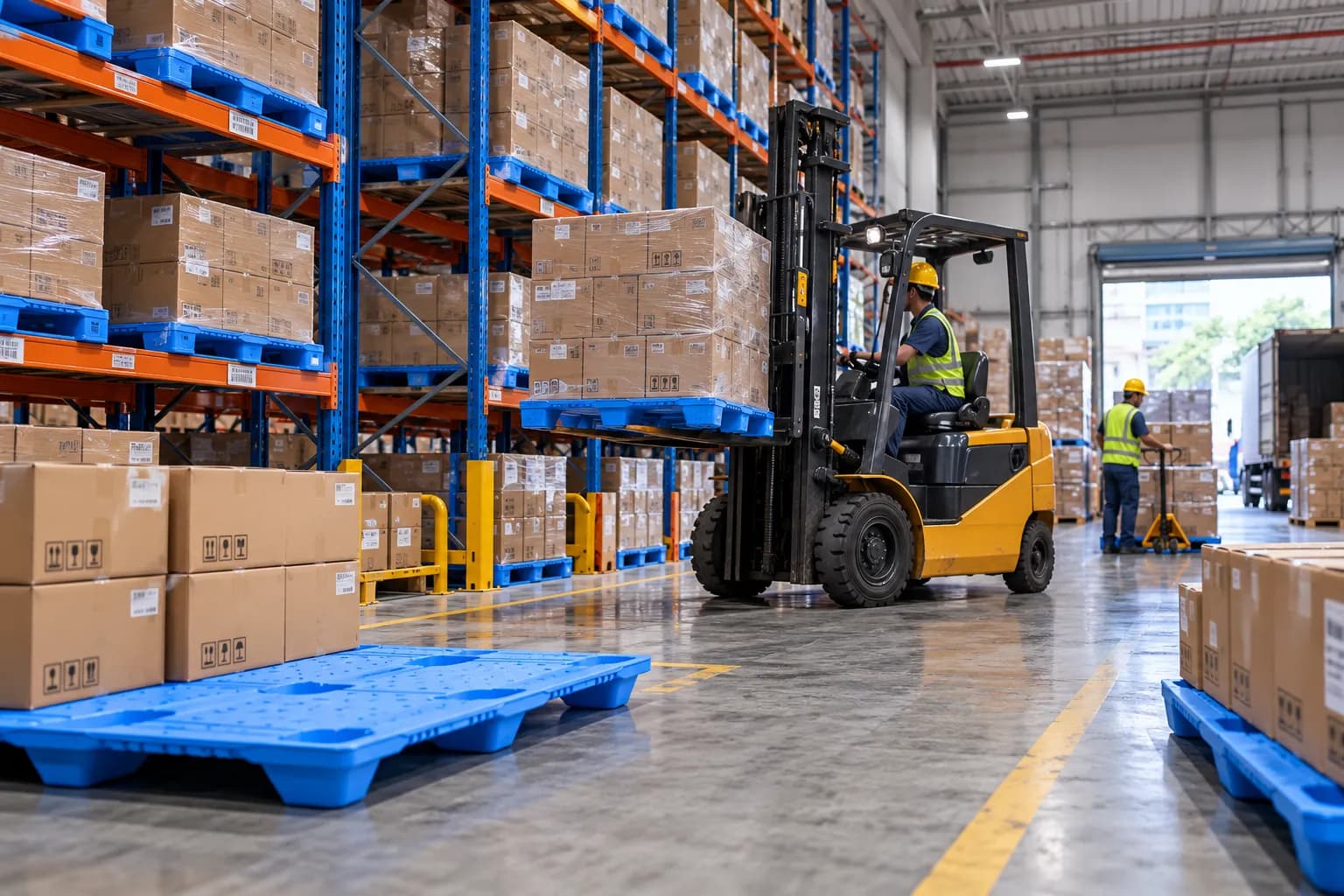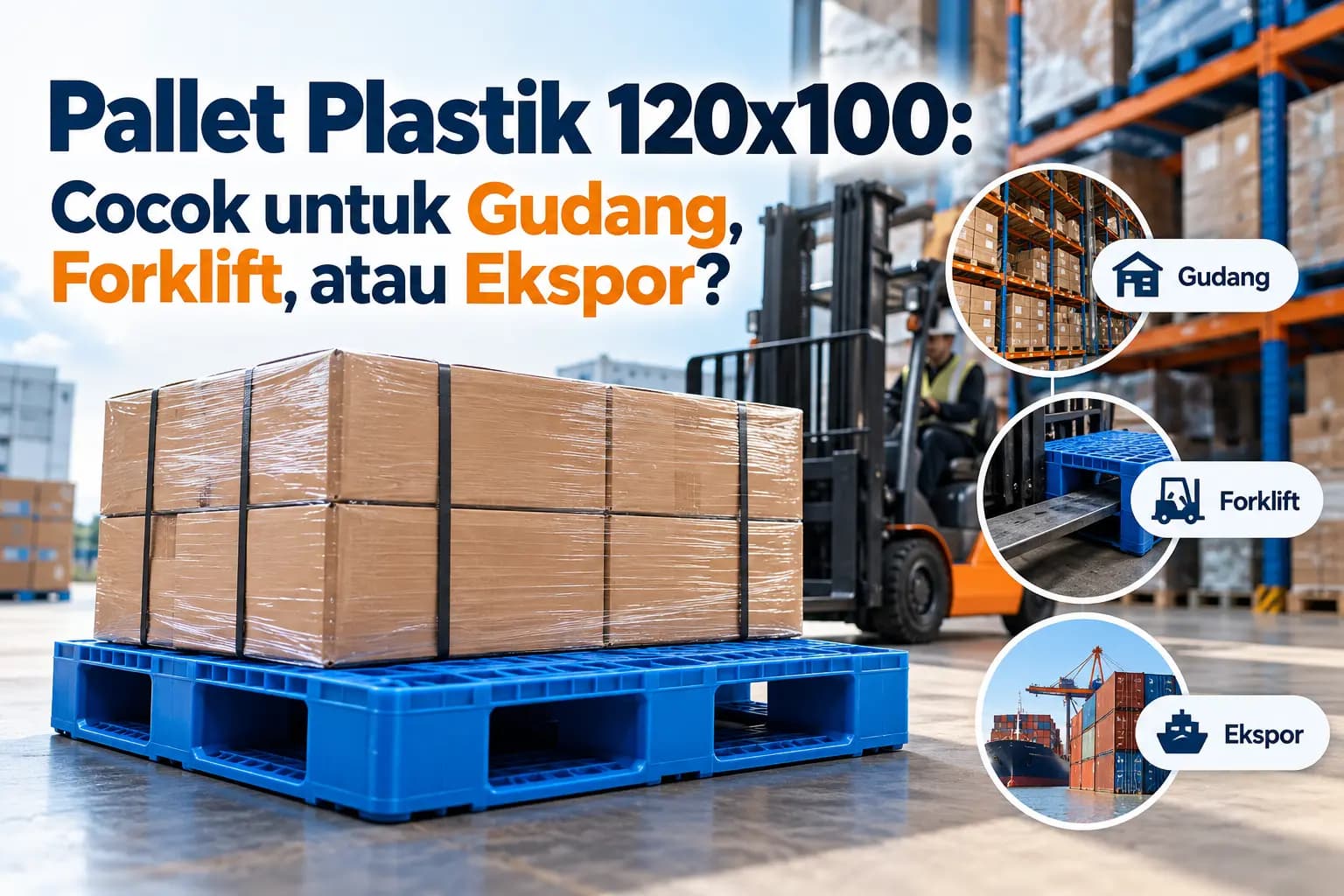
Plastic pallets measuring 120x100 cm are among the most commonly used sizes in warehousing, manufacturing, distribution, and logistics operations.
This size offers a surface area of approximately 1.2 m², making it versatile enough to accommodate cartons, sacks, raw materials, finished products, and various industrial unit loads.
However, pallet size alone is not enough to determine whether a pallet is truly suitable for a particular application.
Two pallets measuring 120x100 cm may have different load capacities, bottom structures, weights, fork openings, and racking capabilities.
Therefore, the more appropriate question is not simply:
“Is a 120x100 pallet large enough?”
But rather:
“Is this 120x100 pallet compatible with the warehouse system, forklift, load weight, racking, and distribution processes being used?”
This article discusses each of these aspects in detail.
120x100 Plastic Pallets: What Does This Size Mean?
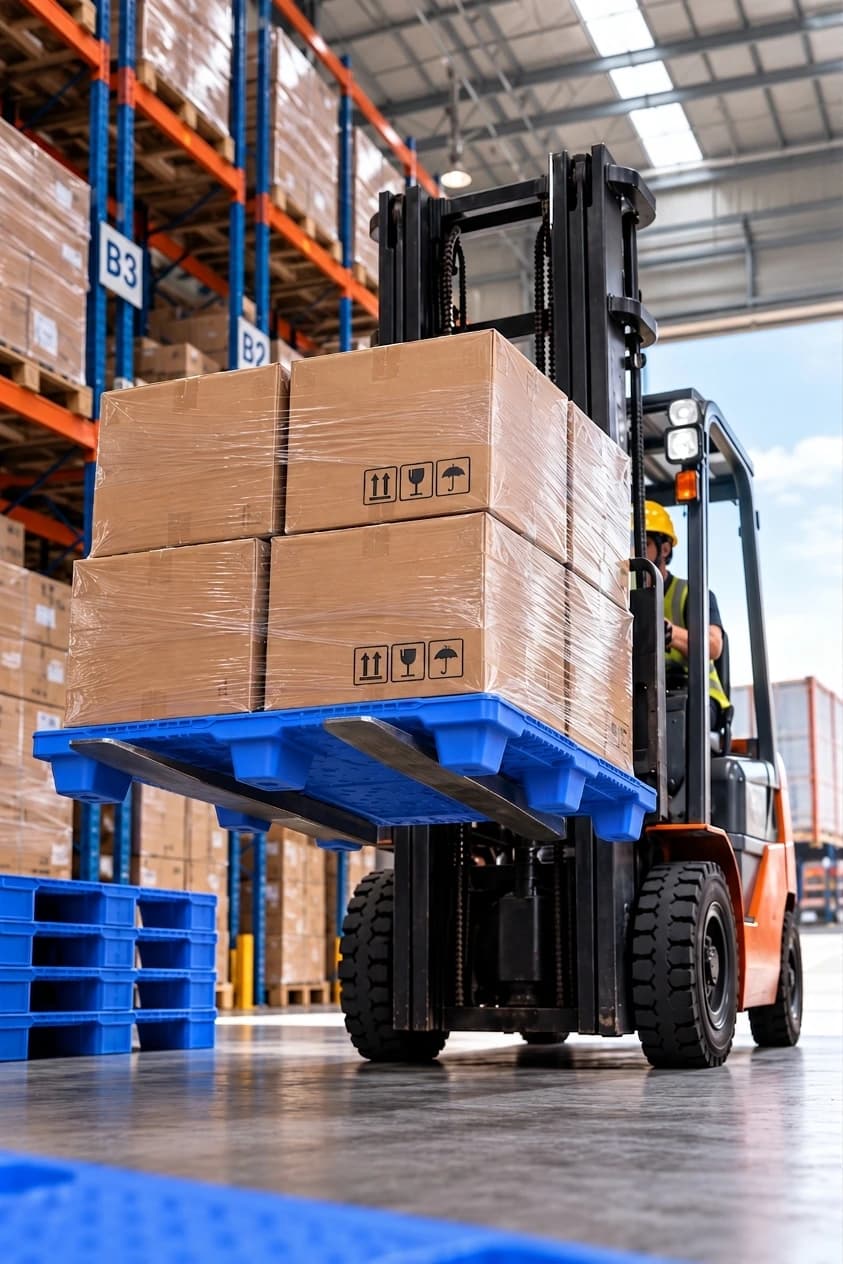
A 120x100 pallet has a footprint of approximately:
120 cm × 100 cm
or
1,200 mm × 1,000 mm
In product catalogs or specifications, you may also find the dimensions written as 100 × 120 cm. In terms of footprint, both refer to a pallet area of 1.2 × 1 meter, although the orientation of the length, width, runners, and forklift entry directions still needs to be checked against the actual pallet design.
Pallet size does not only determine how many goods can be placed on its surface.
Pallet dimensions are also related to compatibility with:
product dimensions;
warehouse layout;
aisle width;
forklifts or hand pallet trucks;
pallet racks;
distribution vehicles;
containers;
and the company's supply chain standards.
ISO 6780 specifies the principal dimensions and tolerances of flat pallets for international material handling. This standard also considers handling using pallet trucks and forklifts, as well as pallet opening and clearance requirements. ISO 6780:2003 was last reconfirmed in 2026 and remains valid.
The 1,200 × 1,000 mm size has long been used as one of the pallet formats in international and Asian logistics systems. ISO has also previously documented recommendations for standardizing 1,200 × 1,000 mm 4-way pallets to help improve distribution and material handling efficiency.
Why Is the 120x100 Size Widely Used in Warehouses?
In warehouses, efficiency is not determined solely by the size of the building.
How goods are arranged also determines how many products can be stored and how quickly they can be moved.
The 120x100 plastic pallet provides a sufficiently large surface for various unit loads without having the footprint of a larger heavy-duty pallet.
This size can be used for various activities, such as finished goods storage, staging before shipment, raw material storage, distribution between production areas, and inbound and outbound processes.
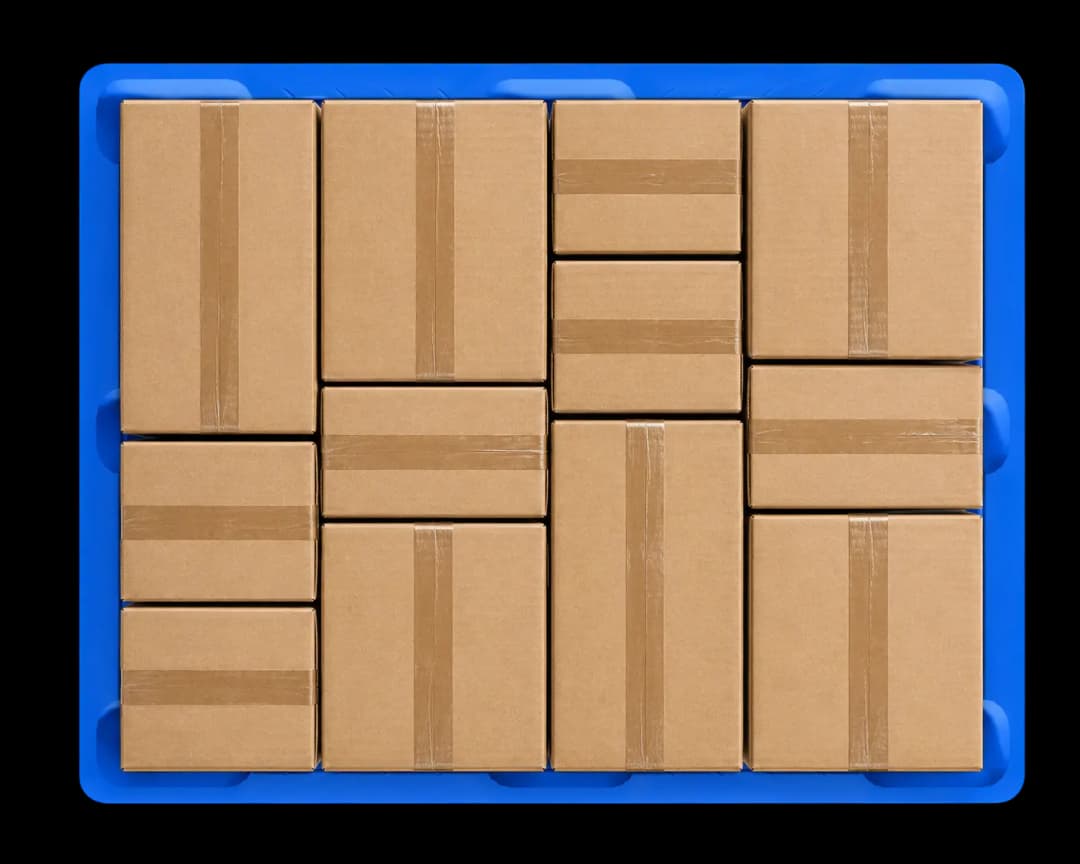
However, before selecting a pallet size, the arrangement of goods on the pallet deck needs to be calculated.
For example, a pallet may have sufficient load capacity but leave considerable unused space if the carton dimensions do not match the pallet footprint.
Conversely, oversized goods that extend beyond the pallet edges can increase the risk of impact during handling.
Therefore, select a pallet based on the combination of:
product dimensions + product weight + storage system + handling method.
Are 120x100 Plastic Pallets Suitable for Forklifts?
Yes, but the 120x100 size alone does not automatically make a pallet compatible with every forklift.
The first thing to consider is the design of the fork openings.
ISO 6780 itself addresses not only the principal dimensions of pallets but also factors such as openings and clearances related to forklift and pallet truck operations.
When selecting a pallet for forklift use, several aspects need to be confirmed, including pallet opening width, opening height, fork length, distance between forks, forklift entry direction, runner structure, and the pallet's dynamic load capacity.
The last factor is often overlooked.
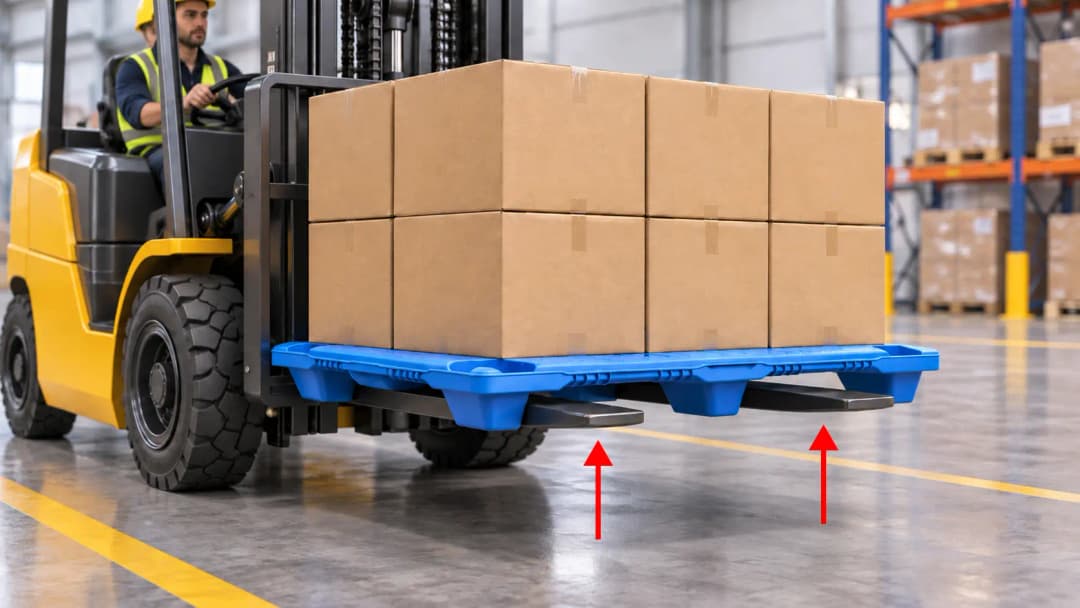
When a pallet rests on the floor, its entire underside receives relatively broad support.
When lifted by a forklift, this condition changes.
The pallet is supported only by the areas in contact with the forklift forks. Therefore, the relevant capacity rating when a pallet is being moved is its dynamic load, not just its static load.
In the KPN HDPE Pallet product line, the Standard KPN 1210 series measuring 100 × 120 cm is available in several configurations with dynamic load capacities of approximately 0.8–2.5 tons, depending on the pallet's construction and weight.
This means forklift requirements must be matched to the pallet variant and the actual weight of the goods being transported.
Don't Misinterpret Pallet Load Capacity
One of the most common mistakes when selecting a pallet is looking at the highest number in the specifications and assuming it represents the pallet's capacity under all conditions.
For example, a pallet may have:
Static load: 2,500 kg
Dynamic load: 2,000 kg
This does not mean the pallet can carry 2,500 kg while being lifted by a forklift.
Static and dynamic loads apply under different conditions.
Static load applies when the pallet remains stationary on a surface such as a warehouse floor.
Dynamic load applies when the pallet carries goods while being lifted or moved using a forklift, hand pallet truck, or other material handling equipment.
Meanwhile, if the pallet is placed on a rack, an assessment of its racking load or load capacity under the specific rack configuration is required.
For the KPN 1210 Standard measuring 100 × 120 cm, the product page currently lists weight options of approximately 8, 8.5, 9, 10, 11, and 12 kg, with static load capacities of approximately 1.3–3 tons and dynamic load capacities of approximately 0.8–2.5 tons, depending on the variant.
Therefore, do not purchase a pallet based solely on a simple statement such as:
“This pallet can support 2 tons.”
Instead, ask:
“Is the 2-ton capacity for static, dynamic, or racking conditions?”
For a more detailed explanation of the differences between these three load capacities, readers can be directed through an internal link to the article Static vs Dynamic vs Racking Load on Pallets: What's the Difference?
What If the Pallet Is Used in a Racking System?
Using pallets on the floor is different from using them on pallet racks.
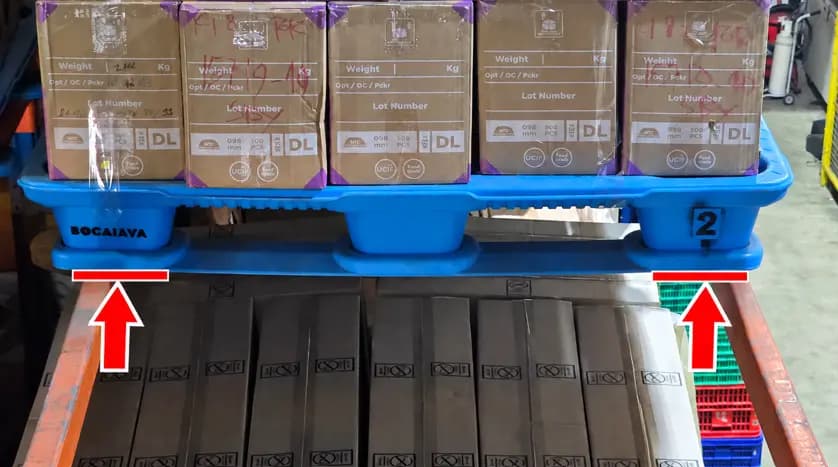
On the floor, the underside of the pallet receives relatively broad support.
On a rack, the pallet may only be supported by beams at specific points.
As a result, the central section of the pallet must maintain its rigidity while supporting the goods.
Therefore, a high static load capacity does not automatically mean a pallet is safe for racking.
Before using a 120x100 plastic pallet in a racking system, consider the distance between beams, pallet orientation, bottom structure, load distribution, product weight, warehouse temperature, and the duration the pallet remains on the rack.
For certain racking applications, KPN also provides Strip Pallets that are placed underneath the pallet to help maintain stability and distribute support.
Specifications must still be confirmed based on the actual rack configuration and load being used.
Are 120x100 Plastic Pallets Suitable for Export?
Plastic pallets can be used for export purposes, but two aspects must be distinguished:
pallet size and pallet material.
In terms of material, plastic pallets offer an advantage because the phytosanitary regulation ISPM 15 specifically governs wood packaging material used in international trade.
The IPPC explanatory document even identifies plastic pallets as an example of commodities excluded from its scope.
This means plastic pallets do not require wood treatments such as fumigation or heat treatment solely to comply with ISPM 15.
However, this does not mean that all plastic pallets are automatically suitable for every export application.
It is still necessary to check the requirements of:
the destination country, receiving company, product type, receiving warehouse system, pallet capacity, pallet dimensions used in the destination supply chain, and container or vehicle specifications.
The 1200 × 1000 mm size is one of the formats used in international material handling, but some countries and supply chains use different pallet footprints.
Therefore, before procuring pallets in large quantities for export, confirm the dimensions accepted by the buyer or destination warehouse.
Which Industries Are Suitable for Using 120x100 Pallets?
120x100 plastic pallets can be used in various industrial operations as long as their capacity and construction are suitable for the intended application.
Examples include manufacturing, warehousing, distribution centers, logistics, retail, building materials, cold storage, food and beverage, and the chemical industry.
KPN's product page also positions its HDPE Pallet product line for applications such as warehouse, storage, distribution, cold storage, food & beverage, and chemical industry.
HDPE material also offers characteristics that make it attractive for warehouse applications because it is water-resistant, does not attract termites like wood, and can be reused multiple times.
Nevertheless, applications in industries with specific requirements, such as food, pharmaceuticals, chemicals, or cold storage, must still consider material specifications, temperature, hygiene, certifications, and applicable regulations.
HDPE material alone does not automatically mean that a pallet meets all food-grade requirements or specific industry standards.
Introducing the KPN 100x120 cm HDPE Pallet
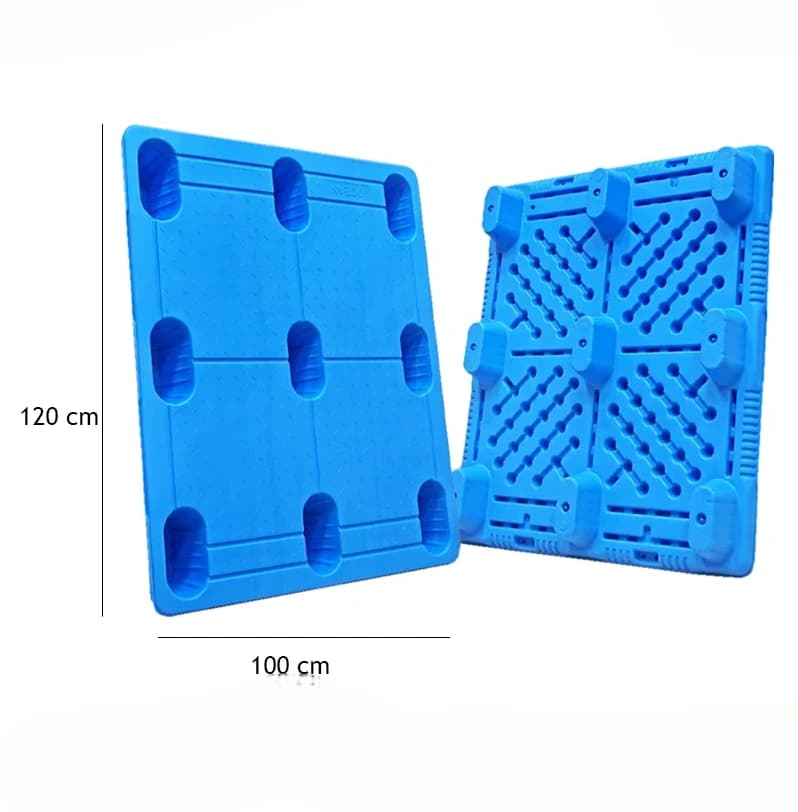
For applications requiring a footprint of approximately 120x100 cm, PT Karya Pilar Nusantara offers the KPN 1210 Standard Pallet, with dimensions listed as 100 × 120 cm.
The current product specifications are:
| Specification | KPN 1210 Standard |
|---|---|
| Dimensions | 120 × 100 x 15 cm |
| Material | HDPE |
| Weight | 8 / 8.5 / 9 / 10 / 11 / 12 kg |
| Static Load | 1.3 / 1.5 / 1.7 / 2 / 2.5 / 3 tons |
| Dynamic Load | 0.8 / 1 / 1.2 / 1.5 / 2 / 2.5 tons |
| TKDN | 52.77% |
These specifications highlight one important point:
Pallets with the same dimensions do not necessarily have the same load capacity.
Differences in weight variants and construction can result in different load-bearing capabilities.
Therefore, pallet procurement should begin by identifying operational requirements before determining the appropriate product variant.
KPN also manufactures its own HDPE Pallets, allowing quantity requirements, specifications, and project procurement needs to be discussed directly with the factory and through a first-hand supplier.
Checklist Before Choosing 120x100 Plastic Pallets
Before purchasing or procuring pallets in large quantities, make sure you have identified:
The dimensions of the goods to be placed on the pallet.
The maximum weight of goods per pallet.
Whether the goods will be stored on the floor or on racks.
Whether the pallet will be lifted using a forklift, hand pallet truck, or stacker.
The dynamic load capacity required when the goods are moved.
The pallet's fork entry system and direction.
The dimensions of the pallet racks being used.
The frequency of pallet use and movement.
Environmental conditions such as humidity or temperature.
The destination country and receiving company if the pallets are used for export.
With this information, pallet selection becomes much more accurate than simply stating:
“I need a 120x100 pallet.”
Conclusion: When Is a 120x100 Pallet the Right Choice?
120x100 cm plastic pallets can be a suitable choice for warehousing, forklift operations, distribution, and export requirements.
However, size is not the only parameter that needs to be considered.
For warehouse applications, make sure the pallet footprint matches the dimensions of the goods and the storage layout.
For forklift operations, pay attention to the fork openings and especially the dynamic load.
For racking systems, do not use static load capacity as the sole reference. The pallet's capacity and configuration must be matched to the racking system being used.
For export applications, plastic pallets offer an advantage because they are not classified as wood packaging material covered by ISPM 15. However, pallet dimensions and specifications must still comply with the requirements of the destination country or receiving party.
For applications requiring a 100 × 120 cm footprint, KPN HDPE Pallets are available in several construction and load capacity options that can be matched to specific applications.
Whether your requirements involve warehousing, distribution, forklift operations, or large-scale project procurement, you can consult directly with PT Karya Pilar Nusantara as an HDPE pallet manufacturer regarding the appropriate specifications.
Direct from the factory, supplied first-hand, with specifications that can be tailored to your procurement requirements.